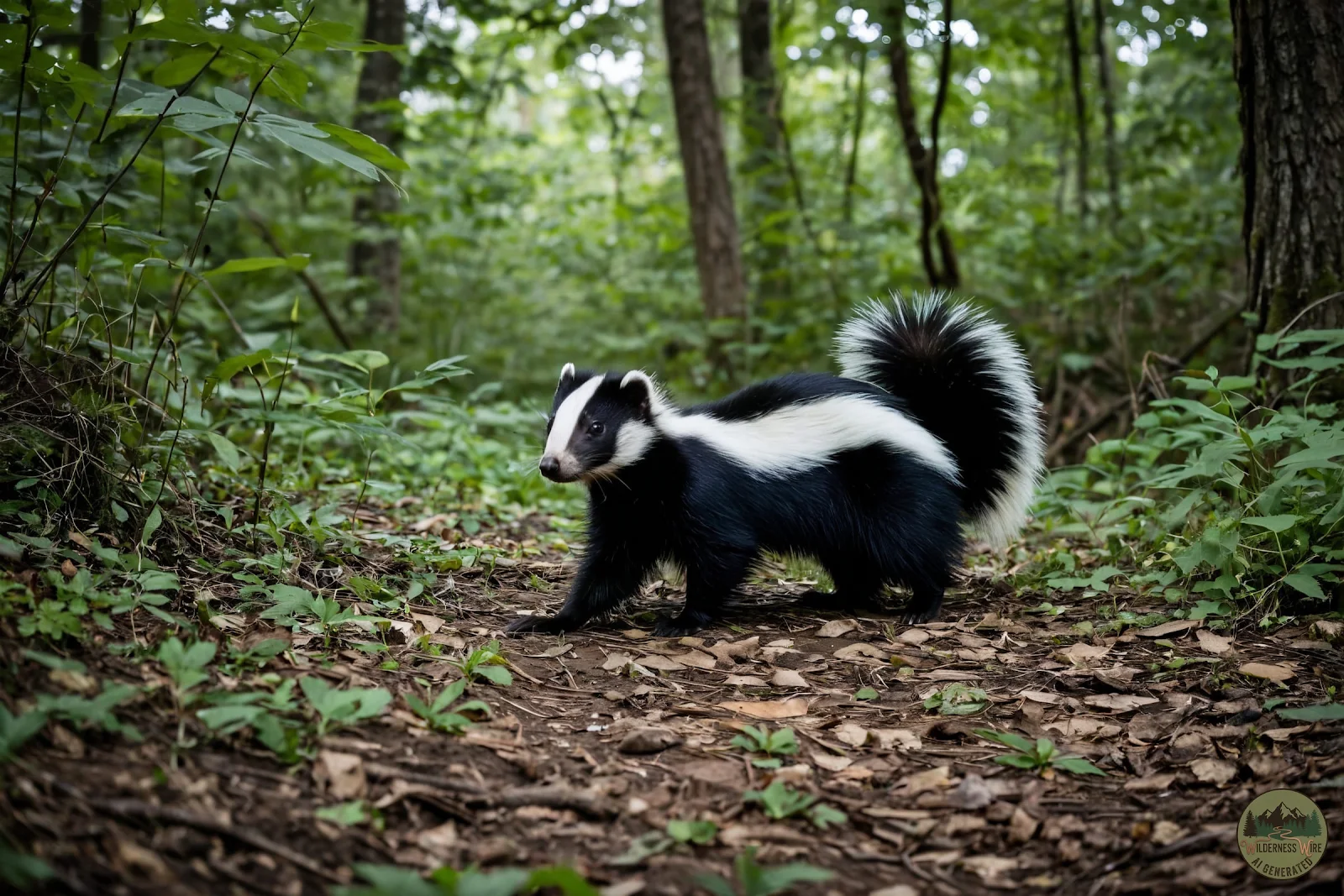
Few animals in North America command as much immediate recognition, or as widespread a misunderstanding, as the skunk. Instantly identifiable by their striking black and white pelage, these creatures are most famously known for their potent chemical defense. Yet, to reduce them solely to this singular attribute would be to overlook a fascinating and ecologically significant member of the weasel family (Mustelidae), exhibiting complex behaviors and playing a vital role in their diverse ecosystems.
Skunks are primarily found across the Americas, with several distinct species populating a wide range of habitats. The most common and widely distributed is the striped skunk ( _Mephitis mephitis_ ), which ranges from southern Canada through the United States and into northern Mexico. Other species include the spotted skunks (genus _Spilogale_ ), known for their more intricate broken white markings and acrobatic defensive stances, the hooded skunk ( _Mephitis macroura_ ) found in the southwestern US and Mexico, and the hog-nosed skunks (genus _Conepatus_ ) recognized by their elongated, naked snouts. While their appearances vary, all skunks share the common characteristic of their warning coloration and, of course, their highly specialized scent glands.
These animals are typically nocturnal, venturing out under the cover of darkness to forage for food. Their diet is remarkably varied, classifying them as omnivores with a strong preference for insects. Grubs, beetles, crickets, and grasshoppers form a significant portion of their intake, making them valuable pest controllers in agricultural and garden settings. Beyond insects, skunks will readily consume small rodents, bird eggs, carrion, berries, fruits, nuts, and even garbage when living in proximity to human settlements. Their opportunistic feeding habits and keen sense of smell, compensating for their relatively poor eyesight, make them highly adaptable survivors in a variety of environments, from forests and grasslands to suburban backyards.
The legendary defensive spray of the skunk is, in essence, a last resort, not a first line of attack. A skunk’s primary goal is to avoid conflict, and they communicate their intentions clearly before deploying their powerful weapon. When threatened, a skunk will first try to deter an aggressor with a series of warnings: stomping its front feet, hissing, and raising its tail to display the contrasting white fur that serves as an unmistakable signal. Only if these warnings are ignored will the skunk turn its back, bend into a U-shape, and unleash a fine, musky spray from two anal glands. This spray is a complex mixture of sulfur-containing organic compounds called thiols, which are highly volatile and remarkably persistent. The odor can be detected over a mile away and is incredibly irritating to the eyes, nose, and throat, causing temporary blindness and nausea in predators. It’s a defense so effective that most predators, including coyotes, foxes, and raptors, learn quickly to avoid these distinctively marked mammals.
Despite their formidable defense, skunks are generally docile and non-aggressive creatures. They are typically solitary, except during the breeding season or when a mother is raising her kits. Breeding usually occurs in late winter or early spring, with a gestation period of about 60-75 days. Litters typically consist of two to ten kits, which are born blind and helpless but quickly develop their signature black and white patterns. The mother skunk meticulously cares for her young in a den, which can be an abandoned burrow of another animal, a hollow log, or a crevice under rocks or buildings. The kits remain with their mother for several months, learning essential foraging and survival skills before venturing out on their own.
Living alongside humans, skunks have demonstrated a surprising capacity for adaptation. While they prefer natural habitats, they are not uncommon visitors to urban and suburban areas, drawn by readily available food sources like pet food, fallen fruit, and garbage, as well as sheltered denning sites. Encounters with pets, particularly curious dogs, are common, leading to the unfortunate but memorable experience of a direct spray. Understanding skunk behavior—giving them space and allowing them to go about their nocturnal activities undisturbed—is key to peaceful coexistence.
Beyond their iconic scent, skunks contribute significantly to ecological balance. By consuming large quantities of insects, they help control pest populations. Their occasional consumption of rodents also plays a role in local food webs. Far from being merely a stinky nuisance, the skunk is a testament to nature's ingenuity in defense, a adaptable survivor, and an integral component of the wild landscapes it inhabits. Its distinctive appearance and unique survival strategy continue to captivate and educate those willing to look beyond its pungent reputation.