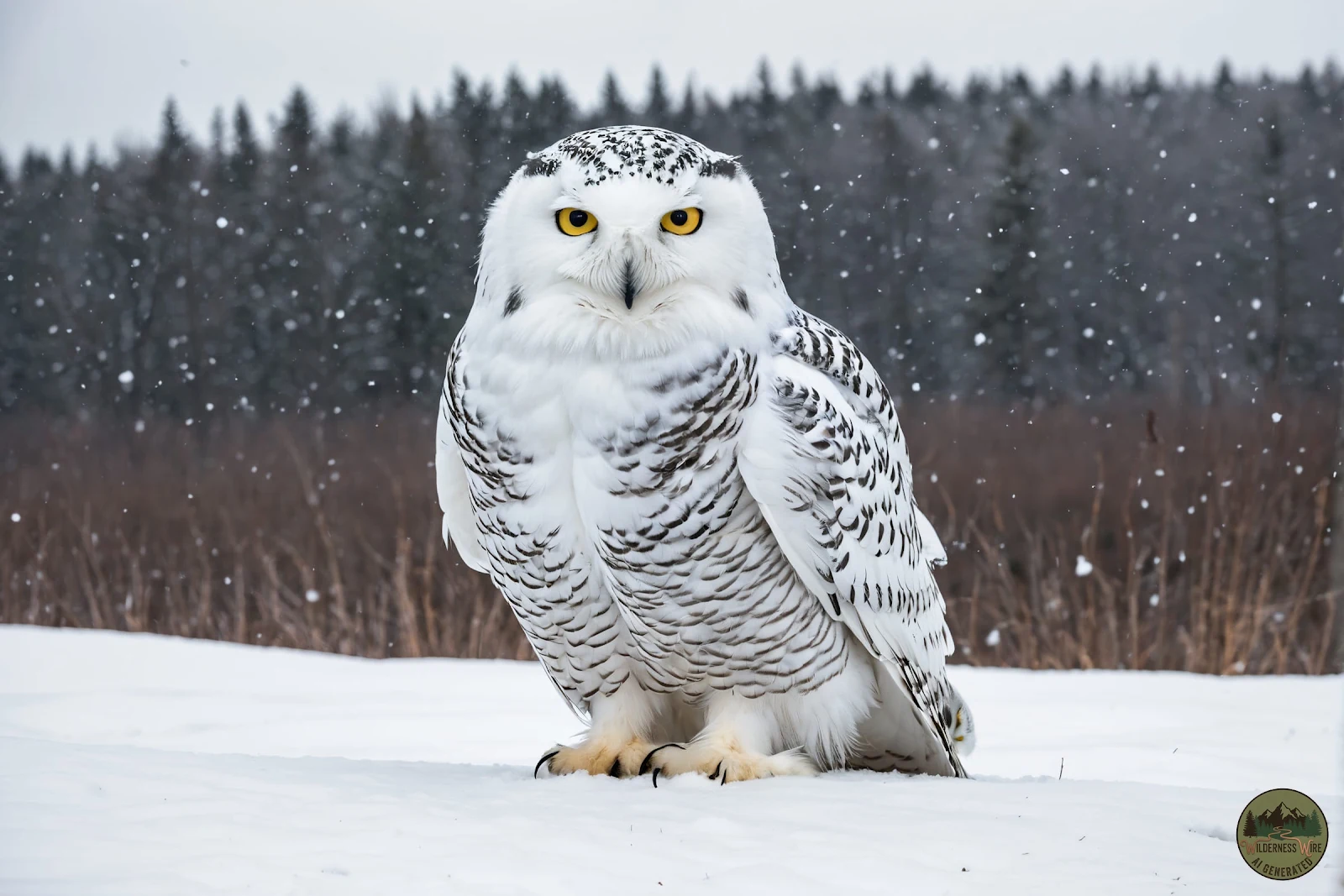
The ethereal presence of the snowy owl, with its immaculate white plumage and piercing golden eyes, evokes the very spirit of the Arctic. These magnificent raptors are perfectly adapted to the planet's harshest environments, reigning as apex predators across the circumpolar tundra. Their striking appearance, often pure white in mature males, offers not just camouflage against snow-laden landscapes but also a stark beauty that captivates observers. Far from being common garden birds, snowy owls are robust hunters, masters of stealth and survival in a world defined by extreme cold and perpetual daylight or darkness.
Measuring between 50 to 70 centimeters (20 to 28 inches) in length with an impressive wingspan of 1.2 to 1.5 meters (4 to 5 feet), the snowy owl is one of the largest owl species by weight. Its most distinctive feature is, of course, its plumage. While adult males can be almost entirely pure white, offering unparalleled camouflage in their snowy hunting grounds, females and younger owls typically exhibit varying degrees of dark barring and spotting. This darker patterning is more pronounced in younger birds and females, serving a similar purpose of breaking up their outline against mottled terrain during less snowy periods or aiding in incubating eggs on the open ground. Beneath these pristine feathers lies a dense layer of down and specialized insulation, allowing them to withstand temperatures as low as -50°C (-58°F). Their legs and toes are heavily feathered, acting like natural snowshoes and providing additional warmth.
Unlike most owl species, which are primarily nocturnal, the snowy owl is often diurnal, hunting during the perpetual daylight of the Arctic summer. This adaptation is crucial in an environment where the sun can remain above the horizon for months. Their keen eyesight is perfectly suited for both low light and bright conditions, while their exceptional hearing, aided by asymmetrical ear openings, allows them to pinpoint prey moving beneath several feet of snow. They typically hunt from a low perch or while in low, silent flight, scanning the vast, treeless expanse of the tundra. Once prey is located, they descend with precision, using their powerful talons to seize their meal.
The primary sustenance for snowy owls consists of small mammals, predominantly lemmings. These small rodents undergo dramatic population cycles, and the snowy owl's reproductive success is inextricably linked to these fluctuations. In years of abundant lemming populations, snowy owls will lay larger clutches of eggs, sometimes up to a dozen, and their young will thrive. Conversely, during lean lemming years, clutch sizes are significantly smaller, or owls may not breed at all. When lemmings are scarce, snowy owls expand their diet to include voles, hares, ptarmigan, ducks, and even larger prey such as geese or arctic foxes, demonstrating remarkable adaptability.
These owls are true denizens of the Arctic and Subarctic regions, with a circumpolar distribution that spans the northern reaches of North America, Europe, and Asia. They prefer wide-open spaces, making the treeless tundra their ideal habitat. While many individuals remain in their Arctic breeding grounds year-round, others undertake impressive southward migrations, especially when food resources become scarce in their northern territories. These movements, often termed "irruptions," can bring snowy owls far south into temperate zones, reaching latitudes as far south as the central United States, parts of Great Britain, and even Japan. Such events are a thrilling spectacle for birdwatchers and a vital indicator of the ecological dynamics occurring thousands of miles away.
Reproduction for snowy owls occurs on the open tundra, typically beginning in late May or early June. The female scrapes a shallow depression on an elevated mound or hummock, providing a vantage point over the surrounding landscape. She then lines it with plant material and her own feathers. The number of eggs laid, as mentioned, is highly variable, ranging from 3 to 14, and is a direct reflection of local lemming availability. The female incubates the eggs for approximately 32 to 34 days, while the male is responsible for hunting and bringing food to her and later to the growing brood. Once hatched, the owlets are covered in soft white down, gradually developing their juvenile plumage. They fledge after about 7 to 9 weeks, though they remain dependent on their parents for several more weeks as they hone their hunting skills.
Despite their formidable adaptations, snowy owls face increasing challenges. Climate change poses a long-term threat to their Arctic habitat, altering prey cycles and potentially reducing breeding success. Industrial development, oil and gas exploration, and increased human presence in their remote territories can lead to disturbance. Furthermore, exposure to contaminants, particularly pesticides and heavy metals accumulating through the food chain, can impact their health and reproductive capabilities. Conservation efforts focus on understanding population dynamics, mitigating human impacts, and preserving their fragile Arctic ecosystems.
The snowy owl holds a unique place in the imagination, representing the wild, untamed beauty of the polar regions. Its silent flight over desolate landscapes, its striking appearance, and its remarkable resilience make it an icon of the Arctic wilderness. To encounter one in its natural environment is to witness a truly magnificent creature, a living testament to the power of adaptation and survival against the odds. It stands as a powerful reminder of the delicate balance of life in extreme environments and the importance of preserving these crucial ecosystems for future generations.