The Steenbok: A Resilient Master of Adaptation and Survival in Africa’s Wild Landscapes
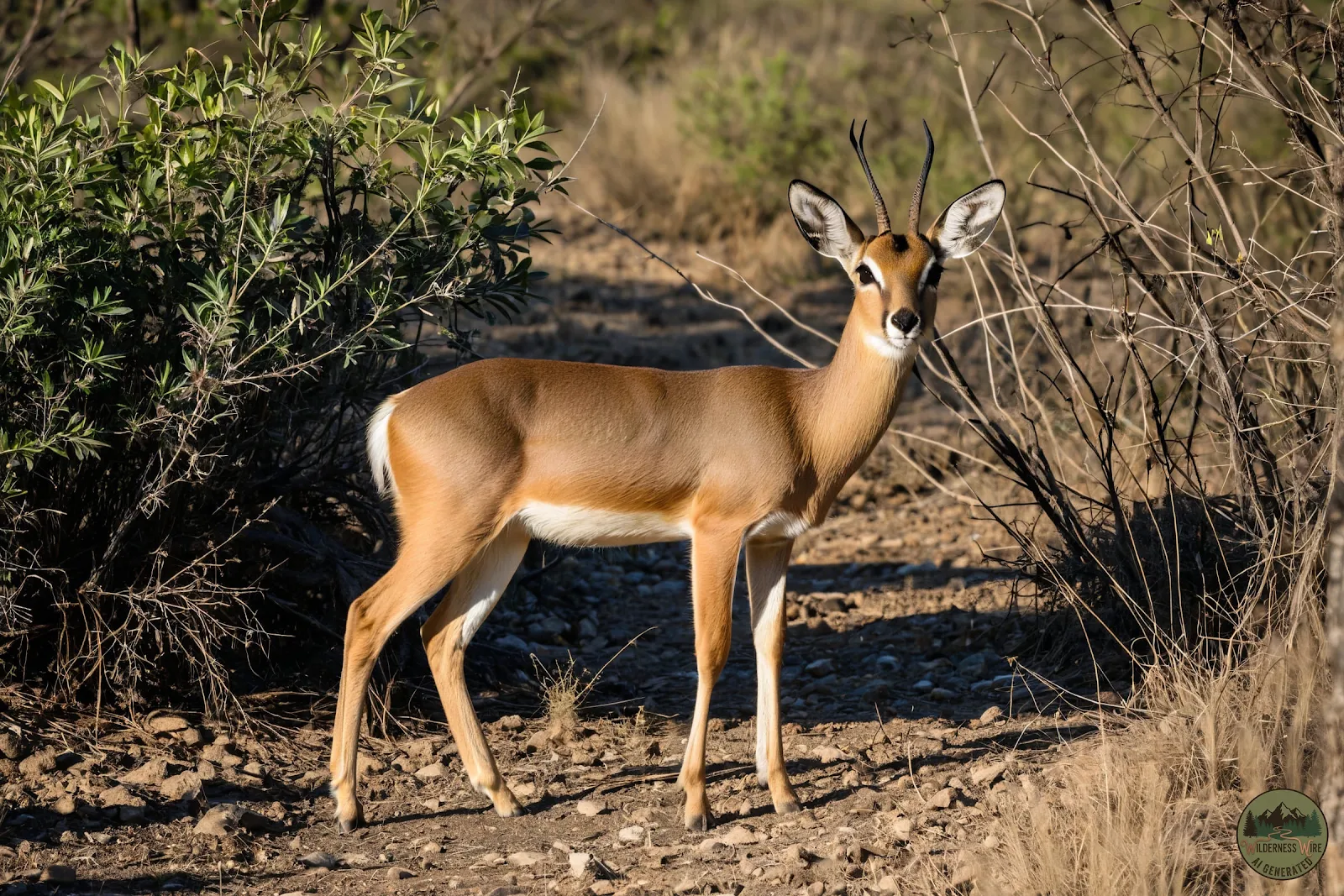
Taxonomically, the steenbok belongs to the tribe Neotragini, a group of dwarf antelopes that includes the klipspringer and the grysbok. It is easily distinguished from its relatives by its smooth, reddish-fawn coat and the absence of lateral hooves, a trait that sets it apart from many other small ungulates. The most striking physical feature of the steenbok is undoubtedly its oversized ears. These are not merely for acute hearing; they serve a critical thermoregulatory function. Highly vascularized, the ears allow the animal to dissipate excess body heat into the air, an essential adaptation for a creature that spends much of its day under the punishing African sun.
Unlike many of their savanna counterparts, steenboks are largely independent of standing water. They are capable of extracting nearly all their required moisture from their food sources, which include a variety of succulent plants, tubers, and roots. This moisture-conservative physiology allows them to inhabit territories far from permanent water holes, thereby reducing their exposure to the high concentrations of predators often found near watering points. When conditions become particularly dire during the dry season, steenboks have been observed using their hooves to dig for moisture-rich bulbs and roots, demonstrating a level of resourcefulness that is rare among antelopes.
The social structure of the steenbok is primarily solitary, although they are known to form monogamous pairs that share a territory. However, even within these pairs, the individuals typically spend most of their time alone, coming together only for mating or occasionally to rest. They are fiercely territorial, using a complex system of scent marking to define their boundaries. Large preorbital glands located just in front of the eyes produce a thick, dark secretion that the steenbok rubs onto twigs and grass stalks. Furthermore, they are unique among antelopes for their meticulous sanitary habits; they frequently dig small depressions in the earth to deposit dung and urine, which they then carefully cover with soil. This behavior is believed to be a tactic to minimize their olfactory footprint, making it harder for predators like leopards, caracals, and jackals to track them.
When threatened, the steenbok employs a "freeze-and-flush" strategy. Because of its small stature, it can easily conceal itself in tall grass or behind low-lying shrubs. It will remain perfectly still, pressed close to the ground, until a predator is almost upon it. Only at the very last moment will it spring away in a series of erratic, zigzagging bounds to confuse the pursuer. In some instances, steenboks have been known to seek refuge in the abandoned burrows of aardvarks or porcupines, an unusual behavior for an antelope but one that provides an effective shield against both aerial and terrestrial threats.
The reproductive cycle of the steenbok is not strictly seasonal, though a peak in births is often observed following the onset of the rains when forage is most nutritious. After a gestation period of approximately seven months, a single lamb is born. The mother hides the lamb in dense vegetation for the first several weeks of its life, returning only to nurse it. This "hiding" phase is a critical survival mechanism, as the young are highly vulnerable to a wide range of predators, including large eagles and pythons. The lamb matures quickly, reaching independence within six to nine months, allowing the population to remain stable even in areas with high predation rates.
Ecologically, the steenbok plays a vital role as a selective browser. By consuming specific parts of plants—such as the terminal buds and young leaves—they influence the growth patterns and diversity of the local flora. Their presence is often an indicator of a healthy, heterogeneous ecosystem. While they are currently classified as a species of Least Concern by the IUCN, their populations are increasingly pressured by habitat fragmentation and the expansion of agricultural land. As fences bisect the landscape, the steenbok’s ability to move freely and find diverse food sources is curtailed.
In the broader context of African wildlife, the steenbok is a reminder that ecological success is not always measured by size or strength. Through a combination of physiological specialization, secretive behavior, and dietary flexibility, this small antelope has carved out a niche that has remained stable for millennia. Observing a steenbok in the wild offers a glimpse into the intricate balance of the savanna, where even the smallest inhabitants possess the sophisticated tools necessary to survive one of the world's most challenging environments.