Posts

Showing posts with the label Wildlife Conservation

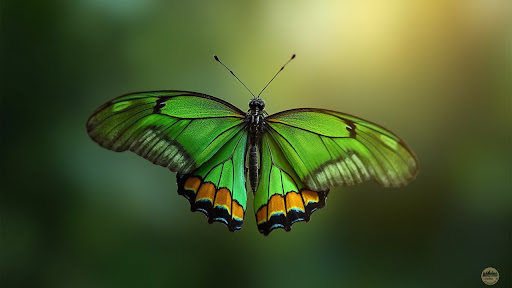
Massive Green Butterflies Glide Across Sunlight Shafts in Queensland Rainforests
Image
In the dense, humid cathedrals of Australia’s Wet Tropics, a flash of iridescent emerald signals the presence of a true titan among insects. The Cairns Birdwing ( Ornithoptera euphorion ) is not merely a butterfly; it is an ecological masterpiece of the Lepidoptera order and the largest butterfly species found on the Australian continent. Emerging from the canopy of the Daintree and extending down to the humid pockets of the Townsville region, this insect represents a bridge between the ancient Gondwanan past and the modern tropical ecosystems of Queensland. Recent field observations and population studies conducted over the last twelve months have shed new light on how these giants are navigating a rapidly changing climate and the persistent threat of invasive flora. The Biological Architecture of a Giant The Cairns Birdwing is a study in extreme sexual dimorphism, a biological phenomenon where males and females of the same species exhibit vastly different physical characteristics....

Orange Knotted Newts Traverse Dark Mud Across High Himalayan Wetlands

Image
In the mist-drenched corridors of the Eastern Himalayas, where the dense rhododendron forests meet the rising alpine meadows, a creature of seemingly prehistoric origin continues a lifecycle that has remained largely unchanged for millions of years. The Himalayan crocodile newt, known scientifically as Tylototriton verrucosus , is a striking representative of the family Salamandridae. Unlike many of its sleek, aquatic cousins in the Western Hemisphere, this amphibian possesses a rugged, armored appearance that earns it the 'crocodile' moniker. As researchers delve deeper into the high-altitude ecosystems of India, Nepal, and Bhutan, new data regarding the population dynamics and behavioral complexity of this species is shedding light on how specialized herpetofauna survive at the roof of the world. The Living Relic of the Monsoon Forests The Himalayan crocodile newt is the only member of its genus found in the Indian subcontinent, marking it as a biological treasure of the ...

Arctic Nomads Trace Ancient Flight Paths Across The Australian Coastline

Image
Each year, as the northern hemisphere tilts toward winter, a minuscule traveler begins a journey that defies the limitations of its size. The Red-necked Stint (Calidris ruficollis), a shorebird weighing little more than a standard kitchen battery, executes one of the most grueling migratory circuits on the planet. From the windswept tundra of Siberia to the sun-drenched mudflats of the Australian coastline, these birds navigate thousands of miles, linking disparate ecosystems through an unwavering commitment to seasonal habitability. The Mechanics of Global Endurance The migration of the Red-necked Stint is not merely an act of travel; it is a masterclass in physiological adaptation. These birds rely on high-octane fueling strategies, doubling their body mass through hyperphagia before embarking on trans-oceanic flights that can last for days without rest. During these perio...

Striped Numbats Forage Across Sun-Dappled Woodlands In Western Australia

Image
In the quiet, semi-arid woodlands of Western Australia, a biological relic of an ancient lineage navigates the forest floor with a frantic, specialized energy. The Numbat, or banded anteater, stands as one of the most evolutionarily distinct mammals on the planet. Unlike the vast majority of its marsupial cousins, the Numbat has abandoned the safety of the night, opting for a diurnal lifestyle that dictates every facet of its physiology and behavior. Recent population assessments and behavioral studies conducted over the last twelve months have shed new light on how this species manages its precarious metabolic balance in a landscape increasingly defined by climatic shifts and invasive pressures. A Diurnal Deviation in the Marsupial World The Numbat (Myrmecobius fasciatus) is the sole surviving member of the family Myrmecobiidae, a lineage that diverged from other marsupials tens of millions of years ago. Its most striking departure from the Australian norm is its activity cycle. Wh...

Wolverines Guard Subterranean Snow Vaults Against Warming Arctic Seasons

Image
In the unforgiving expanse of the circumpolar north, the wolverine ( Gulo gulo ) reigns as one of the most resilient and formidable apex predators. Operating in environments where temperatures routinely plunge below minus forty degrees, this solitary mustelid survives not merely through raw aggression, but through a suite of highly specialized physiological and behavioral adaptations. Among these, none is more critical than its sophisticated food-preservation strategy. Recent scientific investigations utilizing satellite telemetry, remote camera traps, and micro-climate data-loggers have shed new light on the wolverine’s reliance on deep, persistent snowpacks to construct subterranean “snow vaults”—frozen caches that act as natural refrigerators to preserve prey and scavenged carcasses. As the Arctic warms at more than three times the global rate, researchers are racing to understand how the degradation of these seasonal cryo-vaults threatens the ...

Ancient Rainforest Architects Of Australia’s Tropical Northern Frontiers

Image
The Apex Gardener of the Daintree Deep within the humid, emerald heart of the Daintree Rainforest in Queensland, Australia, dwells a creature that seems plucked directly from a prehistoric epoch. The Southern Cassowary (Casuarius casuarius johnsonii) is not merely a bird; it is a vital, non-negotiable biological pillar of the Australian rainforest. Standing nearly two meters tall with a striking, cobalt-blue neck and a prominent, horn-like casque, this flightless giant operates with an air of ancient authority, patrolling the dense understory where few other megafauna tread. The Role of the Cassowary as a Forest Disperser Recent ecological studies have highlighted the profound influence these birds hold over the botanical structure of their habitat. Unlike many smaller avian species that rely on insects or smal...

Black Howler Monkeys Roar From Massive Ceiba Trees Within Yucatan Forests

Image
The Auditory Sentinel of the Mesoamerican Canopy As the first light of dawn pierces the dense humidity of the Yucatan Peninsula, a sound erupts that defines the primeval character of the North American tropics. It is not a screech or a whistle, but a deep, resonant guttural boom that carries for miles through the saturated air. This is the call of the Guatemalan black howler monkey ( Alouatta pigra ), one of the largest and most enigmatic primates native to the southern reaches of the North American continent. While often associated with the deep jungles of Central America, this species maintains its most robust strongholds in the Mexican states of Chiapas, Tabasco, and the Yucatan, where recent studies are uncovering the complex social and biological trade-offs required to survive on a diet of leaves. The Bioa...

Singing Ross Seals Navigate Vast Ice Fields Across Southern Ocean Floors

Image
In the desolate, wind-swept expanses of the Antarctic pack ice, far from the bustling colonies of penguins and the well-documented haul-outs of Weddell seals, lives one of the most enigmatic predators on Earth. The Ross seal (Ommatophoca rossii) is a creature of shadow and sound, a biological outlier that has eluded comprehensive scientific study for over a century. However, a surge in bioacoustic research and satellite-tagging expeditions over the past year has finally begun to pierce the veil of secrecy surrounding this solitary pinniped. Researchers are discovering that the Ross seal is not merely a silent drifter of the ice; it is a master of deep-ocean navigation and a vocalist with an repertoire that rivals the most complex songs of the cetacean world. The Acoustic Architect of the Pack Ice For decades, the Ross seal was defined by its absence. Unlike the Crabeater or Leopard seals, which are frequently sighted b...

Macaques Huddle on Frozen Granite Ledges in Bitter Steppe Winds

Image
As winter settles over the high peaks of the Helan and Taihang Mountains, a biting wind sweeps across the adjacent dry grasslands of the Central Asian Steppe. Here, temperatures routinely plummet below minus twenty degrees Celsius, turning the rugged granite cliffs into an icy, inhospitable desert. In this unforgiving landscape, a highly unusual survivor clings to the frozen rock face, defying the biological expectations of its entire lineage. A single North China macaque ( Macaca mulatta tcheliensis ), protected by an exceptionally thick, woolly coat of golden-brown fur, crouches silently against a granite outcrop. Its pink face, framed by a frost-tipped ruff of hair, is focused on a small patch of evergreen scrub emerging from a crevice. This resilient primate represents the northernmost wild population of any non-human primate on the Asian mainland, surviving where few other mammals dare to venture. ...

Black Howler Monkeys Climb Isolated Canopy Trees in Mexican Pasturelands

Image
In the humid lowlands of Tabasco, Mexico, the early morning mist rises over a checkerboard of emerald pastures and isolated patches of tropical forest. Suddenly, a low, resonant drone reverberates through the humid air—not the sound of agricultural machinery, but the primeval roar of the Yucatan black howler monkey ( Alouatta pigra ). This booming vocalization, amplified by an enlarged hyoid bone in the male's throat, once rolled unimpeded across vast, unbroken tracts of Mesoamerican rainforest. Today, it echoes across a highly fragmented landscape dominated by cattle ranches and agricultural fields. For decades, biologists assumed that these strictly arboreal primates were marooned in their shrinking forest islands, too vulnerable to cross the open pasturelands that separate them. However, a series of groundbreaking behavioral studies and conservation monitoring initiatives over the past year have revealed a surprising story of behavioral plasticity. Armed with thermal-...

Ancient Saiga Antelopes Reclaim Vast Grasslands Across Central Asian Steppes

Image
The Resurgence of the Steppe Ghost Across the vast, windswept plains of Kazakhstan, a remarkable biological recovery is unfolding. The Saiga antelope ( Saiga tatarica ), an animal whose lineage stretches back to the Pleistocene era, was once pushed to the very brink of extinction by poaching and disease. Today, however, the species is experiencing a dramatic population rebound that has stunned conservationists and biologists alike. This ancient ungulate, easily recognized by its bizarre, trunk-like nose, has seen its numbers surge from fewer than 50,000 individuals two decades ago to over 1.9 million today. This recovery represents one of the most significant conservation successes of the 21st century, proving that targeted international protections and rigorous anti-poaching efforts can reverse even the most dire population declines. Anatomy of a Survival Specialist The Saiga is a masterclass in evolutionary adaptation. Its mo...

Arctic Narwhals Navigate Complex Sea Ice Through Echolocation Precision

Image
The Phantom of the High Arctic Deep within the fractured, shifting labyrinths of the Arctic sea ice, the narwhal ( Monodon monoceros ) remains one of the ocean's most enigmatic residents. Often referred to as the 'unicorn of the sea,' this medium-sized toothed whale has long been defined by its iconic spiral tusk. However, recent acoustic monitoring studies conducted in the remote fjords of East Greenland have unveiled a far more sophisticated reality: the narwhal is a master of acoustic navigation in one of the planet's most inhospitable environments. Researchers utilizing advanced hydrophone arrays have discovered that narwhals do not merely use sound to locate prey; they employ a highly refined, multi-stage echolocation system to map the underside of moving ice floes. This behavioral adaptation...

Migratory Birds Battle Pacific Storms Along Vast Ocean Corridors

Image
As autumn deepens in the subarctic mudflats of Alaska’s Yukon-Kuskokwim Delta, a quiet physiological revolution takes place. A medium-sized wading bird, the bar-tailed godwit ( Limosa lapponica baueri ), prepares for one of the most grueling athletic feats in the natural world. Within weeks, these birds nearly double their body weight, packing on layers of high-density fat that will serve as fuel for an uninterrupted journey across the vast, featureless expanse of the Pacific Ocean. This is not a journey taken in easy stages. The godwits do not glide, nor do they soar on thermal updrafts like eagles; instead, they flap their wings continuously for up to eleven days and nights without a single moment of rest, sleep, or hydration. Recent tracking data from the past year has illuminated the extraordinary sensory and physiological mechanisms that allow these avian mariners to navigate this perilous, trans-oceanic highway. ...

Elephants Rumble Across Dusty Plains Calling Companions By Name

Image
Deep within the sun-bleached expanse of Kenya’s Samburu National Reserve, a matriarch elephant stands motionless beneath the skeletal branches of an acacia tree. She flares her massive ears, inhales deeply, and emits a low, resonant rumble that vibrates through the dry earth. To the human ear, it is a barely audible hum, but miles away across the acacia scrub, another female elephant stops grazing, lifts her head, and trumpets a direct response. This is not a generic alarm or a simple call of distress; it is a highly specific, individualized address. Recent scientific breakthroughs have confirmed that these majestic creatures are doing something once thought unique to humans: they are calling each other by individual names. For decades, researchers have marveled at the profound social complexity of the African b...

 This website utilizes artificial intelligence (AI) systems to generate, draft, and edit content. All text, images, and media on this site should be considered AI-generated or AI-assisted unless explicitly stated otherwise.