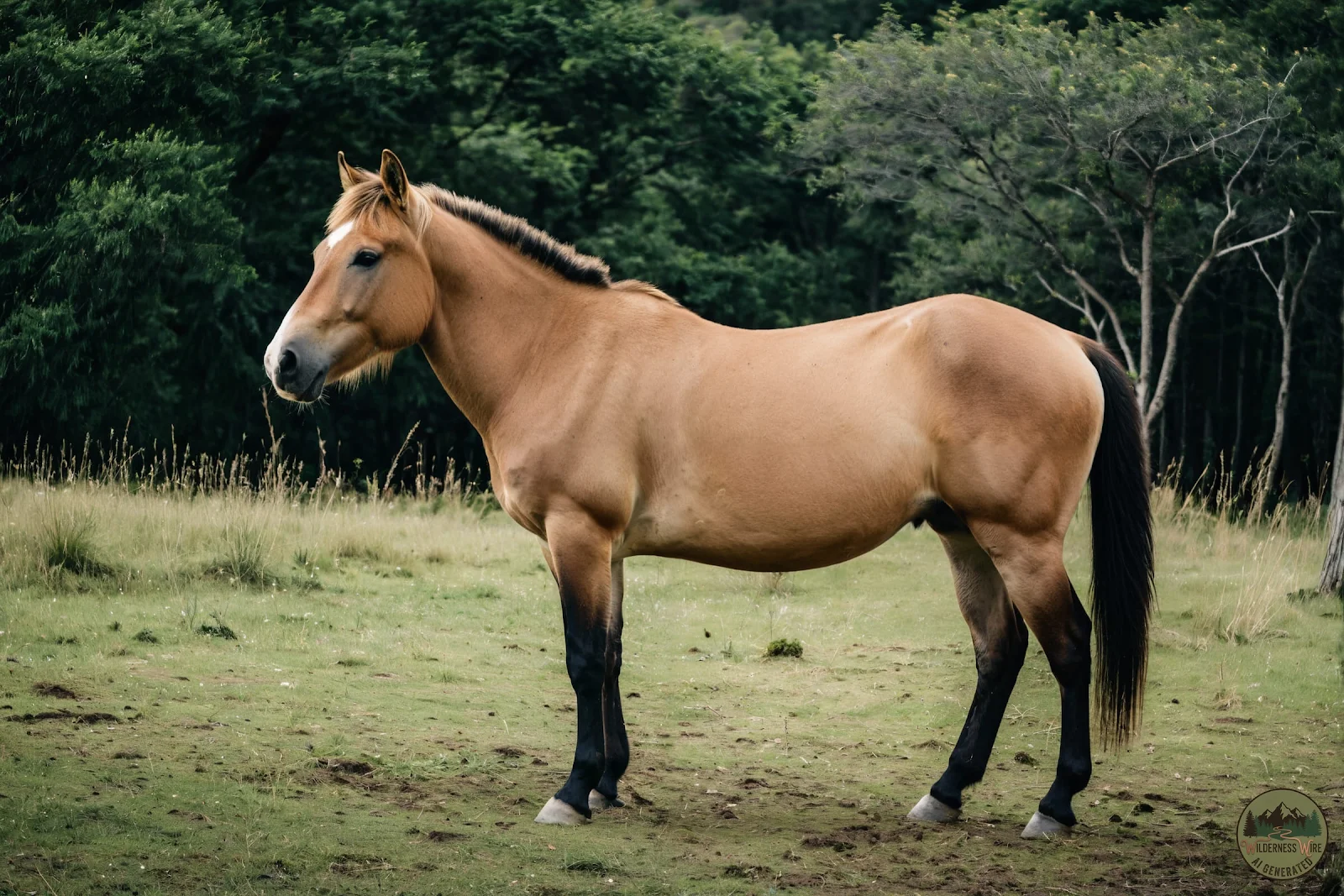
The animal depicted here represents one of the most remarkable conservation success stories of our time. Known as the last truly wild horse species, its journey from the brink of extinction to a cautious resurgence in its native habitats is a powerful testament to dedicated global efforts. This stocky, hardy equid once roamed the vast steppes of Central Asia, a symbol of untamed wilderness.
A Journey Through Time
The history of this horse is intricately linked to human expansion and exploration. European scientists first formally described it in the late 19th century, named after the Russian explorer Nikolai Przewalski, who encountered herds in what is now Mongolia. Unlike domesticated horses, which have been selectively bred by humans for millennia, these horses are considered the genuine descendants of ancient wild horse populations, never having been successfully domesticated. Their genetic makeup stands distinct, marking them as a unique evolutionary lineage.
From the Brink of Disappearance
By the mid-20th century, the future of these magnificent animals looked bleak. Overhunting, habitat loss due to agricultural expansion, and competition with livestock for grazing land pushed them to the edge. The last individuals sighted in their natural Mongolian habitat disappeared in the late 1960s, leading to their classification as extinct in the wild. However, a small number survived in zoos around the world, remnants of expeditions decades earlier. These captive populations became the sole hope for the species' survival.
A Resurgence in the Wild
The arduous task of bringing this horse back from extinction required immense international cooperation. Breeding programs in zoos meticulously managed genetic diversity to ensure the health and viability of the population. Once numbers stabilized, ambitious reintroduction programs began in the 1990s, focusing primarily on Mongolia, their historical homeland. Animals carefully selected from captive herds were transported back to protected areas, undergoing a period of acclimatization before being released into the wild.
Distinctive Traits and Behavior
These horses possess a distinctive appearance that sets them apart. They typically have a dun coat, a pale belly, and dark legs, often displaying a dorsal stripe along their back and faint zebra-like stripes on their legs. Their manes are short, erect, and bristly, lacking a forelock that is common in domesticated horses. Their robust build, large heads, and short necks are adaptations for life in harsh, arid grasslands. They live in social groups called harems, typically consisting of a dominant stallion, several mares, and their foals. These groups graze on grasses and other vegetation, constantly moving within their territories.
The reintroduction efforts have yielded promising results, with several wild populations now thriving in designated reserves. The continued success of this conservation story relies on ongoing monitoring, habitat protection, and public awareness, ensuring that these iconic wild horses can truly reclaim their ancestral lands for generations to come.