Posts

Showing posts with the label Australia

Tasmanian Devils Forge Critical Scavenging Networks Across Rugged Coastal Scrublands

Image
In the rugged, windswept wilderness of Tasmania, a solitary and often misunderstood marsupial maintains a silent vigil over the forest floor. The Tasmanian Devil (Sarcophilus harrisii) serves as the island’s primary terrestrial scavenger, playing an indispensable role in maintaining ecosystem health. Recent ecological monitoring has revealed that these carnivores act as biological vacuum cleaners, their complex foraging behaviors preventing the buildup of carrion and curbing the spread of pathogens throughout the dense Eucalyptus understory. The Essential Role of a Specialized Scavenger The biology of the Tasmanian Devil is a study in raw efficiency. With a jaw pressure disproportionately powerful for its size, the animal is capable of consuming an entire carcass, including bones, fur, and teeth. This rapid nutrient recycling ensures that pathogens do not linger in the environment. Observation studies conducted throughout the past year suggest that these animals have developed sophis...
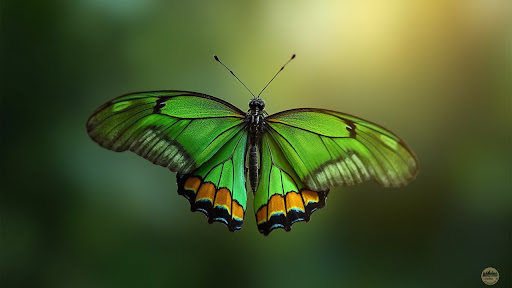
Massive Green Butterflies Glide Across Sunlight Shafts in Queensland Rainforests

Image
In the dense, humid cathedrals of Australia’s Wet Tropics, a flash of iridescent emerald signals the presence of a true titan among insects. The Cairns Birdwing ( Ornithoptera euphorion ) is not merely a butterfly; it is an ecological masterpiece of the Lepidoptera order and the largest butterfly species found on the Australian continent. Emerging from the canopy of the Daintree and extending down to the humid pockets of the Townsville region, this insect represents a bridge between the ancient Gondwanan past and the modern tropical ecosystems of Queensland. Recent field observations and population studies conducted over the last twelve months have shed new light on how these giants are navigating a rapidly changing climate and the persistent threat of invasive flora. The Biological Architecture of a Giant The Cairns Birdwing is a study in extreme sexual dimorphism, a biological phenomenon where males and females of the same species exhibit vastly different physical characteristics....

Arctic Nomads Trace Ancient Flight Paths Across The Australian Coastline

Image
Each year, as the northern hemisphere tilts toward winter, a minuscule traveler begins a journey that defies the limitations of its size. The Red-necked Stint (Calidris ruficollis), a shorebird weighing little more than a standard kitchen battery, executes one of the most grueling migratory circuits on the planet. From the windswept tundra of Siberia to the sun-drenched mudflats of the Australian coastline, these birds navigate thousands of miles, linking disparate ecosystems through an unwavering commitment to seasonal habitability. The Mechanics of Global Endurance The migration of the Red-necked Stint is not merely an act of travel; it is a masterclass in physiological adaptation. These birds rely on high-octane fueling strategies, doubling their body mass through hyperphagia before embarking on trans-oceanic flights that can last for days without rest. During these perio...

Ancient Rainforest Architects Of Australia’s Tropical Northern Frontiers

Image
The Apex Gardener of the Daintree Deep within the humid, emerald heart of the Daintree Rainforest in Queensland, Australia, dwells a creature that seems plucked directly from a prehistoric epoch. The Southern Cassowary (Casuarius casuarius johnsonii) is not merely a bird; it is a vital, non-negotiable biological pillar of the Australian rainforest. Standing nearly two meters tall with a striking, cobalt-blue neck and a prominent, horn-like casque, this flightless giant operates with an air of ancient authority, patrolling the dense understory where few other megafauna tread. The Role of the Cassowary as a Forest Disperser Recent ecological studies have highlighted the profound influence these birds hold over the botanical structure of their habitat. Unlike many smaller avian species that rely on insects or smal...

Spiked Dragons Cling to Mossy Trunks in Queensland Rainforests

Image
In the ancient, rain-saturated corridors of Australia’s Wet Tropics, a living relic of Gondwana carries out one of the most remarkably quiet lives in the animal kingdom. The Boyd's forest dragon ( Lophosaurus boydii ) is an evolutionary masterpiece of crypsis and metabolic restraint. Endemic to the dense tropical rainforests of northern Queensland, this spectacular agamid lizard has long fascinated herpetologists with its prehistoric silhouette, dominated by a prominent vertebral crest and exaggerated cheek scales. However, recent behavioral studies and micro-climate tracking over the past year have illuminated a far more profound secret: the Boyd’s forest dragon is a biological nonconformist, challenging traditional assumptions about reptile thermal ecology in an increasingly warming world. The Physiology of Perfect Silence To encounter a Boyd's...

Giant Black Birds Drum Against Ironbark Trunks in Cape York

Image
Deep within the humid, vine-choked forests of Queensland’s Cape York Peninsula, a sound resonates that defies standard biological expectations. It is not a call, a whistle, or a song, but a deliberate, percussive beat. This is the rhythmic signature of the Palm Cockatoo (Probosciger aterrimus), a bird that has recently become the focus of intense behavioral study due to its status as the only non-human animal known to manufacture and use tools specifically for rhythmic performance. While many animals use tools to extract food or build shelters, the Palm Cockatoo uses them to create art and signal social intent, a discovery that has fundamentally shifted our understanding of avian intelligence and cultural evolution. The Mechanics of the Avian Percussionist The Palm Cockatoo is a biological marvel, standing nearly 60 centimeters tall w...

The Water-Harvesting Scales and Defensive Anatomy of the Thorny Devil

Image
In the sun-scorched expanses of the Australian interior, where the red sand meets an uncompromising sky, lives one of the most anatomically striking creatures on Earth. The thorny devil ( Moloch horridus ), also known as the mountain devil or thorny lizard, is a small, slow-moving reptile that appears to have stepped out of a prehistoric epoch. Covered in an intricate armor of sharp, conical spikes, this sole representative of the genus Moloch is a masterclass in evolutionary adaptation, perfectly engineered to thrive in the hyper-arid deserts of Western and Central Australia. Despite its formidable, dragon-like appearance, the thorny devil is entirely harmless to humans and larger animals. It is a slow, deliberate creature whose survival depends not on venom or physical aggression, but on a suite of highly specialized physiological and behavioral traits. From its unique method of drinking through its feet to its bizarre,...

Intricate Vibrational Dances On Australian Scrub

Image
In the sun-drenched, low-lying scrublands of Australia, a miniature drama of evolutionary precision unfolds beneath the blades of native grasses. Here, the genus Maratus —the peacock spiders—engages in a courtship ritual so complex and visually arresting that it challenges our fundamental understanding of sexual selection and sensory ecology. While many arachnids rely on chemical signals or simple tactile cues, these tiny hunters have evolved a suite of morphological and behavioral adaptations that transform their mating displays into high-fidelity, multi-modal performances. The Architecture of Iridescence The defining feature of the peacock spider is not merely its diminutive size, but the structural coloration of the male’s opisthosomal fan. Unlike pigment-based colors found in many insects, the vibrant reds, blues, and iridescent greens of Maratus volans are the result of microscopic, nanostructured scales. These scales are engineered to reflect light ...

The Bone-Crushing Jaw Mechanics of the Tasmanian Devil

Image
As twilight deepens over the dense sclerophyll forests of Tasmania, a rasping, screeching chorus rises from the dark undergrowth. This acoustic signature, once terrifying to early European settlers, belongs to the world’s largest surviving carnivorous marsupial: the Tasmanian devil ( Sarcophilus harrisii ). Far from being a mindless engine of destruction, this highly specialized mammal plays a vital role in its ecosystem as a master scavenger. Operating as nature's primary cleanup crew, the devil possesses a suite of evolutionary adaptations designed to locate, process, and completely recycle animal carrion. Through its highly developed sensory systems and unparalleled jaw mechanics, the Tasmanian devil ensures that energy locked within organic waste is rapidly reintegrated into the food web. Its ecological contributions are profound, preventing the spread of deadly pathogens and regulating competitor populations. To understand the Tasmanian devil is to appreciate the co...

The Biological Resilience of the Deep Sea Blobfish

Image
In the crushing, high-pressure environment of the abyssal plain, traditional vertebrate anatomy—characterized by rigid skeletons and gas-filled swim bladders—becomes a liability. The blobfish, Psychrolutes marcidus , represents a masterclass in evolutionary compromise. Lacking the dense bone structure of its shallow-water cousins, its body is composed primarily of a gelatinous mass with a density slightly less than that of water. This unique composition allows the blobfish to maintain neutral buoyancy without the energetic expense of active swimming. Its skin is loose and flaccid, lacking the structural integrity required to hold a shape under atmospheric pressure, which leads to its iconic, sagging appearance when removed from the deep sea. In its natural habitat, however, the water pressure provides the necessary support to maintain its streamlined, albeit soft, profile. ...

Jumping Spiders Navigate Complex Mazes Using Advanced Cognitive Mapping

Image
The Cognitive Architects of the Undergrowth In the dense, shadowed leaf litter of the Australian rainforests, a diminutive predator defies the traditional boundaries of arachnid intelligence. Portia fimbriata , a species of jumping spider, does not merely rely on the reflexive strikes typical of its kin. Instead, it engages in what researchers describe as a high-level form of cognitive mapping, allowing it to navigate complex, multi-path environments to reach prey that is often hidden from view. Unlike web-building spiders that wait for vibrations, Portia is a tactical hunter. Recent behavioral observations have confirmed that these spiders can plan elaborate detours. When faced with an obstacle that obscures their target, they will physically move away from the prey, traverse a circuitous route, and emerge at a...

Spotted Green Birds Nest in Sharp Spinifex Grass Clumps

Image
Deep within the hyper-arid interior of the Australian outback, where daytime temperatures bake the earth and nightfall brings a profound, freezing silence, lives one of the most enigmatic avian species on Earth. The night parrot ( Pezoporus occidentalis ) was long feared extinct, a phantom of the desert that eluded scientists for over a century. Armed with state-of-the-art acoustic monitoring arrays and machine-learning algorithms, ornithologists have recently pierced the veil of secrecy surrounding this cryptic, ground-dwelling species, revealing how it survives in one of the harshest environments on the planet. The Acoustic Revolution in the Outback Studying the night parrot presents an almost insurmountable challenge for traditional field ornithologists. These small, yellowish-green birds are strictly noctu...

Horned Blue Cassowaries Forage On Damp Tropical Rainforest Floors

Image
Deep within the ancient, humid understory of Queensland’s Wet Tropics, a primeval shadow moves silently through the ferns. This is the domain of the Southern Cassowary ( Casuarius casuarius ), a massive, flightless avian giant that looks like a living relic of the Cretaceous period. Standing up to two meters tall and clad in coarse, hair-like black plumage, this formidable bird plays a foundational role in maintaining the biodiversity of Australia’s tropical rainforests. For decades, however, some of its most striking physical attributes—namely its towering head casque and its deep, bone-rattling vocalizations—have remained shrouded in evolutionary mystery. Recent breakthroughs in bioacoustics, thermal imaging, and non-invasive genetic tracking are finally shedding light on the complex biology of this elusive species. Researchers working in the dense coastal rainforests of Cape Tribulation have deployed advanced sensor arrays to decode the secret lives of these solitary bird...

 This website utilizes artificial intelligence (AI) systems to generate, draft, and edit content. All text, images, and media on this site should be considered AI-generated or AI-assisted unless explicitly stated otherwise.