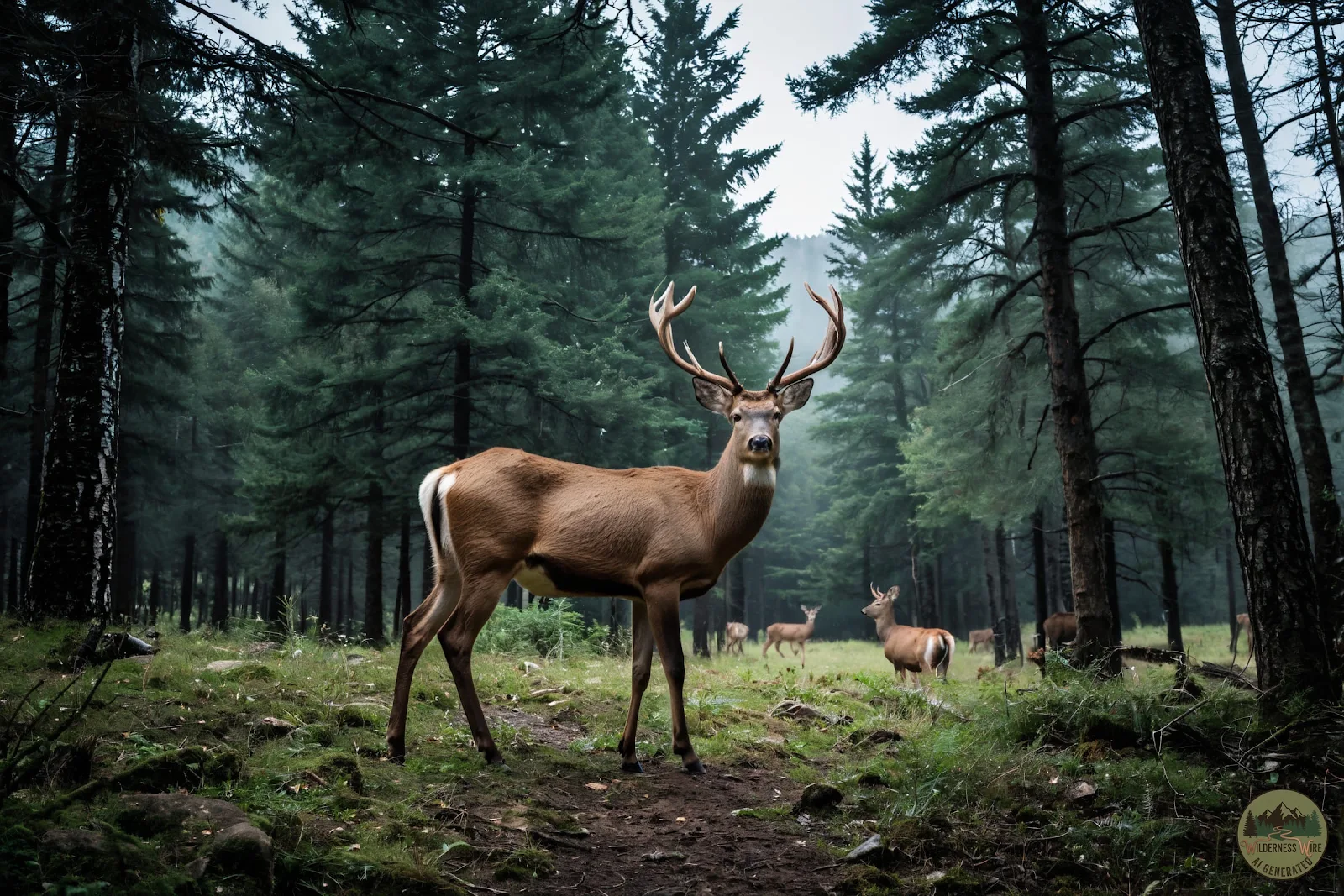
The graceful inhabitant of vast grasslands and sparse woodlands captured in the image is a Rusa deer, scientifically classified as *Rusa timorensis*. Also known as the Sunda sambar, Javan Rusa, or Timor deer, this medium-sized cervid is a testament to nature's adaptability and resilience, thriving across a diverse range of habitats, both native and introduced. Originating from the Indonesian archipelago, its story is one of natural dispersal and, more significantly, human-aided translocation across continents, making it a familiar sight in ecosystems far from its evolutionary cradle.
Native to islands such as Java, Bali, and Timor, the Rusa deer is particularly well-suited to the tropical and subtropical climes of Southeast Asia. Its preferred natural habitats include open dry savannahs, monsoon forests, grasslands adjacent to forests, and even shrublands. These environments provide a mosaic of cover for shelter and open areas for foraging, essential for its survival. Over centuries, various human activities, including deliberate introduction for hunting and population establishment, have dramatically expanded its geographical footprint. Today, robust populations are found in Australia, New Zealand, Mauritius, Reunion, New Caledonia, Papua New Guinea, and Fiji, among others. This widespread distribution highlights its remarkable ability to acclimate to new ecological niches, often outcompeting native fauna in certain regions due to its robust nature and opportunistic feeding habits.
Physically, the Rusa deer presents a striking figure. Adults typically stand between 80 to 110 centimeters (31-43 inches) at the shoulder and can weigh anywhere from 60 to 150 kilograms (130-330 pounds), with males generally larger and more robust than females. Their coat color ranges from a uniform greyish-brown to a reddish-brown, often appearing coarser and less sleek than some other deer species. A distinguishing feature is the relatively shaggy, coarse hair, particularly noticeable in males around the neck and throat, forming a modest mane. The underside of their body is typically lighter, varying from off-white to pale cream. Fawns, unlike many deer species, are born without spots, bearing a uniform light brown coat from birth.
The antlers of the male Rusa deer are a magnificent spectacle, growing annually and usually possessing three tines per antler: a brow tine, a bez tine, and a terminal fork. While not as massive or complex as those of a European red deer, they are substantial and can reach lengths of up to 75 centimeters (30 inches), providing both a formidable tool for dominance displays during the rut and a defense mechanism against predators. The antler cycle is not strictly seasonal in tropical environments, often influenced more by nutritional status and individual physiological rhythms, though a general peak in shedding and regrowth can be observed. The impressive size and structure of these antlers serve as a clear indicator of the male's health and genetic fitness, playing a crucial role in mate selection.
As herbivores, Rusa deer are primarily grazers and browsers, demonstrating a flexible diet that allows them to thrive in diverse vegetative landscapes. They consume a wide array of plant material, including various grasses, leaves, shoots, herbs, and fallen fruits. Their foraging behavior is adaptable; they are known to exploit agricultural crops when available, which can lead to conflicts with human populations in areas where their range overlaps with farming activities. This dietary versatility is a key factor in their success in colonizing new environments, as it allows them to make the most of available resources, even in degraded or altered landscapes. Their feeding habits also contribute to seed dispersal and nutrient cycling within their ecosystems.
Behaviorally, Rusa deer are generally crepuscular, meaning they are most active during dawn and dusk. However, they can be observed foraging at night and resting during the hotter parts of the day, particularly in areas with less predation pressure or human disturbance. They are social animals, often forming small, fluid groups, though solitary individuals, especially older males, are not uncommon. During the breeding season, known as the rut, males become highly territorial and engage in elaborate dominance displays, including vocalizations and sparring with their antlers, to secure mating rights with females. These social interactions are vital for maintaining herd structure and genetic diversity.
Reproduction in Rusa deer is characterized by a gestation period of approximately eight months, typically resulting in the birth of a single fawn, though twins are rare but possible. The timing of birth can be influenced by rainfall patterns and food availability, ensuring the fawn is born when resources are most abundant, increasing its chances of survival. Fawns are precocial, meaning they are relatively well-developed at birth, capable of standing and moving shortly after. They are hidden by their mothers in dense vegetation for the first few weeks, gradually accompanying the mother as they grow stronger and more independent. Sexual maturity is reached around 18-24 months of age, and their lifespan in the wild can range from 10 to 15 years, potentially longer in protected environments.
The Rusa deer's vocalizations are distinct and serve various communicative purposes. They emit a loud, sharp bark when alarmed or sensing danger, a warning signal that reverberates through the forest or grassland, alerting other deer and potentially other species to a perceived threat. During the rut, males produce guttural roars and grunts as part of their dominance displays and to attract females. These sounds are integral to their social cohesion and survival in the wild, enabling communication over distances and conveying crucial information about their environment.
While a significant component of their native ecosystems, the introduction of Rusa deer to non-native environments has presented a complex ecological challenge. In many regions, particularly in Australia and New Zealand, they have flourished to the extent of becoming an invasive species. Their robust populations can exert considerable grazing pressure on native vegetation, leading to habitat degradation, reduced biodiversity, and altered plant community structures. They compete with native herbivores for food and can disrupt delicate ecological balances. This has necessitated extensive management strategies, including controlled hunting and eradication programs, to mitigate their impact on vulnerable native flora and fauna. The Rusa deer serves as a poignant example of how a species' success in one environment can translate into an ecological burden in another, highlighting the intricate web of interactions within ecosystems and the far-reaching consequences of human-mediated species introductions.
Despite challenges in introduced ranges, in their native habitat, the Rusa deer continues to play its natural role, contributing to the biodiversity and ecological processes of the islands they call home. They are a valued game species in many regions, providing sustenance and economic opportunities, though sustainable management is critical to prevent overhunting. The adaptability, resilience, and striking appearance of the Rusa deer ensure its continued presence across the globe, a testament to its evolutionary success and its enduring interaction with both natural and human-altered landscapes. Their story is a compelling narrative of survival, dispersal, and the complex relationship between species and their environment.