 Sika Deer_00002_
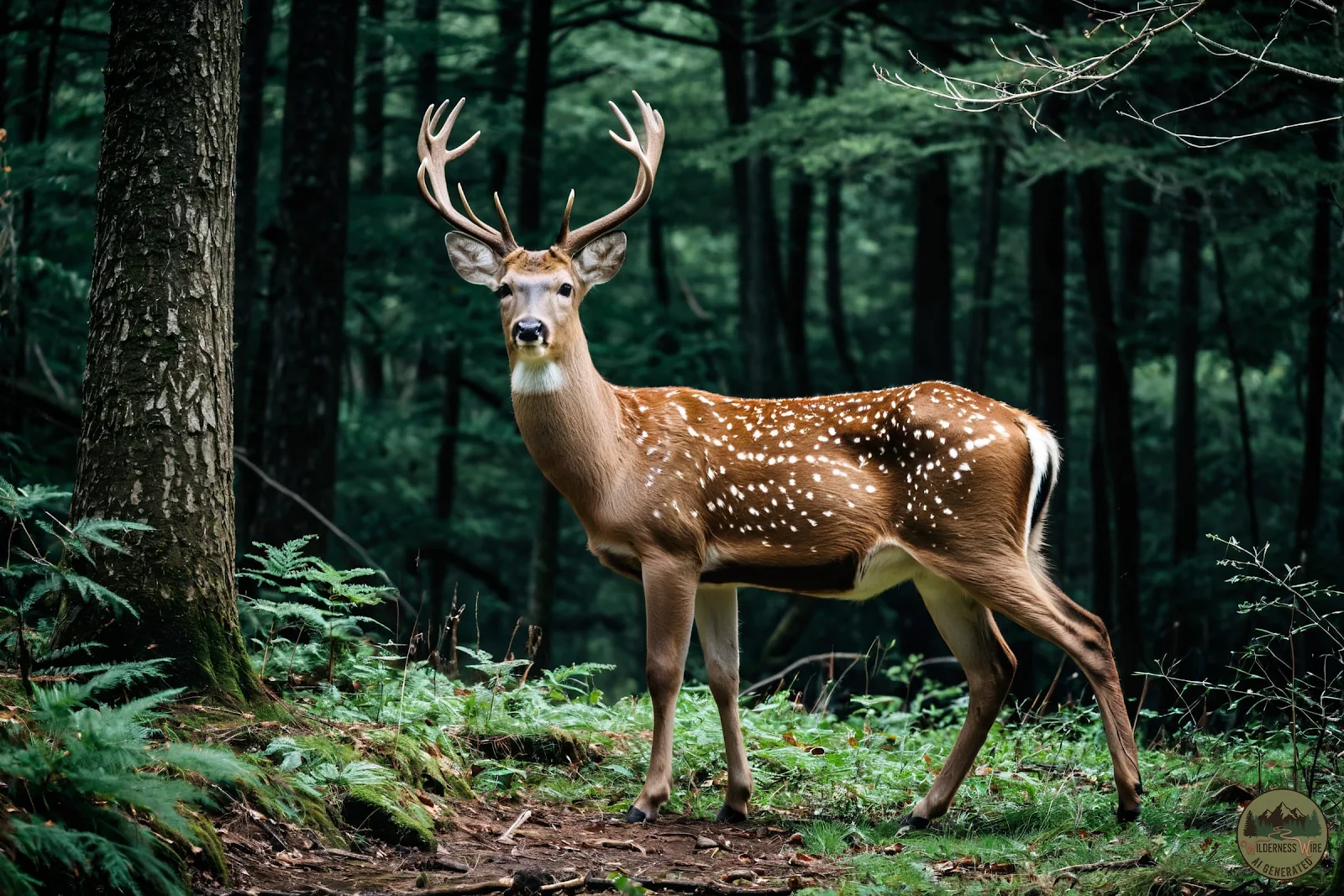
The elegant creature captured in this image is a Sika deer, an animal renowned for its distinctive appearance and fascinating ecological story. Originating from East Asia, these medium-sized deer have successfully adapted to a diverse array of environments, captivating naturalists and posing complex management challenges in equal measure across their native and introduced ranges. Their striking features, from their often-spotted coats to the stags' impressive antlers, make them a truly charismatic species within the deer family.
Sika deer, scientifically classified as *Cervus nippon*, exhibit considerable variation across their numerous subspecies, reflecting their wide geographical distribution. Typically, they possess a reddish-brown coat during the summer months, adorned with prominent white spots along their flanks, reminiscent of fawns of many other deer species. This spotted pattern often fades or disappears entirely in their darker, shaggier winter coats, which range from dark brown to black, providing camouflage against the backdrop of leafless forests or snowy landscapes. A defining characteristic is the large, white rump patch, clearly outlined by darker fur, which flares out when the animal is alarmed, serving as a warning signal to other deer. Adult males, known as stags, grow antlers that typically have three to four tines, or points, which are shed annually, usually in late spring, and regrow over the summer. Their size varies significantly, with some subspecies being notably smaller, reaching heights of around 70-90 cm at the shoulder, while others can exceed 110 cm.
Native to a vast area spanning from the Russian Far East, through Northeast China, Korea, Japan, Taiwan, and parts of Vietnam, Sika deer have evolved to thrive in various habitats. They prefer dense woodland and forest environments, particularly those with a mosaic of broadleaf and coniferous trees, interspersed with open clearings and meadows. Their diet is highly adaptable, primarily consisting of grasses, sedges, leaves, shoots, and fungi, making them both grazers and browsers. This dietary flexibility, coupled with their ability to withstand harsh winters and hot summers, has contributed to their resilience and success in colonizing new territories.
One of the most remarkable aspects of Sika deer behavior is their complex vocalizations, particularly during the autumn rut. Unlike the roaring of red deer or the grunting of fallow deer, Sika stags produce a series of eerie, high-pitched whistles, often described as a "scream" or "squeal," to challenge rivals and attract hinds. This unique vocal display, along with elaborate scent-marking and territorial scrapes, forms a crucial part of their breeding strategy. Hinds give birth to a single fawn, occasionally twins, in late spring or early summer after a gestation period of approximately seven to eight months. The fawns are born with prominent white spots, providing excellent camouflage in the dappled light of the forest undergrowth.
Social structures among Sika deer are somewhat fluid, often forming small, segregated groups outside the breeding season. Hinds typically live in matriarchal herds with their offspring, while stags tend to form bachelor groups or live solitarily. During the rut, these groupings dissolve as stags become highly territorial, vying for access to female herds. Their vigilance and acute senses of smell and hearing are vital for detecting predators, which historically included wolves, tigers, and bears in their native ranges. In many of their introduced habitats, humans remain their primary predator, whether through regulated hunting or poaching.
The global story of the Sika deer is one of both conservation concern and ecological impact. In their native lands, several subspecies face significant threats due to habitat loss, fragmentation, and unsustainable hunting practices, leading to vulnerable or endangered classifications for populations like the North China Sika deer and the Tsushima Sika deer. Conservation efforts are underway in these regions to protect remaining populations and restore their habitats. Conversely, in regions where they have been introduced, such as parts of the United Kingdom, Ireland, continental Europe, New Zealand, Australia, and certain areas of the United States, Sika deer have often become an invasive species. Their adaptability and prolific breeding rates can lead to overgrazing, significantly altering forest ecosystems by suppressing native plant regeneration and outcompeting indigenous deer species. In some areas, particularly in the UK, they also pose a threat through hybridization with native red deer, which can dilute the genetic purity of the latter.
Despite the challenges of managing their populations, the Sika deer remains a truly captivating species. Their striking appearance, complex social behaviors, and remarkable adaptability offer a continuous source of study for ecologists and wildlife enthusiasts alike. From the ancient forests of Japan, where they are revered and protected in places like Nara Park, to the managed woodlands of Europe, their presence enriches biodiversity and reminds us of the intricate balance within natural ecosystems. The Sika deer, with its distinctive whistle echoing through the autumn woods, stands as a testament to the enduring power of nature and the delicate responsibilities of stewardship.