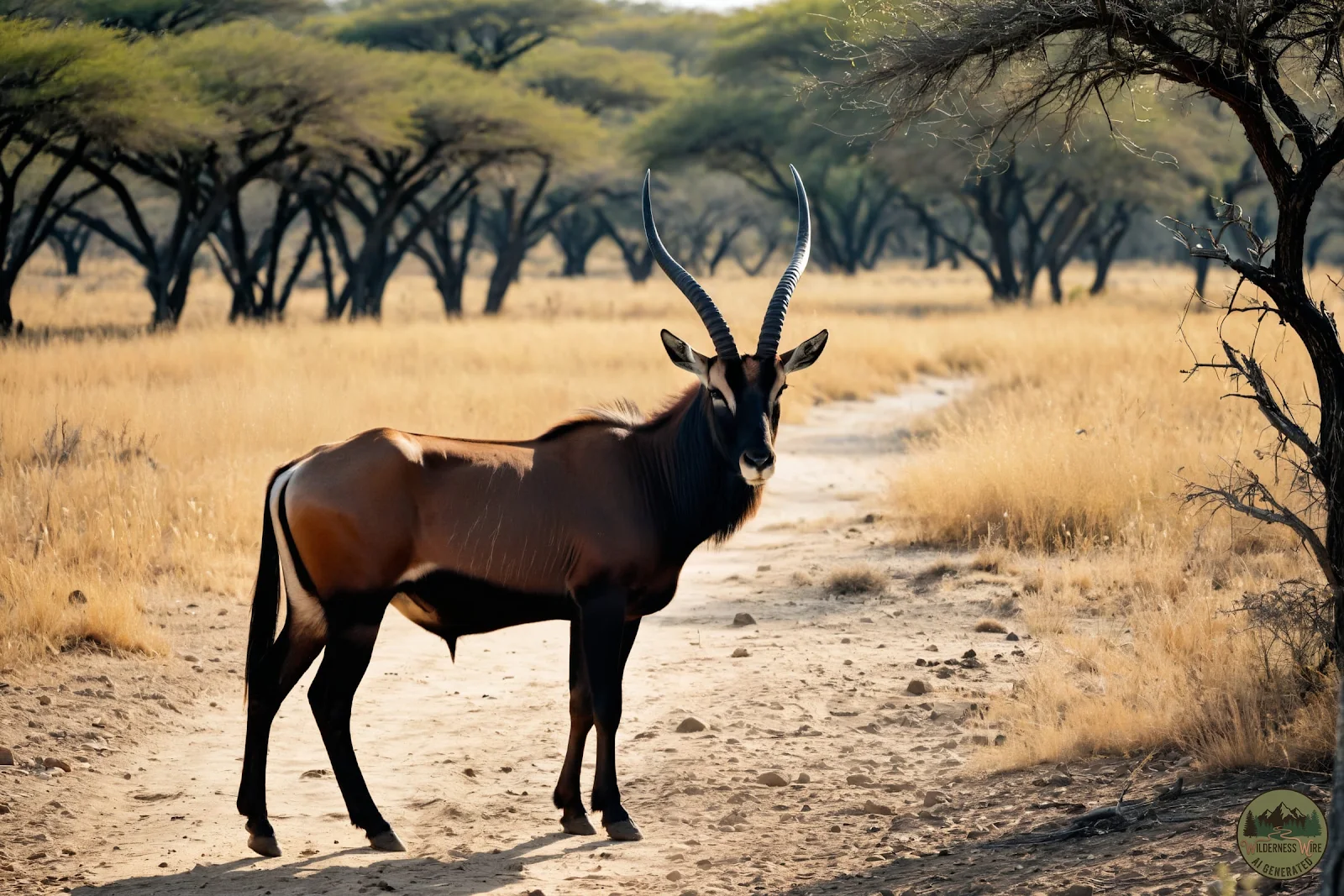
Amidst the sweeping savannas and dense woodlands of sub-Saharan Africa roams a creature of remarkable elegance and power: the Sable Antelope. Renowned for its magnificent, scimitar-shaped horns and striking coloration, this majestic bovine stands as one of Africa's most iconic and visually arresting antelopes. Its regal posture and watchful demeanor command respect, embodying the wild beauty of its native landscapes. Observing a Sable Antelope in its natural habitat is to witness a living testament to evolutionary artistry, where form and function merge into a creature perfectly adapted to its environment.
The Sable Antelope ( *Hippotragus niger*) is immediately recognizable by its impressive, ringed horns which arc backward in a graceful curve, sometimes reaching lengths of up to 1.6 meters (over 5 feet) in males. These formidable appendages are present in both sexes, though those of the males are considerably longer and more robust, spiraling out dramatically from the head. Beyond the horns, a striking sexual dimorphism defines the species. Adult bulls boast a glossy, jet-black coat, contrasting sharply with their pure white underparts, a white facial mask, and a distinctive white stripe running from the eye to the muzzle. Females and juveniles, in contrast, display a rich chestnut to reddish-brown coat, gradually darkening with age. This dramatic difference in coloration makes distinguishing between the sexes remarkably easy, with the older, dominant males appearing particularly striking against the green or gold backdrop of the African bush.
Sable Antelopes are primarily found in the mosaic of woodlands, savannas, and grasslands across southern and eastern Africa. Their preferred habitat is characterized by well-developed woodlands, often miombo or mopane, interspersed with open grasslands and, crucially, a reliable water source. They are highly dependent on water, often drinking daily, and will not stray far from permanent rivers or waterholes. This specific ecological niche dictates their distribution, as they thrive in areas offering both sufficient grazing and browsing opportunities, along with dense cover for shelter and protection from predators. Their territorial instincts and reliance on specific types of forage and water further emphasize the delicate balance required for their survival within these complex ecosystems.
Their diet consists primarily of medium-length grasses, though they will also browse on leaves and shoots, particularly during the dry season when grasses become scarce. Unlike some other grazers, Sable Antelopes prefer fresh, green grasses and are selective feeders, choosing the most nutritious parts of the vegetation. This specialized diet means they often share their range with other herbivores but compete directly with fewer species, allowing them to carve out their own ecological niche. Their strong neck and powerful jaw muscles are perfectly suited for tearing through tough grasses, a testament to their evolutionary adaptation as efficient foragers in diverse African vegetation.
Socially, Sable Antelopes live in a structured herd system. The typical herd consists of a dominant bull, a harem of related females, and their offspring, numbering anywhere from 10 to 30 individuals. These herds are often referred to as 'harem herds'. The dominant male aggressively defends his territory, which includes grazing grounds and water sources, from rival males. Younger males, once reaching maturity, are expelled from the maternal herd and form bachelor herds, patiently awaiting an opportunity to challenge an established bull for control of a harem or territory. Hierarchy within the female group also exists, influencing access to resources and breeding opportunities. This intricate social dynamic, governed by displays of dominance and submission, plays a vital role in maintaining herd cohesion and reproductive success.
Reproduction among Sable Antelopes is timed to coincide with favorable environmental conditions, typically after the rainy season when food is abundant. After a gestation period of approximately 240 to 270 days, a single calf is born. The newborn calf is a light fawn color, providing excellent camouflage against the dry grass, and is initially hidden in dense vegetation by its mother for a few weeks to avoid predators. During this vulnerable period, the mother will visit periodically to nurse. As the calf grows stronger, it gradually integrates into the main herd, where the collective vigilance of the group offers greater protection. This initial period of seclusion is a critical survival strategy, minimizing the risk of predation during the calf's most vulnerable stage.
The magnificent horns of the Sable Antelope are not merely for display; they are formidable weapons, expertly used in defense against predators. When threatened by lions, leopards, hyenas, or wild dogs, Sable Antelopes do not immediately flee. Instead, they often stand their ground, especially the males, lowering their heads and brandishing their sharp, scimitar-like horns. They are known to fight fiercely, capable of inflicting serious injury or even death upon an attacking predator. Their powerful build and swift movements also contribute to their survival, allowing them to outmaneuver many threats. This combination of defensive weaponry, agility, and a strong collective defense mechanism makes the Sable Antelope a formidable opponent for even the most determined predators.
Despite their impressive defenses, Sable Antelopes face significant threats in the modern era. Habitat loss and fragmentation due to agricultural expansion, human settlement, and infrastructure development are major concerns, reducing their available range and isolating populations. Poaching, both for their meat and their highly prized horns, also poses a serious threat in many areas. Furthermore, diseases transmitted from domestic livestock can devastate populations. The Giant Sable Antelope (*Hippotragus niger variani*), a subspecies endemic to Angola, is critically endangered, representing one of Africa's most urgent conservation challenges. Efforts to protect this subspecies and others involve anti-poaching initiatives, habitat preservation, translocations to new protected areas, and community engagement programs aimed at fostering coexistence.
The Sable Antelope stands as a powerful symbol of Africa’s wild heart, a creature whose very presence evokes a sense of ancient majesty and untamed beauty. Its complex social structures, specialized dietary needs, and striking physical attributes make it a unique and vital component of its ecosystem. Ensuring the long-term survival of this species requires ongoing dedication to conservation, safeguarding its habitats, and protecting it from the myriad pressures it faces. Only through concerted efforts can future generations continue to marvel at the sight of this truly magnificent antelope gracing the African landscapes.