Few creatures embody the raw majesty and elegance of the African savanna quite like the Sable Antelope. Renowned for their striking appearance, especially the males with their glossy black coats, stark white facial markings, and magnificent scimitar-shaped horns, these bovids are among the most visually impressive antelopes found across eastern and southern Africa. Their presence in the landscape is often a breathtaking sight, a testament to the continent's rich biodiversity and the intricate balance of its ecosystems.
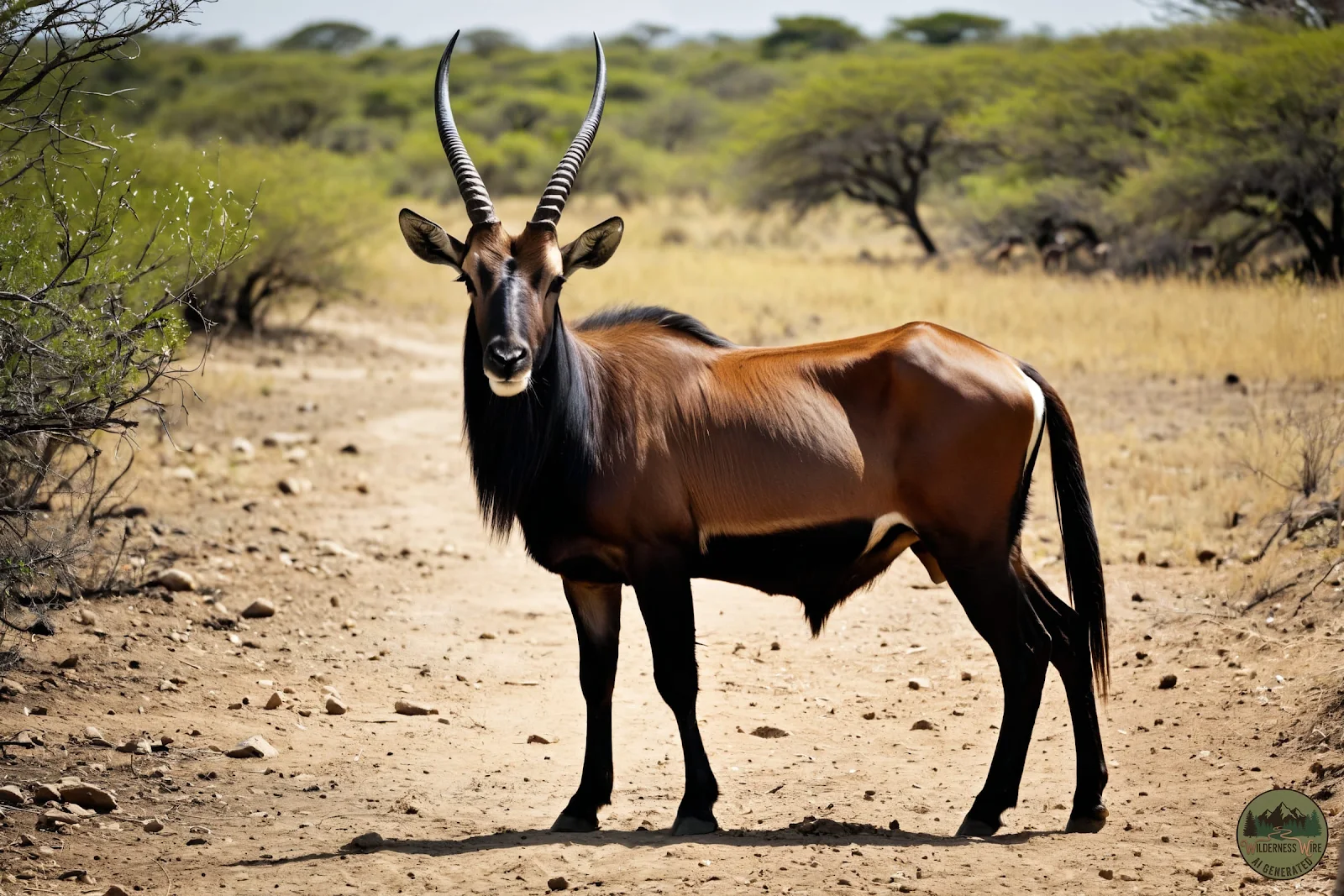
The physical attributes of the Sable Antelope ( *Hippotragus niger*) are what first captivate observers. Adult males, or bulls, develop a deep, lustrous black coat, contrasting sharply with their pure white bellies, inner thighs, and the distinctive white mask on their faces, which is typically bisected by a dark stripe running from the forehead down to the nose. Females and juveniles, in contrast, exhibit a chestnut to reddish-brown coloration, which darkens with age, though never reaching the coal-black hue of the mature males. Both sexes possess a prominent mane that runs from the nape of the neck to the shoulders, giving them a regal, almost horse-like bearing. Standing at an average shoulder height of 120 to 140 centimeters and weighing between 180 and 270 kilograms, sables are robust and powerful animals, built for resilience in a challenging environment.
However, it is the horns that are perhaps their most defining feature. Both males and females grow impressive, heavily-ringed horns that arch gracefully backwards in a pronounced scimitar shape. In males, these horns can reach an extraordinary length, often exceeding 100 centimeters and sometimes approaching 165 centimeters (65 inches), forming a formidable defensive and display weapon. Female horns are typically shorter and less massive. These magnificent appendages are not merely for show; they are crucial for defense against predators such as lions and spotted hyenas, allowing the antelope to stand its ground and inflict serious injury. The distinctive curvature and ridged texture of the horns make them instantly recognizable and a symbol of the animal's untamed spirit.
Sable Antelopes are primarily inhabitants of woodland savannas and open grasslands, preferring areas with medium-height grasses and access to water. Their range stretches across various countries in Africa, including Angola, Botswana, Democratic Republic of Congo, Kenya, Malawi, Mozambique, Namibia, South Africa, Tanzania, Zambia, and Zimbabwe. Within this broad distribution, four recognized subspecies exist, each with subtle variations in size, horn length, and coat coloration, adapting to their specific regional habitats. The most famous, and perhaps most critically endangered, is the Giant Sable Antelope (*H. n. variani*) found exclusively in Angola, distinguished by its exceptionally long horns.
Their social structure is fascinating and highly organized. Sable herds are typically matriarchal, led by an dominant adult female. These mixed herds usually consist of 10 to 30 individuals, primarily females and their offspring, although larger aggregations can occur. Young males are tolerated in these herds until they reach about two to four years of age, at which point they are expelled by the dominant female. These ousted males then form bachelor herds, where they establish a hierarchy through sparring and ritualized displays. As they mature, some males become solitary, highly territorial individuals, carving out exclusive territories that they defend vigorously against other males, particularly those that attempt to mate with females within their domain. This territoriality is crucial for reproductive success, ensuring that only the strongest and most formidable males pass on their genes.
As herbivores, Sable Antelopes are selective grazers, showing a preference for medium-length grasses, especially those found in areas of recent burn or those that have been previously grazed by other species, which encourage the growth of tender new shoots. They supplement their diet with leaves from bushes and trees, particularly during the dry season when grasses become scarce and less nutritious. Their strong teeth and agile lips are well-adapted for snipping and stripping vegetation. Access to water is also vital for their survival, and they will travel considerable distances to find reliable water sources, typically drinking once a day, or more frequently in hot, dry conditions.
Reproduction generally occurs during the rainy season, when food and water are abundant, maximizing the chances of calf survival. After a gestation period of approximately 240 to 270 days (8-9 months), a single calf is born. The newborn calf is a vulnerable, light brown or tawny creature, which relies on camouflage and its mother's protective instincts for survival. It remains hidden in dense vegetation for several weeks after birth, only joining the main herd once it gains sufficient strength and agility. This "hiding" phase reduces the risk of predation. Sable mothers are fiercely protective of their young, using their formidable horns to ward off any perceived threat. Calves are weaned around six to eight months but may remain with their mothers for much longer.
The Sable Antelope's survival strategies extend beyond mere physical prowess. They possess acute senses of sight, smell, and hearing, allowing them to detect predators from a distance. When confronted, instead of immediately fleeing, sables are known for their courage. They often face down threats, lowering their heads and presenting their sharp horns in a dangerous arc, a clear warning to any would-be attacker. This defiant stance is particularly effective against solitary predators. Their ability to run at considerable speeds and maintain endurance also aids in evading pursuit once the decision to flee is made.
Despite their formidable defenses, Sable Antelopes face significant threats in the modern era. Habitat loss and fragmentation due to agricultural expansion, human settlement, and infrastructure development are major concerns, reducing the available grazing land and disrupting their traditional migration routes. Poaching, driven by demand for their meat and magnificent horns, also poses a serious challenge to their populations. While some subspecies are relatively stable, others, like the Giant Sable, remain critically endangered, requiring intensive conservation efforts, including anti-poaching initiatives, habitat protection, and breeding programs. Protected areas and national parks are crucial for their continued survival, acting as vital sanctuaries where these majestic animals can thrive.
In their ecological role, Sable Antelopes contribute to the health of the savanna ecosystem. As grazers, they help to manage grass growth, preventing overgrowth and creating conditions suitable for other species. They also serve as a prey source for large carnivores, playing an integral part in the food web and contributing to the natural selection pressures that maintain the overall vitality of the savanna. Their presence is an indicator of a healthy and balanced ecosystem, reflecting the success of conservation efforts and the enduring wildness of the African landscape. To witness a herd of Sable Antelopes moving gracefully through the savanna, their dark forms contrasting with the golden grasses, is to experience a profound connection to the heart of Africa, a privilege that underscores the importance of protecting these magnificent creatures for future generations.