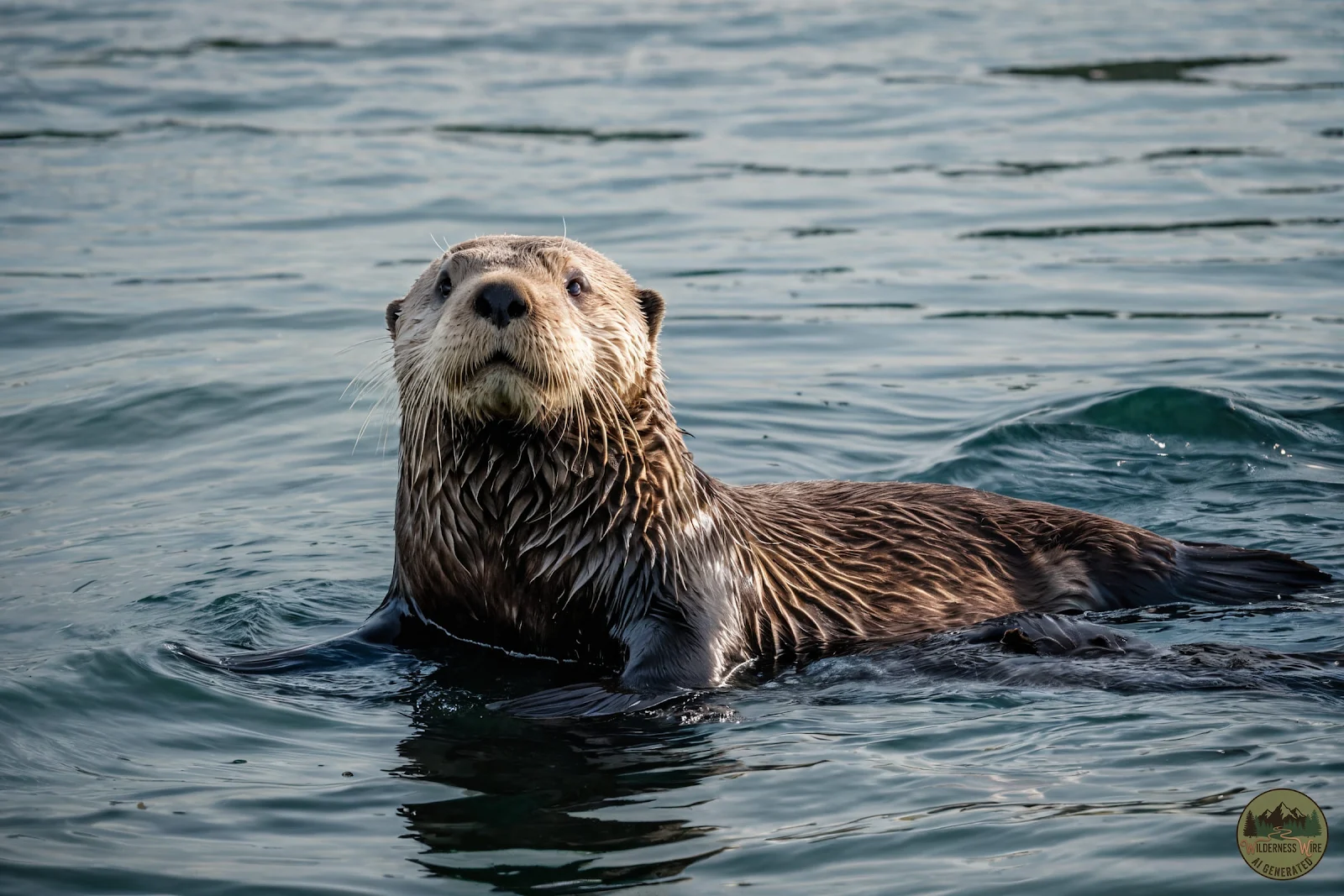
Amidst the coastal waters of the North Pacific, a charismatic marine mammal thrives, captivating observers with its playful antics and remarkable adaptations. The sea otter, a member of the weasel family, stands apart from most marine mammals due to its unique strategy for surviving in frigid ocean environments. Unlike seals, whales, or polar bears that rely on a thick layer of blubber for insulation, sea otters possess the densest fur of any animal on Earth, boasting up to a million hairs per square inch in some areas. This extraordinary coat traps a layer of air against their skin, providing crucial insulation and warmth, a natural wetsuit that allows them to flourish in waters as cold as 0°C.
Maintaining this vital fur layer is an arduous, constant task. Sea otters spend a significant portion of their day meticulously grooming, a behavior that is not merely cosmetic but essential for their survival. They roll, rub, and comb their fur, blowing air into it to maintain its loft and waterproof qualities. If their fur becomes matted or soiled, its insulating properties diminish rapidly, leaving the otter vulnerable to hypothermia. This dedication to grooming underscores the critical reliance they have on their pelage, highlighting a fundamental difference in adaptation compared to their blubber-endowed marine counterparts.
Beyond their fur, sea otters exhibit a suite of other adaptations tailored for their aquatic lifestyle. Their streamlined bodies, powerful, rudder-like tails, and webbed hind feet facilitate efficient swimming and diving. Their forepaws, however, are perhaps their most distinctive tools. Remarkably dexterous, these paws are used for foraging, manipulating objects, and even employing tools. Sea otters are one of the few mammals known to regularly use tools; they often carry a favorite rock tucked in a loose pouch of skin under their foreleg, using it to crack open the hard shells of clams, mussels, and other prey while floating on their backs. This intelligent behavior not only demonstrates their problem-solving abilities but also allows them to access food sources unavailable to many other predators.
Their diet is varied but primarily consists of marine invertebrates. Sea urchins, clams, mussels, crabs, abalone, and various snails form the bulk of their meals. Because they lack blubber and rely solely on their fur for warmth, sea otters possess an incredibly high metabolic rate, requiring them to consume a substantial amount of food daily—often 25-35% of their body weight. This constant need to forage drives their active lifestyle and their continuous search for food sources on the ocean floor, where they can dive to depths of 70 meters and hold their breath for several minutes.
The ecological impact of sea otters extends far beyond their individual survival; they are recognized as a keystone species, meaning their presence has a disproportionately large effect on their environment. Their voracious appetite for sea urchins, in particular, plays a critical role in maintaining the health of kelp forests. Without sea otters, sea urchin populations can explode, leading to "urchin barrens" where these spiny grazers decimate kelp beds. By controlling urchin numbers, sea otters allow kelp forests to flourish, providing crucial habitat, food, and shelter for countless other marine species, from fish and invertebrates to larger predators. These vibrant kelp forests also act as significant carbon sinks, absorbing carbon dioxide from the atmosphere, further highlighting the sea otter’s understated yet profound environmental contribution.
Socially, sea otters exhibit a fascinating blend of solitary and communal behaviors. While they are often seen foraging alone, they frequently gather in groups known as "rafts" for resting or socializing. These rafts, sometimes numbering in the hundreds, can be observed floating peacefully on the water's surface, often holding paws to prevent drifting apart. Females give birth to a single pup, which is born with buoyant fur and cannot dive. The mother will meticulously care for her pup, carrying it on her chest, grooming its fur, and teaching it essential foraging and survival skills over many months. This strong maternal bond is vital for the pup's development and its eventual independence in the challenging marine environment.
The history of sea otters is a stark reminder of humanity's impact on wildlife. Prized for their exceptionally dense and luxurious fur, sea otters were hunted to the brink of extinction during the 18th and 19th centuries' maritime fur trade. By the early 20th century, only a few isolated populations survived, sparking global conservation efforts. Thanks to international protections and reintroduction programs, populations have made remarkable comebacks in many areas, particularly along the coastlines of North America, Russia, and Japan, though they still occupy only a fraction of their historical range.
Despite these conservation successes, sea otters face ongoing threats. Oil spills are particularly devastating, as crude oil fouls their fur, destroying its insulating properties and leading to hypothermia and death. Predation by sharks and orcas, entanglement in fishing gear, habitat degradation, and diseases also pose significant risks. Furthermore, climate change, by altering ocean currents and prey availability, introduces new challenges. Continued vigilance, habitat protection, and responsible human practices are essential to ensure the long-term survival of this remarkable species. Their continued presence in coastal ecosystems is not just a testament to their resilience, but a vital indicator of ocean health and biodiversity. The sea otter, with its engaging demeanor and indispensable ecological role, serves as a powerful symbol of successful conservation and the ongoing imperative to protect marine life.