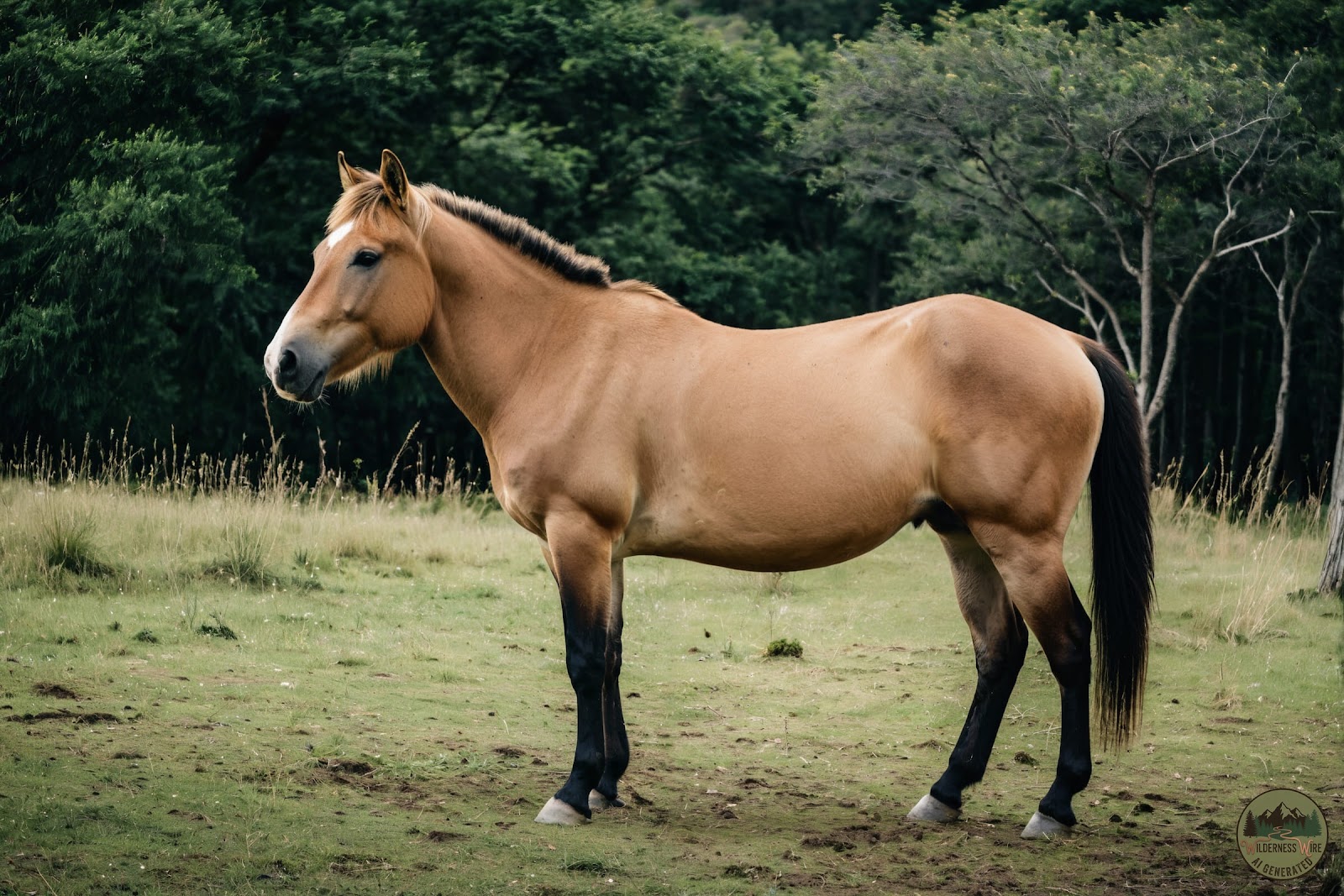
The Roe Deer, a quintessential inhabitant of European and Asian woodlands, presents an elegant and understated beauty that belies its remarkable adaptability and complex biological strategies. Often observed at the edges of forests, in clearings, or venturing into agricultural fields during twilight hours, this relatively small deer species holds a significant ecological niche and offers fascinating insights into mammalian survival. Its scientific classification, *Capreolus capreolus* for the European Roe Deer and *Capreolus pygargus* for the Siberian Roe Deer, hints at the subtle distinctions within the species, though both share many fundamental characteristics.
Physically, the Roe Deer is a slender and graceful animal, typically standing between 65 to 75 centimeters at the shoulder and weighing between 15 to 30 kilograms. Its coat undergoes a striking seasonal transformation; in summer, it adopts a vibrant reddish-brown hue, often with a slightly darker head and neck, providing excellent camouflage amidst dense foliage. As autumn progresses, this summer coat is shed, replaced by a thicker, grizzled grey-brown fur, perfectly suited for the colder months and offering superior insulation. A distinctive feature is the prominent white or creamy rump patch, which, while less obvious in the summer, becomes a stark signal in winter. When startled, this patch flares outwards, acting as a warning signal to other deer, a flash of white disappearing into the undergrowth. Males, known as bucks, possess short, upright antlers, typically featuring two or three points. These antlers are shed annually, usually in late autumn or early winter, with new growth commencing almost immediately, culminating in fully developed and cleaned antlers by early spring, ready for the breeding season. The development and size of the antlers are often indicative of the buck's age and health, though environmental factors also play a crucial role.
Roe Deer are incredibly versatile in their habitat preferences. While historically associated with ancient woodlands, their adaptability has allowed them to colonize a diverse range of environments. They thrive in mosaic landscapes comprising mixed woodlands, dense scrubland, hedgerows, and adjacent agricultural land. This preference for "edge habitats" is strategic; it provides both cover from predators and access to a rich variety of foraging opportunities. Their distribution spans across most of Europe, from the Mediterranean coastlines to the northern reaches of Scandinavia, and extends eastward into parts of Asia. This wide geographical spread demonstrates their ability to cope with varied climates and ecological conditions, from temperate forests to the fringes of sub-arctic taiga.
Their diet is predominantly browse-based, classifying them as selective feeders. Unlike grazers, which primarily consume grasses, Roe Deer prefer tender shoots, leaves, buds, and young bark from a wide array of woody plants. They also supplement their diet with forbs, heather, berries, and fungi, especially when available seasonally. This selective foraging strategy means they spend more time choosing high-quality, easily digestible plant material, which is crucial for their relatively small digestive systems. This dietary preference allows them to thrive in areas where other larger deer species might struggle, and it also impacts forest regeneration patterns, as their browsing can significantly influence the composition of understory vegetation.
Socially, Roe Deer are largely solitary or form small family groups. Bucks are typically territorial, especially during the breeding season, establishing and defending their domains against rivals. They mark their territories using scent glands located on their foreheads, rubbing them against trees and shrubs, and also by fraying vegetation with their antlers. Females (does) are also territorial, particularly when raising fawns, ensuring exclusive access to resources within their home range. While they may be seen in larger, loose aggregations during the winter months, particularly in open fields where food is scarcer, this is generally a temporary gathering driven by foraging needs rather than a strong social bond. Communication between individuals involves a range of vocalizations, most notably a distinctive "bark" often uttered when alarmed, and a softer "peep" used by does to communicate with their fawns.
Perhaps the most remarkable aspect of Roe Deer biology lies in their reproductive strategy: delayed implantation. The mating season, or rut, occurs from mid-July to mid-August. During this time, bucks engage in elaborate pursuit rituals, often running in circles through vegetation, creating "roe rings" that are sometimes visible on the forest floor. After a successful mating, the fertilized egg, or blastocyst, does not immediately implant in the uterine wall. Instead, it enters a state of diapause, remaining dormant for several months. Implantation only occurs in late December or early January. This extended period of dormancy, lasting approximately 4.5 months, means the total gestation period for Roe Deer is around 9.5 to 10 months, culminating in fawning in May or early June.
This delayed implantation is a sophisticated evolutionary adaptation. By mating in summer, the does can capitalize on the abundance of nutritious food available at that time, allowing them to be in peak physical condition for conception. However, having the fawns born in mid-winter would be highly detrimental due to harsh weather and scarce resources. Delayed implantation ensures that the fawns are born in late spring, a period of optimal environmental conditions with warm weather and plentiful lush vegetation, maximizing their chances of survival. Typically, a doe will give birth to one to three fawns, usually twins. The fawns are born with distinctive white spots on their reddish-brown coats, providing excellent camouflage amongst dappled sunlight and vegetation. They are precocial, able to stand within hours of birth, but are initially hidden by their mother in dense cover, relying on their camouflage and lack of scent to avoid predators. The doe will visit them only to nurse, minimizing her presence to avoid drawing attention to their location. This strategy is critical during their vulnerable early weeks.
While Roe Deer populations are generally stable and, in many regions, have even expanded, they face various challenges. Natural predation comes from species like foxes, wolves (where present), and sometimes eagles, particularly targeting fawns. However, human-related threats are more significant. Habitat fragmentation due to development, traffic collisions, and changes in agricultural practices pose considerable risks. Regulated hunting also plays a role in population management in many European countries, aiming to maintain healthy deer densities and mitigate potential impacts on forestry and agriculture.
The Roe Deer, with its shy demeanor and intricate life cycle, serves as a vital component of its ecosystem. It contributes to seed dispersal, influences plant community structures through browsing, and provides a food source for predators. Its continued presence is a testament to its resilience and adaptability, a small deer with a big story, quietly navigating the complex interplay between humans and the natural world, a true wilderness success story thriving at the very edges of our expanding landscapes.