Snowy Owls: Arctic Masters of Survival and Tundra's Iconic Predator
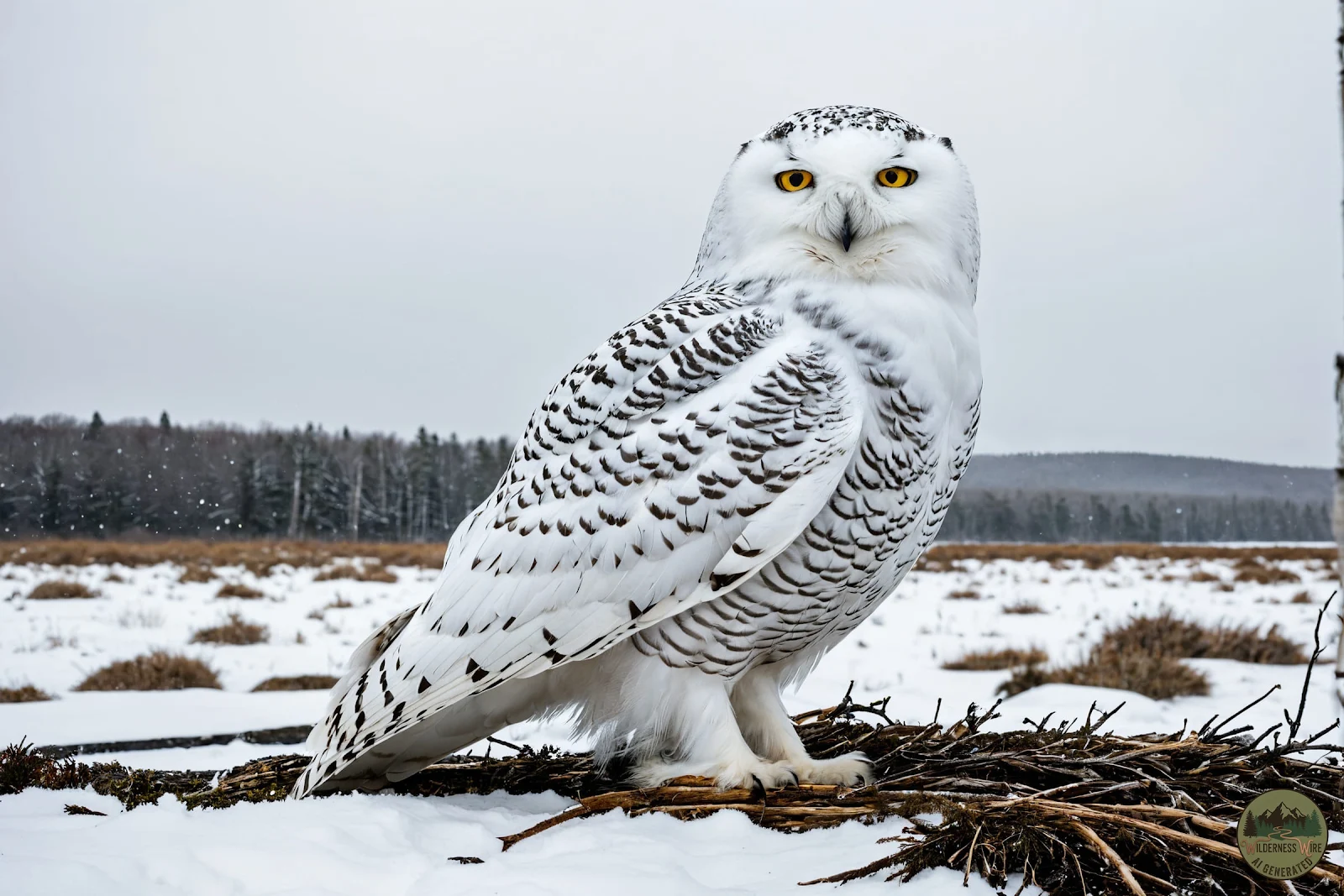
The vast, treeless expanse of the Arctic tundra is home to one of nature's most iconic and strikingly beautiful predators: the snowy owl. Clad in a plumage that ranges from pristine white to subtly barred, these magnificent raptors are perfectly adapted to their extreme environment, embodying the stark beauty and formidable challenges of the circumpolar north. Unlike most owls, which are creatures of the night, snowy owls are often diurnal hunters, a necessity born from the perpetual daylight of the Arctic summer. Their piercing yellow eyes survey the open landscape, ever vigilant for the subtle movements of prey across the snow-dusted terrain.
Known scientifically as *Bubo scandiacus*, the snowy owl possesses a circumpolar distribution, breeding across the Arctic regions of North America, Europe, and Asia. Their preferred habitat is the open tundra, characterized by low vegetation, rolling hills, and an absence of tall trees. This treeless environment is crucial for their hunting strategy, as it allows them unobstructed views of the ground and excellent opportunities for perching on hummocks or even directly on the snow. While males tend to be almost pure white, particularly as they age, females and younger birds typically exhibit more extensive dark barring on their feathers. This sexual dimorphism not only aids in camouflage against varying tundra backdrops but also serves as an indicator of age and sex, which can play a role in mate selection.
Survival in the Arctic demands extraordinary physiological adaptations, and the snowy owl possesses these in abundance. Their dense, multi-layered plumage acts as an unparalleled insulator, trapping air close to their bodies and protecting them from temperatures that can plummet far below freezing. This feathering extends even to their legs and feet, providing "snowshoes" that distribute their weight for walking on snow and offer additional thermal protection. A thick layer of fat beneath their skin further contributes to their insulation, particularly important during periods of scarce food. These adaptations allow them to maintain a stable body temperature even when external conditions are brutally harsh, making them true masters of cold survival.
The diet of the snowy owl is intricately linked to the fluctuating populations of small mammals, primarily lemmings. These voles-like rodents are the cornerstone of the Arctic food web, and their boom-and-bust cycles directly influence the reproductive success and movements of snowy owls. When lemming populations are high, snowy owls can raise larger clutches of chicks, sometimes laying as many as eleven eggs. Conversely, when lemmings are scarce, breeding efforts may be minimal or even abandoned entirely. Beyond lemmings, their diet can include other small mammals like voles, hares, and sometimes larger prey such as arctic foxes. They are also opportunistic bird hunters, preying on ptarmigan, ducks, and geese. Their hunting technique involves patiently waiting from an elevated perch, then swooping down silently to snatch unsuspecting prey with their powerful talons.
One of the most fascinating aspects of snowy owl biology is their migratory behavior, or rather, their irruptive movements. Unlike many migratory species that follow predictable seasonal routes, snowy owls are considered "nomadic" or "irruptive." During years of severe lemming scarcity in their breeding grounds, large numbers of snowy owls may move southward, sometimes thousands of kilometers, into temperate regions like the northern United States, southern Canada, and parts of Europe and Asia. These "irruptions" are not true migrations in the classic sense but rather mass dispersals driven by hunger, as individuals seek new hunting grounds. Such events offer rare opportunities for naturalists and birdwatchers in southern latitudes to observe these magnificent birds, though for the owls themselves, it signals a period of profound stress and often higher mortality.
Reproduction occurs on the open tundra, typically beginning in May. The female creates a shallow scrape on an elevated piece of ground – a hummock, mound, or rock outcrop – providing a vantage point and drainage. She then lays a clutch of between 3 and 11 eggs, with the number heavily dependent on the local abundance of lemmings. Incubation, primarily by the female, lasts about 32 days.
The male provides food for the incubating female and, later, for the hungry chicks. Young owls fledge at about 2 to 3 months of age, at which point they are still reliant on their parents for food and hunting lessons for several more weeks before becoming fully independent. The synchronous hatching of chicks, often spaced over several days, means there can be significant size differences within a brood, with larger, older chicks having a survival advantage in lean times.
Despite their imposing presence and formidable hunting skills, snowy owls face increasing pressures. The species was reclassified from Least Concern to Vulnerable by the IUCN in 2017, largely due to concerns over climate change and its potential impacts on their Arctic habitat and prey base. Warming temperatures can alter the delicate tundra ecosystem, affecting vegetation, permafrost, and crucially, lemming populations. Human activities, including habitat fragmentation, disturbance from oil and gas exploration, and collisions with vehicles and power lines during irruptive years, also pose significant threats. Conservation efforts focus on understanding their population dynamics, monitoring the health of Arctic ecosystems, and mitigating human-related threats, particularly during their southward dispersals.
The snowy owl stands as an enduring symbol of the pristine and harsh beauty of the Arctic. Its striking appearance, exceptional adaptations, and vital role as an apex predator make it a keystone species in the fragile tundra environment. To observe one in its natural habitat, whether soaring silently over a snow-covered plain or perched stoically on a windswept mound, is to witness a profound testament to the resilience and majesty of wild nature. Understanding and protecting these extraordinary birds is not merely about preserving a single species, but about safeguarding the intricate web of life that defines the world's most northern reaches.