Sika Deer: Adaptability, Conservation, and Ecological Impact
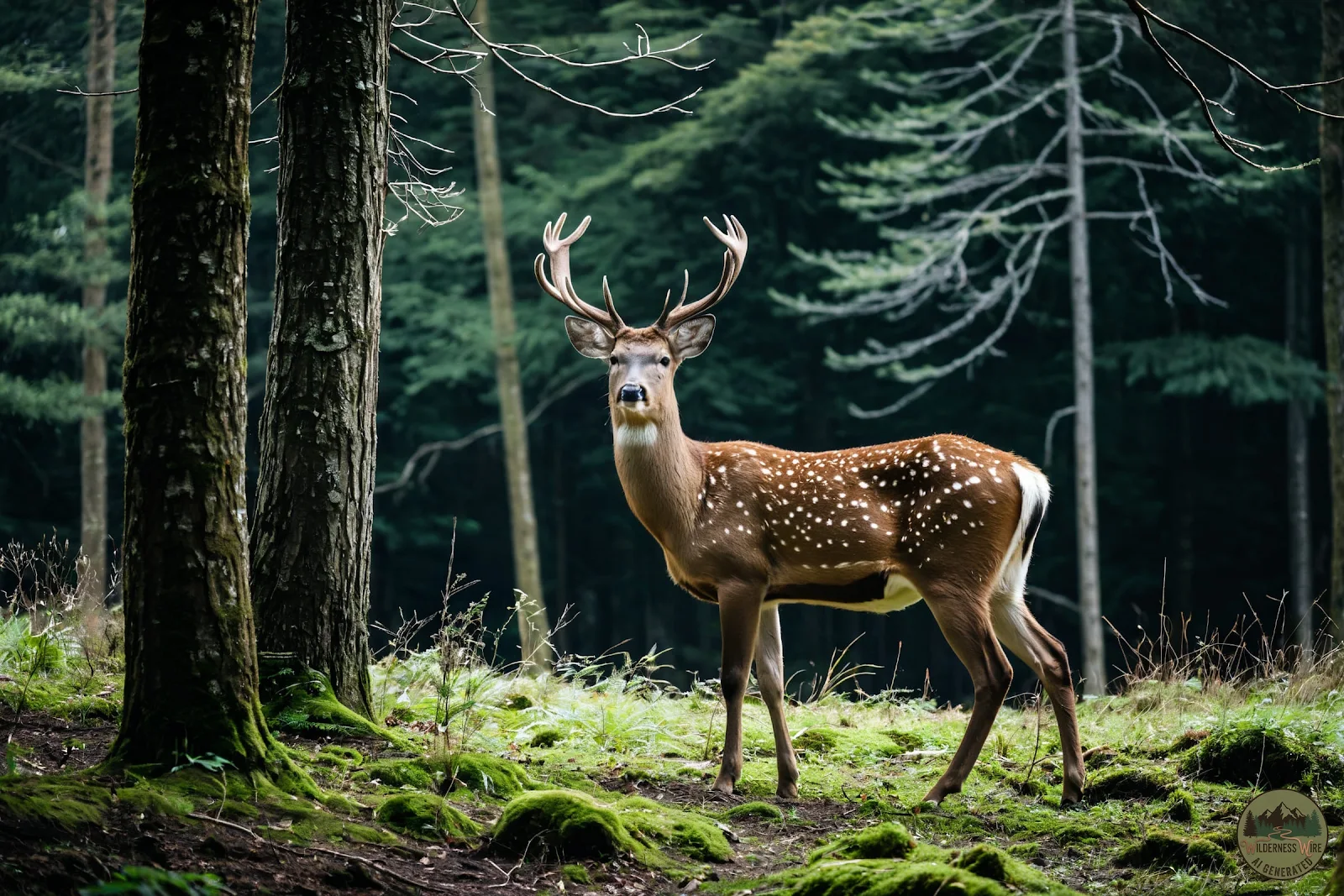
The Sika deer, scientifically known as Cervus nippon, is an elegant and remarkably adaptable cervid native to much of East Asia. Its name, "Sika," is derived from the Japanese word for deer, reflecting its prominent presence and cultural significance in Japan. Characterized by its often-spotted coat and graceful demeanor, the Sika deer presents a fascinating study in evolutionary adaptation, social behavior, and the complex interactions between wildlife and human-modified landscapes.
Physically, the Sika deer exhibits considerable variation across its numerous subspecies, which span a vast geographical range. Typically, Sika deer are medium-sized, standing between 70 to 110 centimeters (28 to 43 inches) at the shoulder and weighing anywhere from 30 to 140 kilograms (66 to 309 pounds), with males generally larger than females. A defining feature is their coat, which undergoes distinct seasonal changes. In summer, most Sika deer display a reddish-brown pelage adorned with prominent white spots arranged in dorsal rows, reminiscent of a fawn's coat, providing excellent camouflage in dappled sunlight. These spots tend to fade or disappear entirely in winter, replaced by a thicker, darker, often grayish-brown or black coat, better suited for colder temperatures. The rump patch is also notable; a large, white patch that can be flared when the animal is alarmed, serving as a visual signal to other deer in the vicinity.
Male Sika deer, or stags, grow impressive antlers that are typically shed annually in late winter or early spring and regrow over the summer. While they generally possess four points on each antler (hence sometimes called "eight-pointers"), the exact configuration can vary based on age, genetics, and nutritional status. These antlers are crucial tools for display and combat during the rutting season. Beyond their visual appeal, Sika deer possess keen senses, with excellent hearing and a sharp sense of smell, which are vital for detecting predators and navigating their complex environments. Their slender build and powerful legs enable them to move swiftly and gracefully through dense undergrowth or across open terrain.
The native distribution of Cervus nippon historically spanned from Siberia and Manchuria through Korea, China, Vietnam, Taiwan, and the entire Japanese archipelago. This vast native range has led to the evolution of numerous distinct subspecies, each adapted to its specific local conditions. Examples include the Japanese Sika (C. n. nippon), the Formosan Sika (C. n. taiouanus), the Dybowski's Sika (C. n. dybowskii), and various Chinese subspecies, many of which are now critically endangered or extinct in their original habitats due to extensive habitat loss and hunting pressure. Conservation efforts for these native populations are paramount, often involving reintroduction programs and stringent protective measures.
Beyond their native range, Sika deer have been widely introduced to other parts of the world, primarily for ornamental purposes or as game animals, a practice that began centuries ago. Significant populations now thrive in the United Kingdom, Ireland, continental Europe, New Zealand, Australia, and parts of the United States, particularly Maryland and Virginia. While these introduced populations highlight the species' remarkable adaptability, they also pose significant ecological challenges. In many regions, Sika deer are considered an invasive species, competing with native ungulates for resources, altering forest structure through overbrowsing, and, most notably, hybridizing with native red deer (Cervus elaphus). This hybridization is a critical concern, as it can lead to genetic pollution and the potential loss of distinct genetic lineages within red deer populations.
Sika deer are highly adaptable herbivores, thriving in a variety of habitats ranging from dense coniferous and deciduous forests to open grasslands, marshlands, and even coastal dunes. Their diet is diverse, consisting of grasses, forbs, leaves, shoots, bark, and fallen fruits. This dietary flexibility is a key factor in their success in both native and introduced environments. Socially, Sika deer exhibit considerable variability. They can be found solitary, in small family groups, or in larger, sometimes mixed-sex, herds, depending on population density, habitat quality, and season. Males often form bachelor groups outside the breeding season, while females typically live in matriarchal groups with their offspring.
Perhaps one of the most distinctive and captivating aspects of Sika deer is their repertoire of vocalizations. Unlike many other deer species, Sika deer are notably vocal, employing a wide range of calls for communication. During the autumn rut, male Sika deer emit a piercing, whistle-like scream or roar, which is utterly unique among cervids. This loud, high-pitched call serves to announce their presence, challenge rivals, and attract females. Beyond the rutting scream, they also produce a variety of other sounds, including soft bleats, growls, and sharp barks used as alarm calls, all contributing to their complex social interactions and predator avoidance strategies.
Reproduction typically occurs in the autumn. The rut is a period of intense competition among males, who engage in elaborate displays and sometimes violent antler clashes to secure mating rights with females. Following a gestation period of approximately seven to eight months, a single fawn is usually born in late spring or early summer, though twins can occur. Fawns are born with prominent white spots on a reddish-brown coat, providing excellent camouflage in the undergrowth during their vulnerable early weeks. They are suckled by their mothers for several months and remain with her until they are yearlings, sometimes longer, before dispersing to establish their own territories or join new groups.
In conclusion, the Sika deer is a species of remarkable contrasts. In its native lands, it stands as a symbol of wild beauty, often revered in cultural folklore, yet many of its subspecies are teetering on the brink of extinction. Simultaneously, in regions where it has been introduced, its resilience and adaptability have allowed it to flourish, sometimes to the detriment of local ecosystems and native species. The Sika deer’s captivating appearance, diverse vocalizations, and complex ecological role make it a species worthy of extensive study and careful management, embodying the intricate balance required for biodiversity conservation in an ever-changing world.