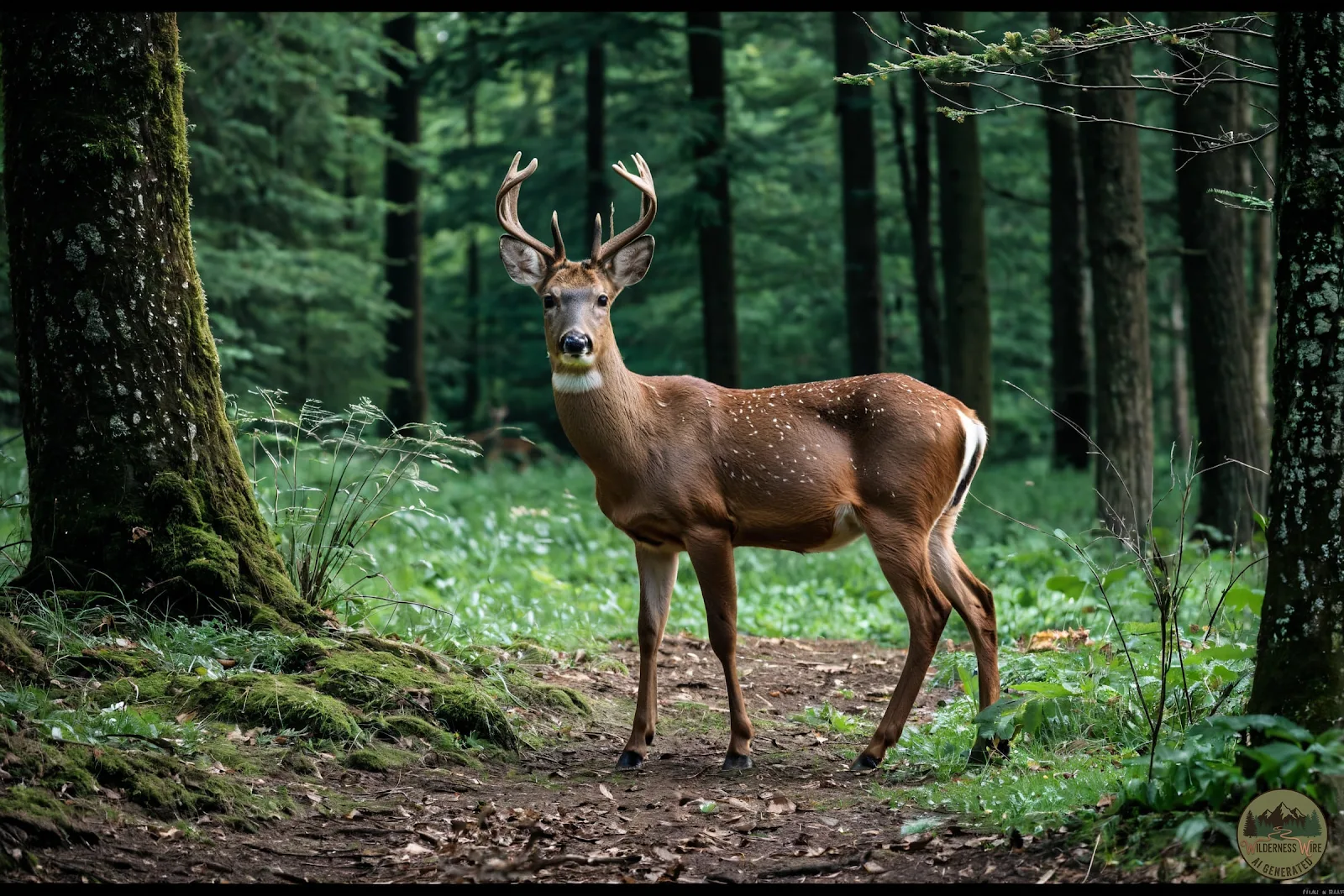
The graceful and often elusive creature depicted, commonly known as the Roe Deer, is a cornerstone of many European and Asian woodlands. Despite its widespread presence, its delicate form and cautious nature allow it to blend seamlessly into its environment, making close observation a rewarding, yet challenging, experience for naturalists. These elegant cervids are the smallest native deer species across much of their extensive range, characterized by their compact build, distinctive markings, and a unique life cycle that sets them apart from many of their larger relatives.
Physically, these deer are immediately recognizable by their slender bodies and relatively short, stocky legs. Their coat color undergoes a significant transformation with the seasons: a striking reddish-brown hue dominates during the warmer months, providing excellent camouflage amidst the summer foliage. As autumn progresses, this vibrant coat gradually gives way to a duller, greyish-brown, sometimes even blackish, winter pelage, offering better concealment against the bare branches and muted tones of the colder landscape. A prominent white or creamy patch on the rump, often referred to as a "rump mirror," becomes particularly noticeable when the animal is alarmed, flaring out as a visual signal to other deer. Males, known as bucks, sport short, branched antlers that are typically rough at the base, growing annually from late autumn and shedding in early winter. These antlers are relatively small compared to other deer species, usually featuring two or three points on each side, though their size and complexity can vary with age and nutritional status.
The Roe Deer's preferred habitat is incredibly varied, showcasing its remarkable adaptability. While primarily associated with woodlands, they thrive in mosaic landscapes that offer a mix of dense cover, open glades, and agricultural fields. This preference stems from their need for both shelter from predators and access to diverse foraging grounds. They can be found in broadleaf and coniferous forests, shrublands, heathlands, and even suburban parklands, demonstrating a surprising tolerance for human proximity as long as sufficient cover and food sources are available. Their distribution spans across most of Europe, from the United Kingdom and Scandinavia down to the Mediterranean, extending eastward into parts of Asia, including Turkey, the Caucasus, and Siberia. This vast geographical spread highlights their ecological resilience and ability to adjust to a wide array of climatic conditions and vegetation types.
As browsers rather than grazers, Roe Deer exhibit a highly selective diet, focusing on nutrient-rich vegetation. Their nimble lips and small mouths allow them to pick out the most palatable and digestible parts of plants, a feeding strategy that distinguishes them from larger grazers like red deer. Their menu includes young shoots, tree leaves, buds, berries, fungi, and various herbaceous plants. This dietary preference means they spend significant time foraging, often at dawn and dusk, though they can be active throughout the day in undisturbed areas. Their selective browsing habits can influence forest regeneration, as they may preferentially consume certain saplings, thereby shaping the understory composition. Conversely, their presence helps distribute seeds, contributing to the biodiversity of their habitats.
Socially, Roe Deer are generally less gregarious than many other deer species. While small family groups consisting of a doe and her fawns are common, bucks are largely solitary outside of the breeding season. They are fiercely territorial, with bucks establishing and defending territories through scent marking, fraying (rubbing their antlers on trees and bushes), and occasional aggressive encounters with rivals. Does also maintain home ranges, which may overlap, but they become more solitary and protective when fawning. Communication within the species is varied; they emit a distinctive, dog-like "bark" when alarmed or agitated, serving as a warning to others. They also use visual cues, such as the white rump patch, and a range of scent markings from glands on their heads and feet to convey information about their presence, status, and reproductive condition.
Perhaps one of the most fascinating aspects of the Roe Deer's biology is its unique reproductive strategy: delayed implantation. Mating typically occurs in July or August, but unlike most mammals where the embryo immediately implants in the uterine wall, the Roe Deer embryo enters a state of diapause. It remains dormant and unattached for several months, only implanting in the uterine wall in late December or early January. This remarkable adaptation ensures that, despite a summer rut, the fawns are born in May or June of the following year, when food resources are abundant and the weather is most favorable for their survival. Does usually give birth to one or two, sometimes three, spotted fawns, which are initially hidden in dense vegetation. The fawns' dappled coats provide excellent camouflage, and they remain hidden for several weeks, visited by the mother only for nursing to minimize the risk of attracting predators. They are weaned after about three months but often stay with their mother until the next fawning season.
The annual antler cycle of the bucks is another marvel of natural rhythm. Antler growth begins in autumn, with the new antlers emerging as bony protrusions covered in a sensitive, furry skin known as velvet. This velvet supplies blood and nutrients to the growing bone. By spring, typically March or April, the antlers are fully grown and hardened, and the velvet is shed, often through rubbing against trees and bushes. The clean, hard antlers are then used for territorial displays and fights during the breeding season. By late October or November, after the rut, the antlers are shed, and the cycle begins anew. This continuous regrowth and shedding underscore the dynamic nature of their physiology and their deep connection to seasonal changes.
Roe Deer possess several adaptations that contribute to their survival in often challenging environments. Their keen senses of smell and hearing are particularly well-developed, allowing them to detect predators long before they are seen. Their agility and explosive speed enable them to make quick, darting escapes through dense undergrowth. The cryptic coloring of both adults and fawns provides excellent camouflage, making them difficult to spot against the dappled light of the forest floor. While they are not considered a threatened species globally, they face challenges from habitat fragmentation, increased road traffic, and predation by larger carnivores such as wolves, lynx, and foxes, where these predators are present.
Interactions with humans are multifaceted. Roe Deer are admired for their beauty and grace, representing a significant component of woodland ecosystems. However, their increasing populations in some areas can lead to conflicts with agriculture, as they may browse on crops and young forest plantations. They are also a common sight along rural roads, leading to frequent vehicle collisions, particularly during dawn and dusk. In many countries, Roe Deer are managed through regulated hunting, which plays a role in population control and provides economic benefits, while also requiring careful conservation strategies to maintain healthy populations. Their presence is a vital indicator of ecosystem health, as they contribute to seed dispersal, vegetation management, and serve as prey for larger predators, thereby influencing the intricate web of life in their diverse habitats. Their enduring presence and unique biological traits make the Roe Deer a captivating and important part of the natural world, a testament to the resilience and adaptability of wildlife in a changing landscape.