The Biological Marvels and Social Complexity of the Australian Arboreal Sugar Glider
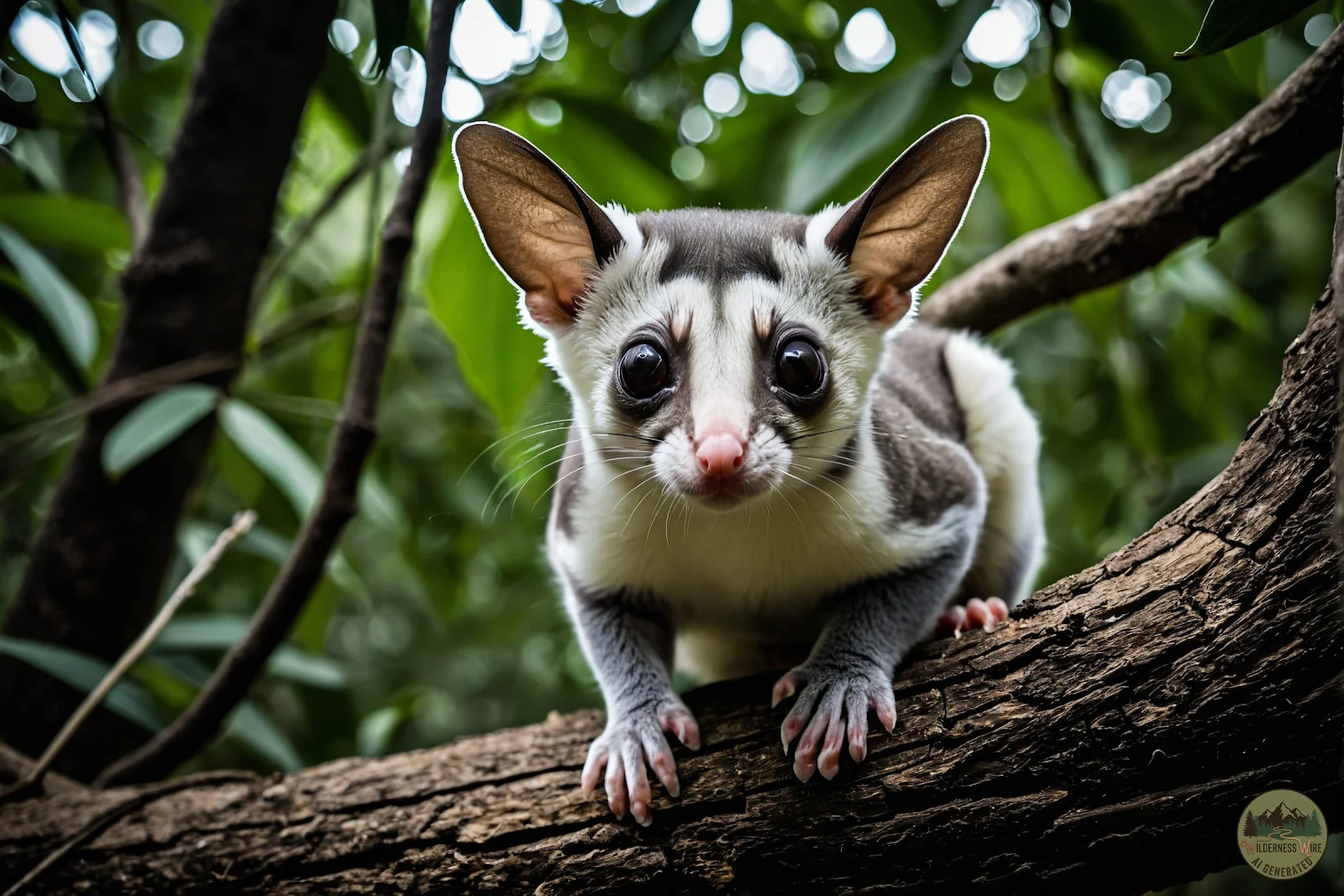
The sugar glider (Petaurus breviceps) is one of nature’s most specialized arboreal acrobats. A member of the Petauridae family, this small marsupial is native to the sprawling forests of mainland Australia, Tasmania, New Guinea, and several Indonesian islands. While often compared to the flying squirrels of North America, the sugar glider is a distinct product of marsupial evolution, sharing more in common with kangaroos and opossums than with rodents. Its common name is derived from a penchant for sugary foods—specifically nectar and tree sap—and its remarkable ability to glide through the canopy using a specialized membrane known as a patagium.
The mechanics of the sugar glider’s flight are a marvel of biological engineering. The patagium is a thin, fur-covered fold of skin that extends from the fifth finger of each forepaw back to the first toe of each hindfoot. When the glider launches itself from a high branch, it spreads its limbs wide, stretching the membrane into a rectangular wing-like surface. By adjusting the tension of the skin and shifting its long, bushy tail, the sugar glider can steer with precision, executing turns and controlling its descent. This allows it to cover distances of up to 50 meters or more in a single leap, effectively bypassing ground-level predators and navigating the fragmented forest canopy with minimal energy expenditure.
Evolutionarily, the sugar glider represents a fascinating example of convergent evolution. This occurs when two unrelated species evolve similar traits to adapt to similar environments or ecological niches. While the North American flying squirrel and the sugar glider look nearly identical and occupy the same ecological role, their internal biology is vastly different. The sugar glider, as a marsupial, gives birth to relatively undeveloped young that must complete their growth inside a protective maternal pouch. This reproductive strategy defines their life cycle; after a gestation period of only 16 days, the tiny, pea-sized joeys crawl into the pouch, where they remain for approximately two months until they are physically prepared to handle the rigors of the external world.
The dietary habits of Petaurus breviceps are categorized as exudativorous, meaning they primarily consume the exudates of plants. During the winter months, their diet relies heavily on the sap of eucalyptus trees and the gum of acacias. They use their sharp lower incisors to strip bark and create wounds in the trees, returning later to harvest the oozing liquids. However, these sugary substances are low in protein. To balance their nutritional needs, sugar gliders become opportunistic insectivores during the spring and summer, hunting moths, beetles, and spiders. This seasonal shift in diet is crucial for maintaining the energy levels required for their high-metabolic lifestyle and reproductive cycles.
Socially, sugar gliders are highly gregarious and exhibit complex colony structures. They typically live in groups of up to seven adults and their current offspring, sharing a communal nest within a tree hollow. These colonies are often led by a dominant male who maintains group cohesion through scent marking. Male sugar gliders possess several specialized scent glands, including one on the forehead (the frontal gland) and one on the chest (the sternal gland). By rubbing these glands against group members and the territory, they create a "colony scent" that allows individuals to recognize one another in the dark and helps to exclude intruders.
The nocturnal lifestyle of the sugar glider is supported by significant physiological adaptations. Their large, protruding eyes are optimized for gathering light in the dense forest understory, providing excellent night vision and depth perception—a necessity for judging distances during long-range glides. Furthermore, to cope with fluctuations in temperature and food availability, sugar gliders can enter a state of daily torpor. During torpor, the animal significantly lowers its metabolic rate and body temperature for several hours, conserving energy that would otherwise be spent maintaining homeothermy. This ability is a vital survival mechanism, particularly in the face of the unpredictable Australian climate.
Communication within a sugar glider colony is surprisingly vocal. They produce a range of sounds, including chirps, whistles, and a distinctive "crabbing" noise when threatened or disturbed—a sound that resembles a rhythmic, buzzing bark. These vocalizations, combined with chemical signaling through pheromones, create a sophisticated social network that ensures the survival of the group in a competitive environment.
In the ecosystem, sugar gliders play a quiet but essential role as pollinators. As they move from flower to flower in search of nectar, pollen grains often stick to their fur and are transported across the canopy. This facilitates the genetic diversity of many Australian plant species. Despite their resilience, sugar gliders face increasing challenges due to habitat fragmentation and the loss of old-growth trees with suitable nesting hollows. Understanding the intricate biological and social requirements of these marsupials is essential for conservation efforts, ensuring that the silhouette of the gliding "sugar-thief" continues to be a staple of the night sky in the Southern Hemisphere.