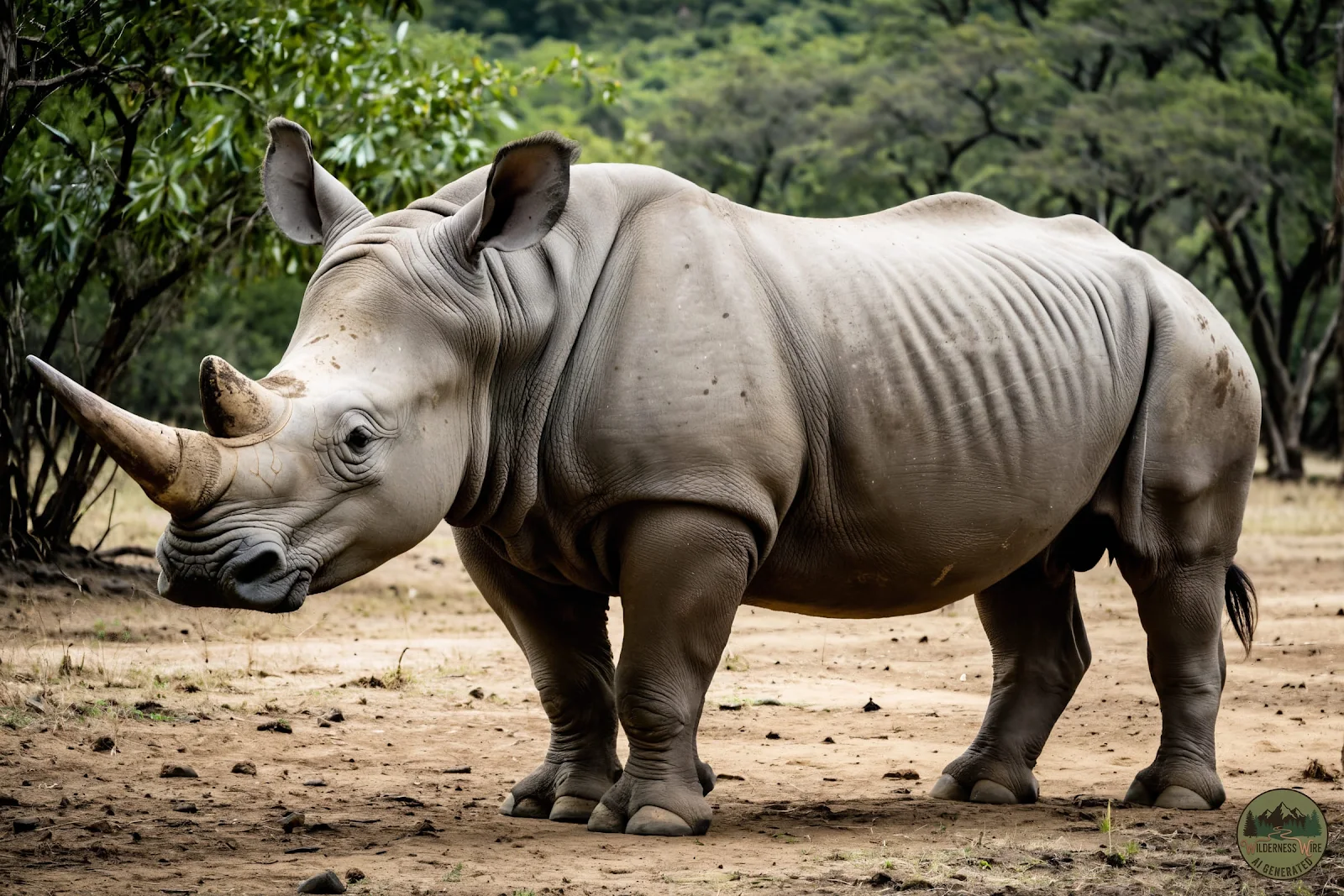
The rhinoceros stands as one of Earth's most ancient and magnificent megafauna, a living relic of a bygone era. With their formidable bulk, armor-like skin, and iconic horn, these creatures command respect and awe. There are five distinct species of rhinoceros, each with unique characteristics and inhabiting different corners of the globe: the Black Rhinoceros, White Rhinoceros, Indian Rhinoceros, Javan Rhinoceros, and Sumatran Rhinoceros. While all share a common ancestry and several general features, their individual adaptations reflect millennia of evolution in diverse environments, from the vast savannas of Africa to the dense tropical forests of Asia.
The two African species, the Black and White rhinos, are perhaps the most recognized. Despite their names, both are grey; the "white" in White Rhinoceros is thought to be a corruption of the Afrikaans word "weit," meaning wide, referring to its broad, flat mouth adapted for grazing grasses. The White Rhino is the largest of all rhino species, characterized by its square lip, pronounced nuchal hump, and typically longer head. They are primarily grazers, moving across open grasslands in small, loosely knit groups, often referred to as a "crash." Conversely, the Black Rhinoceros, though often smaller, possesses a prehensile, pointed upper lip perfectly suited for grasping leaves and twigs, making it a browser of shrubs and trees. Black rhinos are generally more solitary and known for being more aggressive and unpredictable, a trait that has unfortunately made them particularly vulnerable to human conflict and poaching. Both African species face immense pressure, with the Black Rhino critically endangered and the White Rhino currently listed as near threatened, though its northern subspecies is functionally extinct.
In Asia, three distinct rhino species persist, each critically endangered or vulnerable. The Indian Rhinoceros, also known as the greater one-horned rhinoceros, is easily identified by its single horn and thick, folded skin that gives the impression of armored plates. These impressive skin folds are not actually rigid armor but rather flexible creases that allow the animal to move with surprising agility despite its size. Found predominantly in the grasslands and riverine forests of India and Nepal, they are semi-aquatic, often wallowing in water to cool down and protect their skin from insects. The Javan Rhinoceros is arguably the rarest large mammal on Earth, with fewer than 80 individuals remaining in a single national park in Indonesia. Similar in appearance to the Indian rhino, it is smaller and has more subtle skin folds. Its survival hangs by the thinnest thread, making every individual precious. The Sumatran Rhinoceros is the smallest and hairiest of all rhino species, a unique adaptation to its high-altitude forest habitat. It is also the only Asian rhino with two horns, a trait shared with its African cousins. Its dense hair helps retain body heat in cooler mountain climes and protects its delicate skin in the dense jungle undergrowth. This species, too, faces an immediate and severe threat of extinction, with fragmented populations numbering fewer than 80.
The formidable horn of the rhinoceros, a defining characteristic, is not bone but composed entirely of keratin, the same fibrous protein found in human hair and fingernails. This unique composition allows it to be incredibly tough and resilient, yet also capable of slow regrowth if damaged. Rhinos use their horns for defense against predators, for sparring during mating rituals, and for foraging, particularly the Black Rhino which uses its horn to break branches or dig for roots. Their thick skin, which can be up to 5 cm thick, acts as a natural shield, protecting them from thorns, bites, and impacts. Despite their immense size and powerful appearance, rhinoceroses are remarkably agile and can reach surprising speeds when threatened. They also possess an acute sense of smell and hearing, compensating for their relatively poor eyesight. Their large, mobile ears can rotate independently to pinpoint sounds, and their nasal passages are highly sensitive, allowing them to detect the presence of predators or rivals from a considerable distance.
Rhinoceroses play a crucial role in their ecosystems as megaherbivores. Through their grazing and browsing, they help shape vegetation structure, disperse seeds, and create pathways that benefit smaller animals. They are integral to maintaining the biodiversity of the habitats they occupy. Their social structures vary; while white rhinos often form small, stable "crashes," black rhinos are typically solitary except for mothers with calves. Communication among rhinos involves a complex array of vocalizations, from snorts and grunts to squeaks and roars, as well as scent marking through urine and feces, which serve to delineate territories and convey reproductive status. Breeding is a slow process; after a gestation period of around 15 to 16 months, a single calf is born, remaining with its mother for up to three years. This extended period of maternal care is vital for the calf's development but also means that populations recover very slowly from declines.
Tragically, these magnificent animals face an existential crisis, primarily driven by human activities. Poaching for their horns is the most immediate and devastating threat. Despite horns having no scientifically proven medicinal value, they are highly sought after in some traditional Asian medicine markets and increasingly as a status symbol or investment. This illicit trade has fueled organized crime networks and decimated rhino populations across Africa and Asia. Habitat loss and fragmentation, due to agricultural expansion, human settlements, and logging, further compound the problem, isolating populations and reducing genetic diversity. Political instability and armed conflict in some rhino range states also hinder conservation efforts, making it dangerous for rangers and challenging to enforce protection laws.
In response to this dire situation, immense global efforts are underway to save rhinos from extinction. Intensive anti-poaching measures, including armed patrols, advanced surveillance technology like drones, and community involvement, are crucial in protecting rhinos on the ground. The establishment of protected areas, national parks, and private reserves provides safe havens. International agreements, such as CITES (Convention on International Trade in Endangered Species of Wild Fauna and Flora), aim to regulate and ban the trade of rhino horn, although illegal trade persists. Scientific advancements are also contributing, with genetic research and assisted reproductive technologies offering hope for critically endangered species like the northern white rhino. Furthermore, educational programs are working to reduce demand for rhino horn by raising awareness about the plight of these animals and promoting sustainable alternatives.
The rhinoceros, with its ancient lineage and formidable presence, represents not just a species but an entire ecosystem's health. Their survival is a testament to the resilience of nature and the determination of conservationists. Protecting them means preserving biodiversity, maintaining ecological balance, and safeguarding a creature that has roamed the Earth for millions of years. The sight of a rhino in the wild is a profound experience, a glimpse into deep time, and a powerful reminder of the delicate balance of life on our planet. The future of these incredible animals depends on continued vigilance, innovation, and a collective human commitment to secure their place in the wild for generations to come.