 Sika Deer_00001_
The elegant and distinctive sika deer, a species steeped in rich natural history and cultural significance, stands as a testament to nature's diverse adaptations. Originating from East Asia, these medium-sized cervids have successfully expanded their presence across various parts of the globe, sometimes as welcomed additions to landscapes, and other times as subjects of careful management due to their vigorous adaptability. Their name, "sika," is derived from the Japanese word for deer, reflecting their strong association with the Japanese archipelago where they hold a special place in folklore and wildlife conservation.
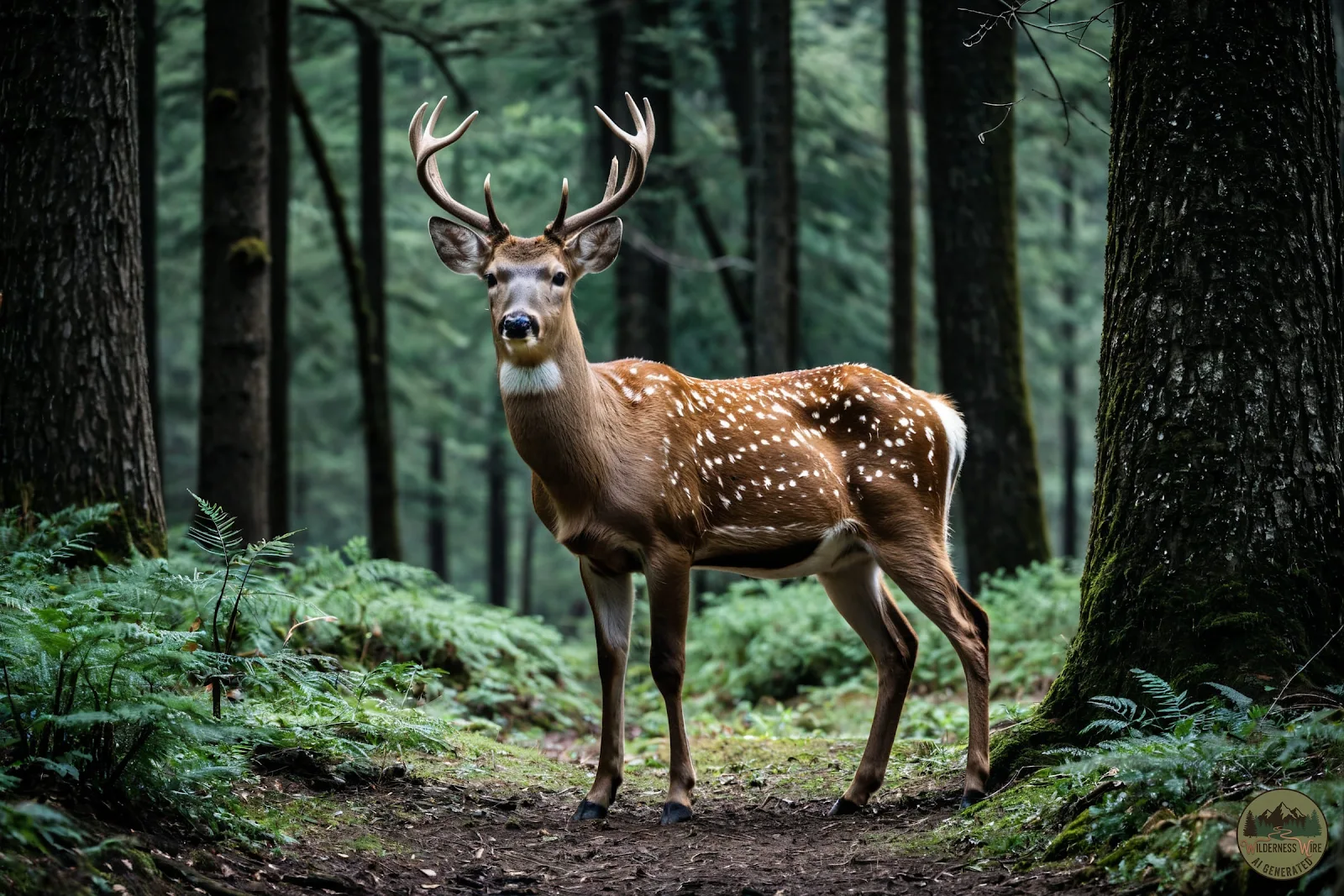
Characterized by their striking appearance, sika deer display a remarkable range of coat colors and patterns, which can vary significantly between subspecies, seasons, and individual animals. Typically, their summer coat is a vibrant reddish-brown, adorned with prominent white spots arranged in distinct lines along their flanks and back. This spotted pattern, reminiscent of a fawn's coat, often fades in winter, replaced by a thicker, darker grey-brown pelage that offers enhanced camouflage against the starker backdrop of leafless woodlands. A defining feature is their distinctive white rump patch, which flares out when the deer is alarmed, serving as a visual warning signal to other individuals in the vicinity. Males, known as stags, grow impressive antlers that typically branch into several tines, usually four points per antler in mature individuals, though variations exist. These antlers are shed annually, typically in late winter or early spring, with new growth commencing almost immediately. Stags are noticeably larger than hinds (females), exhibiting clear sexual dimorphism.
Sika deer are highly adaptable creatures, capable of thriving in a wide array of habitats. Their native range spans from Siberia, through China, Korea, and Japan, into parts of Vietnam and Taiwan. Within these regions, they occupy diverse environments, including dense temperate and boreal forests, mixed woodlands, grasslands, and even marshy areas. Their ability to consume a broad spectrum of vegetation, from grasses and herbs to tree leaves, bark, and even fungi, contributes significantly to their success. This dietary flexibility allows them to persist in areas where other deer species might struggle. They are often found in areas with a good understory, providing both food and shelter from predators.
Their social structure is quite fluid, ranging from solitary individuals to small family groups or even larger herds, particularly during the rutting season. Sika deer are known for their complex and varied vocalizations, which are particularly pronounced during the autumn rut. Stags emit a range of sounds, from high-pitched whistles and groans to a startling, roaring scream that can carry for considerable distances. This "scream" serves to establish dominance among competing males and to attract hinds. The rut is a period of intense competition, with stags engaging in ritualistic displays and fierce clashes to win breeding rights. Following a gestation period of approximately 7-8 months, hinds typically give birth to a single fawn, though twins are not unheard of. Fawns are born with their characteristic spotted coats, providing excellent camouflage in dense vegetation. They are initially hidden by their mothers, who visit periodically to nurse, before gradually integrating into the social structure.
Beyond their native territories, sika deer have been introduced to numerous other countries, including parts of Europe (such as the United Kingdom, Ireland, and continental Europe) and North America (particularly Maryland, Virginia, and Texas in the United States). These introductions often occurred for hunting purposes or through escapes from private collections. While some introduced populations have remained localized, others have flourished, leading to significant ecological impacts. In many areas, sika deer are considered an invasive species, competing with native deer species for resources and sometimes hybridizing with red deer, posing a threat to the genetic purity of both species. Their prolific browsing habits can also alter forest understories and impact tree regeneration, necessitating careful management strategies to mitigate their ecological footprint.
Despite the challenges posed by introduced populations, the sika deer remains a fascinating species. In Japan, the Nara deer, a semi-domesticated population of sika, are revered as sacred messengers of the gods and roam freely within the city's parks, interacting daily with tourists. This unique relationship highlights the species' capacity for coexistence with humans under specific cultural contexts. From their striking seasonal coats and formidable antlers to their dramatic vocalizations and adaptable nature, sika deer offer a compelling study in resilience and the complex dynamics of wildlife management in a rapidly changing world. Understanding their ecology, behavior, and the implications of their global spread is crucial for ensuring the health of both their native ecosystems and the landscapes they now inhabit as introduced species.