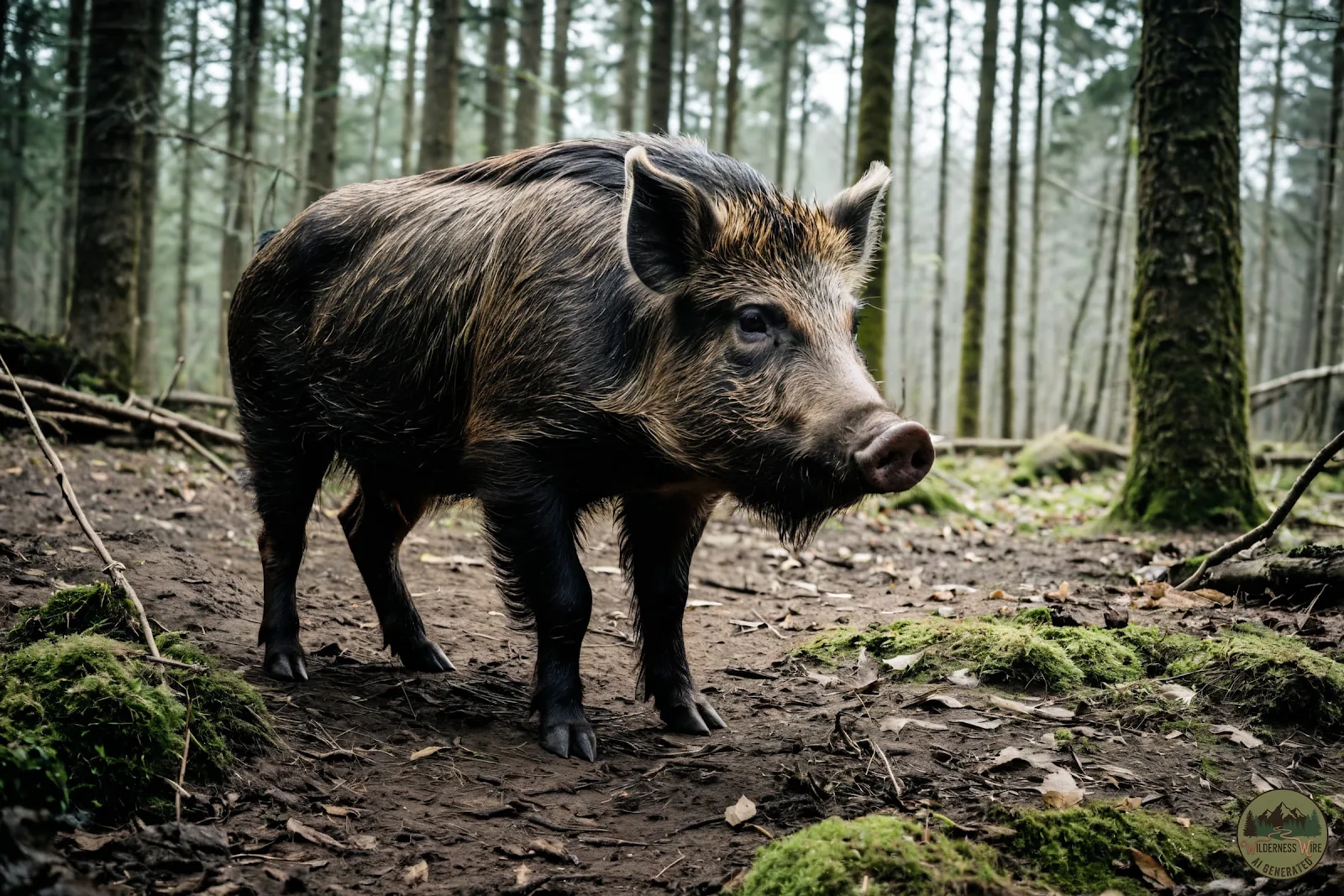
Master of Adaptation: The Anatomy, Intelligence, and Global Success of the Wild Boar
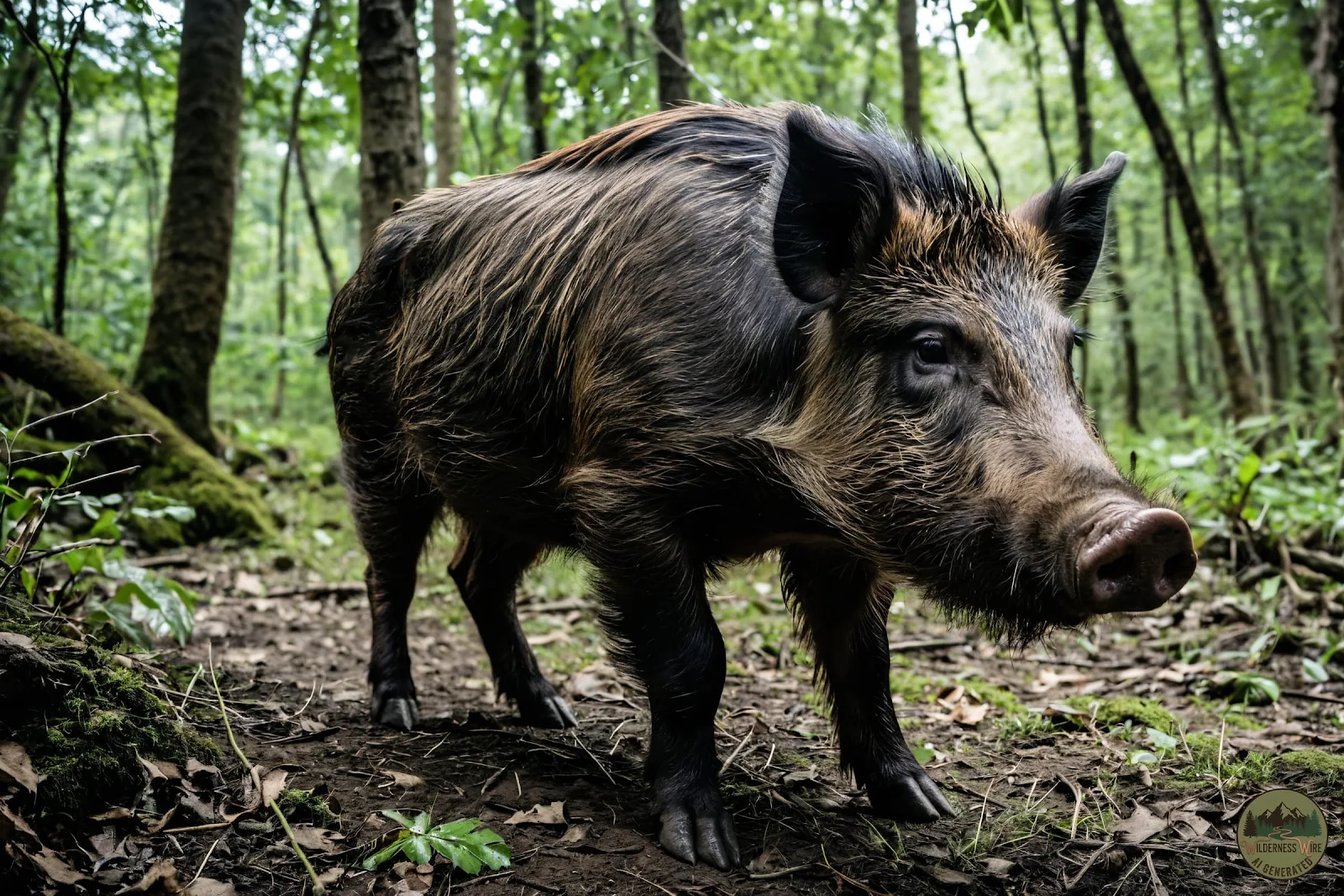
The wild boar, scientifically known as Sus scrofa, represents one of the most successful and resilient mammalian species on the planet. Originating across much of Eurasia and North Africa, this ancestor of the domestic pig has demonstrated an extraordinary capacity for adaptation, allowing it to colonize diverse environments ranging from semi-arid steppes and tropical rainforests to temperate woodlands and even suburban fringes. Its survival is not merely a matter of chance but a result of millions of years of evolutionary refinement, resulting in an animal that is physically formidable, socially complex, and intellectually sharp.
Physically, the wild boar is a masterpiece of functional anatomy. Unlike their domesticated descendants, wild boars possess a lean, muscular build characterized by a heavy front end and a sloping back. Their most distinctive feature is arguably the elongated, wedge-shaped head, which terminates in a highly sensitive cartilaginous snout. This snout is powered by a complex network of muscles, allowing the animal to exert tremendous force when "rooting" or digging into the earth. This behavior is central to their survival, as it enables them to access underground food sources such as tubers, roots, and fungi that are unavailable to most other large mammals.
The defensive and offensive capabilities of the boar are centered on its tusks. In males, the canine teeth grow continuously throughout their lives. The lower tusks, known as "cutters," are razor-sharp weapons, while the upper tusks, or "whetters," serve as sharpening stones. When the boar closes its mouth, the upper and lower teeth rub together, maintaining a lethal edge. To protect themselves during territorial disputes or against predators, mature boars develop a thick layer of subcutaneous tissue and cartilage over their shoulders, often referred to as a "shield." This natural armor is so dense that it can deflect the tusks of rivals or the claws of a predator.
Beyond their physical prowess, wild boars are defined by their sophisticated sensory systems. While their eyesight is relatively poor, specialized for detecting motion rather than fine detail, their sense of smell is nothing short of extraordinary. A wild boar can detect odors from several miles away and locate food buried several feet underground. This olfactory capability is complemented by acute hearing, making them difficult to surprise in the wild. These senses are vital for an animal that is primarily crepuscular or nocturnal, moving through the undergrowth during the hours of dawn, dusk, and darkness to avoid human contact and heat.
The social structure of Sus scrofa is centered on the "sounder," a cohesive group typically consisting of several related females and their offspring. These sounders are led by an experienced matriarch who dictates movement, foraging locations, and flight responses. The matriarchal system ensures that knowledge of water sources and seasonal food abundance is passed down through generations. In contrast, adult males are largely solitary, joining the sounders only during the breeding season, known as the "rut." This social dichotomy reduces competition for resources within the group and ensures that the most robust genetic traits are passed on through the dominant males who successfully compete for breeding rights.
Ecologically, the wild boar is often described as an "ecosystem engineer." Their constant rooting behavior has a profound impact on the environment. While often criticized for the damage they cause to agricultural crops, in a natural forest setting, this disturbance can be beneficial. Rooting aerates the soil, accelerates the decomposition of organic matter, and creates seedbeds for various plant species. However, their role becomes more controversial when they are introduced as an invasive species. In regions like North America and Australia, where native ecosystems did not evolve alongside high-intensity rooting mammals, boars can cause significant damage to native flora and fauna, often outcompeting local species for food and destroying sensitive habitats.
One of the keys to the boar's global expansion is its status as an opportunistic omnivore. There is very little a wild boar will not eat. Their diet shifts with the seasons, focusing on acorns, beech mast, and chestnuts in the autumn, while turning to green vegetation, insects, and small vertebrates in the spring. They are also known to scavenge carrion, playing a vital role in nutrient cycling within the forest. This dietary flexibility, combined with a high reproductive rate—sows can produce two litters of four to six piglets in a single year under ideal conditions—allows populations to recover rapidly from disease or heavy predation.
The intelligence of the wild boar is frequently underestimated. Researchers have found that suids possess cognitive abilities comparable to those of dogs and even some non-human primates. They are capable of problem-solving, exhibit long-term memory, and show a high degree of behavioral plasticity. In areas where they are frequently hunted, boars have been observed changing their activity patterns to become strictly nocturnal or learning to navigate complex urban environments to find food. This intelligence makes them one of the most difficult species to manage, as they quickly learn to avoid traps and recognize the signs of human presence.
Historically, the wild boar has occupied a significant place in human culture and mythology. In ancient Greece, the Erymanthian Boar was a symbol of raw, untameable nature, while in Norse mythology, the boar Gullinbursti represented fertility and strength. For centuries, hunting the boar was considered the ultimate test of courage for European nobility, due to the animal's legendary ferocity when cornered. This cultural relationship eventually led to the domestication of the species, resulting in the pigs that are now a cornerstone of global agriculture. Yet, despite millennia of living alongside humans, the wild boar remains fundamentally wild, resisting total subjugation and continuing to thrive in the shadows of human civilization.
As we move further into the 21st century, the relationship between humans and wild boars continues to evolve. Climate change, which results in milder winters and higher seed production in forests, has led to a population explosion in many parts of Europe. This brings them into more frequent conflict with humans as they venture into cities and suburbs. Understanding the wild boar requires a balance of acknowledging their potential for destruction and respecting their vital role in the natural world. They are a testament to the persistence of wilderness, a species that survives not by avoiding change, but by mastering it.