The Resilient Yak: A Biological Masterpiece and Cultural Icon of the High Himalayan Peaks
The high-altitude reaches of the Tibetan Plateau and the surrounding Himalayan ranges represent one of the most inhospitable environments on Earth. In these desolate, oxygen-thin landscapes, where temperatures can plummet to forty degrees below zero, few large mammals can survive, let alone thrive. Among those that do, the yak stands as a definitive icon of evolutionary resilience. Known scientifically as Bos grunniens (the domestic yak) and Bos mutus (the wild yak), these massive bovines are not merely survivors of the cold; they are biological masterpieces of adaptation, specifically engineered by nature to inhabit the "Roof of the World."
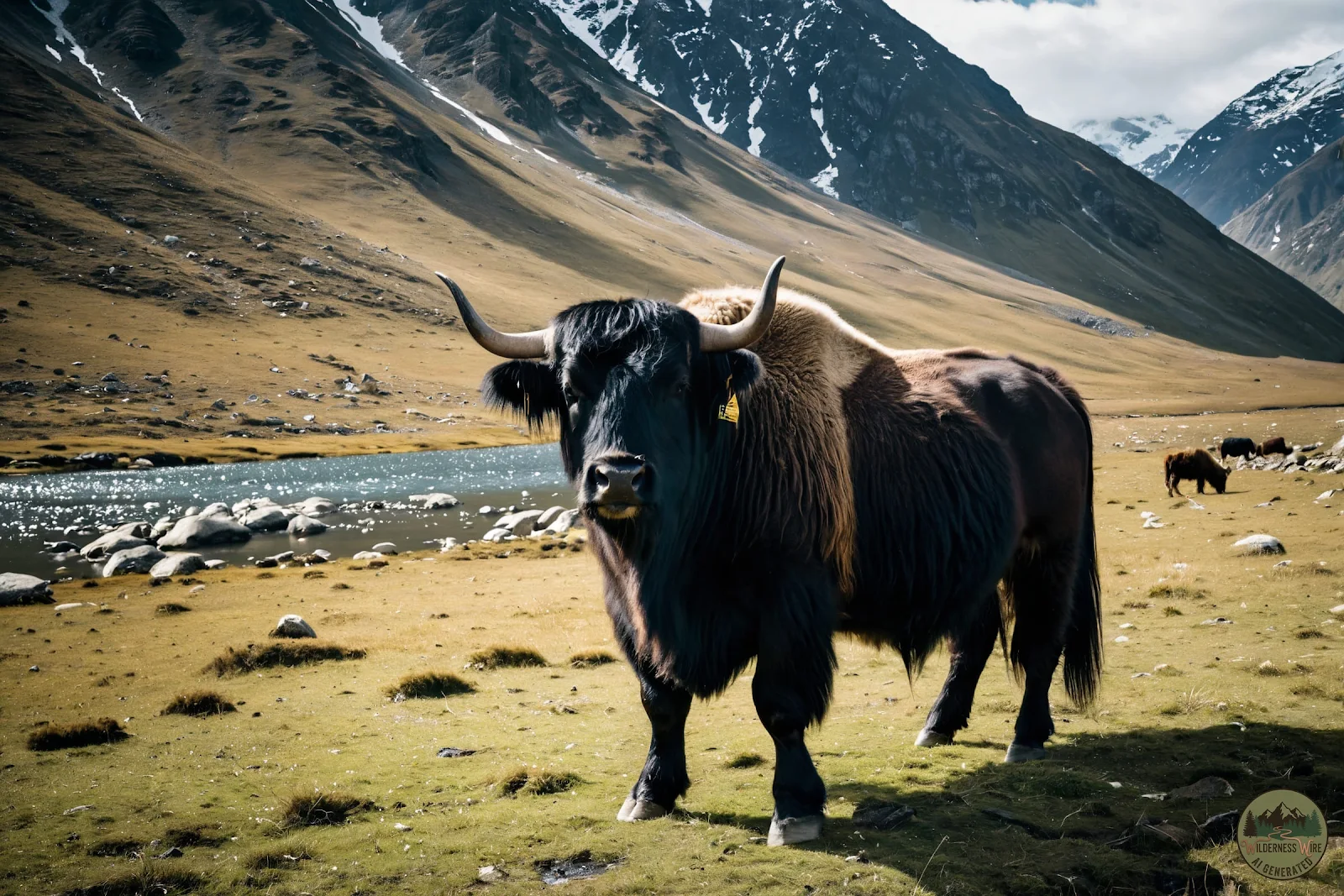
The physical profile of the yak is defined by its most striking feature: an immense, multi-layered coat. This integumentary system consists of a long, shaggy outer layer of guard hairs that can reach nearly to the ground, acting as a windbreak and shedding moisture. Beneath this outer shell lies a dense, matted undercoat of fine wool, often referred to as "khullu." This inner layer is exceptionally efficient at trapping air and body heat, providing an insulation value comparable to the finest cashmere or qiviut. Unlike most other bovines, yaks possess very few sweat glands, an adaptation that conserves heat in the frigid alpine air, though it renders them highly susceptible to heat exhaustion at lower, warmer altitudes.
Beyond its external insulation, the internal physiology of the yak is uniquely tuned to hypoxia. At elevations exceeding 4,000 meters, the available oxygen is roughly half of what is found at sea level. To compensate, yaks have developed larger hearts and lungs relative to their body size than cattle found in lowland regions. More importantly, their blood chemistry is specialized; yaks possess a high red blood cell count and a unique hemoglobin structure that facilitates the rapid uptake and efficient transport of oxygen. Their rumen, too, is adapted to process the tough, fibrous sedges and grasses of the alpine tundra, allowing them to extract maximum caloric value from a landscape that appears barren to the casual observer.
There is a significant distinction between the domestic yak and its wild progenitor. The wild yak, or "drong" in Tibetan, is a formidable creature, considerably larger and more aggressive than its domesticated counterpart. A wild bull can stand two meters tall at the shoulder and weigh up to 1,000 kilograms. These wild populations are now critically endangered, restricted to the most remote corners of the Qinghai-Tibet Plateau. They are darker in color, usually a deep charcoal or black, and possess a wary disposition honed by centuries of avoiding predators like the Himalayan wolf and the snow leopard. In contrast, domestic yaks exhibit a wider variety of coat colors, including brown, white, and piebald, and are generally smaller, having been bred over several millennia for docility and specific utility.
The domestication of the yak was a pivotal moment in human history, enabling the colonization of the high-altitude plateaus. For the nomadic peoples of Central Asia, the yak is more than livestock; it is the foundation of an entire civilization. Often referred to as the "ships of the plateau," these animals provide virtually every necessity for survival. Their milk is rich in fat—often up to 7%—and is processed into butter and "chhurpi," a hard cheese that can be stored for years. Yak butter holds profound cultural and religious significance, used both as a primary caloric source in butter tea and as fuel for lamps in Buddhist monasteries. The coarse hair is woven into heavy-duty tents and ropes, while the soft under-down is used for clothing. Even the animal's dung is indispensable, serving as the primary fuel source for cooking and heating in a landscape where trees are non-existent.
Ecologically, yaks play a vital role in maintaining the health of the alpine meadow ecosystem. Through their grazing patterns, they prevent the dominance of certain plant species, promoting biodiversity among the low-lying flora. Their movement across the landscape helps aerate the soil and distribute nutrients through their waste. However, the balance of this ecosystem is increasingly fragile. Climate change is causing the rapid retreat of Himalayan glaciers and the thawing of permafrost, which alters the distribution of water and the composition of the grasses the yaks rely upon. Furthermore, the encroachment of domestic herds into wild yak territories leads to competition for resources and the risk of genetic hybridization, which threatens the purity and survival of the wild Bos mutus lineage.
In the modern era, the yak is also gaining recognition beyond its traditional borders. The textile industry has begun to value yak fiber as a sustainable and ethical alternative to other luxury wools. Because yaks shed their undercoat naturally in the spring, the fiber can be harvested without shearing, appealing to the growing market for animal-friendly products. This burgeoning industry provides a potential economic lifeline for nomadic herders, whose traditional way of life is under pressure from modernization and government settlement policies. By creating a global market for yak products, there is a renewed incentive to maintain traditional herding practices that are more ecologically integrated than industrial farming.
To observe a yak in its natural habitat is to witness a creature in perfect harmony with a hostile environment. Whether it is a domestic herd traversing a high mountain pass with heavy loads or a lone wild bull standing defiant against a blizzard, these animals embody the spirit of the high mountains. Their survival is intrinsically linked to the health of the Tibetan Plateau, a region often called the "Third Pole" due to its massive ice reserves. As we look toward the future, the conservation of the wild yak and the support of sustainable yak husbandry are essential not only for the preservation of a unique species but for the cultural and ecological integrity of one of the world’s most extraordinary landscapes.