Gentle Giants of the Ocean: The Biology and Mystery of the Majestic Whale Shark
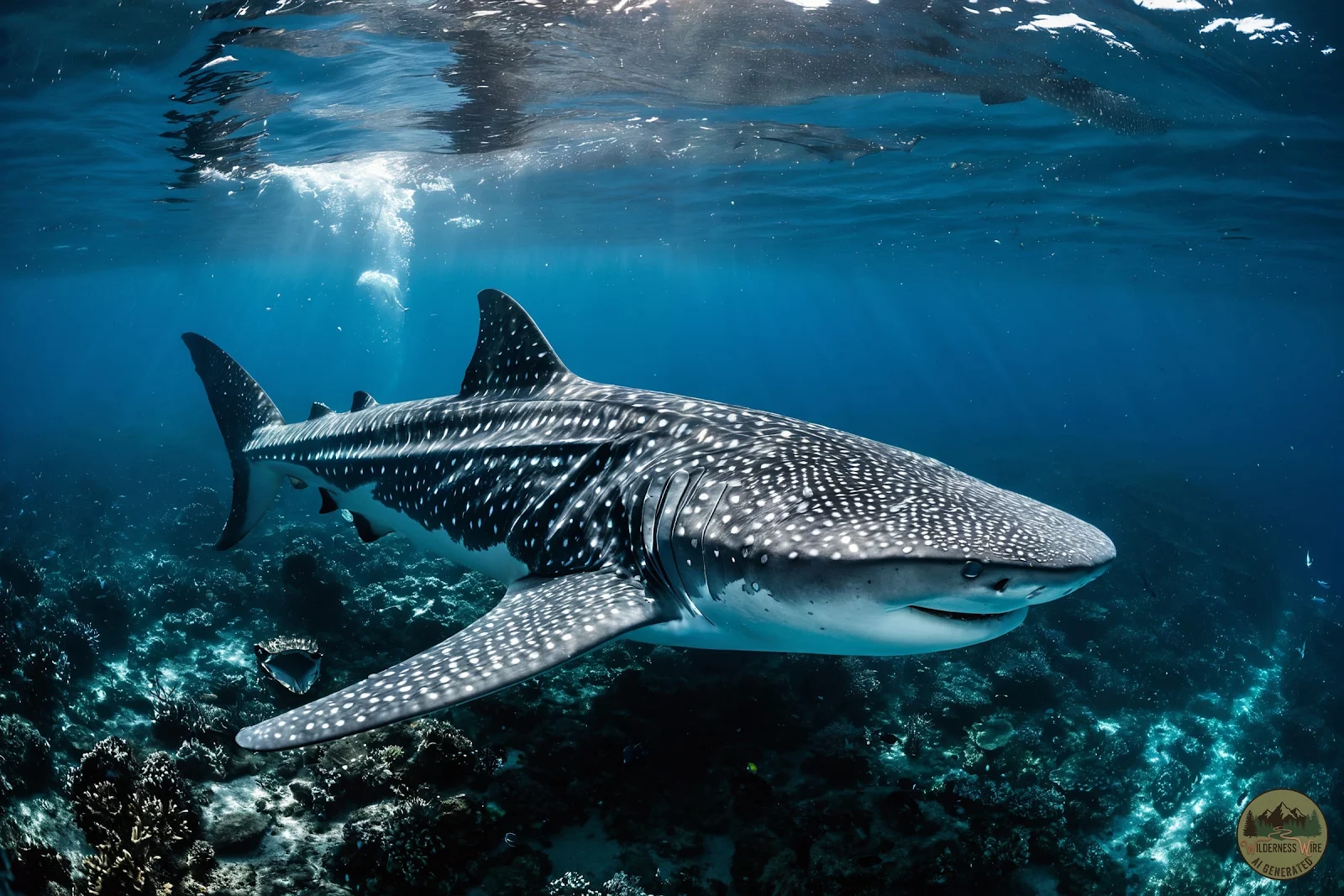
The vast, blue expanses of the world’s tropical oceans harbor many giants, but none are as enigmatic or as visually striking as the whale shark (Rhincodon typus). Despite its formidable name, this creature is not a whale, but rather the largest extant fish species on the planet. Reaching lengths that can exceed 12 meters—with some unverified reports suggesting individuals of up to 18 meters—the whale shark is a cartilaginous fish, belonging to the same subclass as sharks and rays. Its presence in the water is a testament to the evolutionary success of filter-feeding strategies, a niche it shares with the great baleen whales, despite belonging to a completely different evolutionary lineage.
One of the most defining characteristics of this species is its skin, which is both a protective armor and a biological identifier. The skin can be up to ten centimeters thick, the toughest of any living animal, and is covered in small, tooth-like scales known as dermal denticles. This provides protection against predators and reduces drag as the shark moves through the water. More fascinating, however, is the unique pattern of white spots and pale horizontal and vertical stripes that cover its dark grey or blue-toned back. Much like a human fingerprint, these patterns are entirely unique to each individual. Marine biologists have even adapted algorithms originally developed for mapping star constellations in the night sky to identify individual sharks by their spot patterns, allowing for non-invasive tracking and population monitoring across the globe.
The whale shark's feeding mechanism is a marvel of biological engineering. Unlike most sharks that rely on rows of sharp teeth to hunt active prey, the whale shark is a filter feeder. Its mouth, which can be over a meter wide, is located at the very front of its head—a "terminal" position—rather than underneath the snout like many other shark species. While it possesses hundreds of rows of tiny, non-functional teeth, its primary tools for nourishment are its gill rakers. As the shark swims with its mouth open, it takes in massive volumes of water containing plankton, krill, small fish, and squid. The water is then forced out through the gill slits, while the solid matter is trapped by the internal filtration pads. This "cross-flow" filtration system is remarkably efficient, preventing the filters from clogging even in nutrient-rich waters.
This feeding behavior often dictates the migratory patterns of the species. Whale sharks are known to be highly migratory, traveling thousands of miles to follow seasonal blooms of plankton or mass spawning events of coral and fish. They are frequently observed in specific "hotspots" such as Ningaloo Reef in Australia, the Mesoamerican Barrier Reef off the coast of Mexico, and the waters around the Philippines and Mozambique. These aggregations are often composed primarily of juvenile males, leading to significant questions about the whereabouts of the adult females and the younger pups, which remain largely elusive to the scientific community.
The reproductive life of the whale shark remains one of the great mysteries of marine biology. For decades, it was unclear whether they laid eggs or gave birth to live young. This was clarified in 1995 when a pregnant female was caught off the coast of Taiwan, containing over 300 embryos at various stages of development. This confirmed that the species is ovoviviparous, meaning the eggs hatch inside the mother and she gives birth to live young. However, the location of their nursery grounds remains a subject of intense research. Scientists believe that pregnant females may venture into the open ocean or deep water to give birth, away from the coastal areas where they are most commonly sighted.
Furthermore, their diving capabilities are extraordinary for a fish that is often associated with sun-drenched surface waters. While they are frequently seen basking or feeding near the surface, satellite tracking has revealed that they can dive to depths exceeding 1,900 meters. These deep-sea excursions are likely driven by the search for different food sources or for thermoregulation. Because they are ectothermic (cold-blooded), diving into the frigid depths of the bathypelagic zone requires them to eventually return to the surface to warm their massive bodies in the sunlit layers of the ocean.
Despite their massive size and lack of natural predators—save for the occasional attack by orcas or large great white sharks on smaller individuals—whale sharks face significant threats from human activity. They are currently listed as Endangered on the IUCN Red List. Historically, they were targeted by fisheries for their fins, oil, and meat. While international trade is now heavily regulated under CITES, they are still vulnerable to "ghost" fishing nets, boat strikes due to their surface-feeding habits, and the ingestion of microplastics. As filter feeders, they are particularly susceptible to plastic pollution, as they cannot easily distinguish between nutrient-rich plankton and small fragments of floating debris.
In recent years, ecotourism has emerged as a double-edged sword for the conservation of the species. On one hand, "swim with the giants" programs have provided an economic incentive for local communities to protect the sharks rather than hunt them, turning them into valuable living assets. On the other hand, the sheer volume of tourists and boats can disrupt feeding behaviors and cause physical injury. Responsible management and strict ethical guidelines are essential to ensure that human curiosity does not detrimental impact the health of these gentle giants. Their longevity—estimated to be between 70 and 100 years—means that every individual lost has a long-term impact on the stability of the population.
Studying the whale shark is not merely an exercise in curiosity; it is vital for understanding the health of our oceans. As an umbrella species, the protection of the whale shark and its migratory corridors naturally leads to the protection of countless other marine organisms and habitats. Their presence signals a productive ecosystem, and their movements offer insights into the changing temperatures and currents of a warming planet. To observe a whale shark in the wild is to witness a relic of ancient biological success, a silent wanderer that bridges the gap between the surface world and the mysterious depths of the abyss.