Australia’s Subterranean Bulldozer: The Unique Biology and Vital Ecological Role of the Mighty Wombat
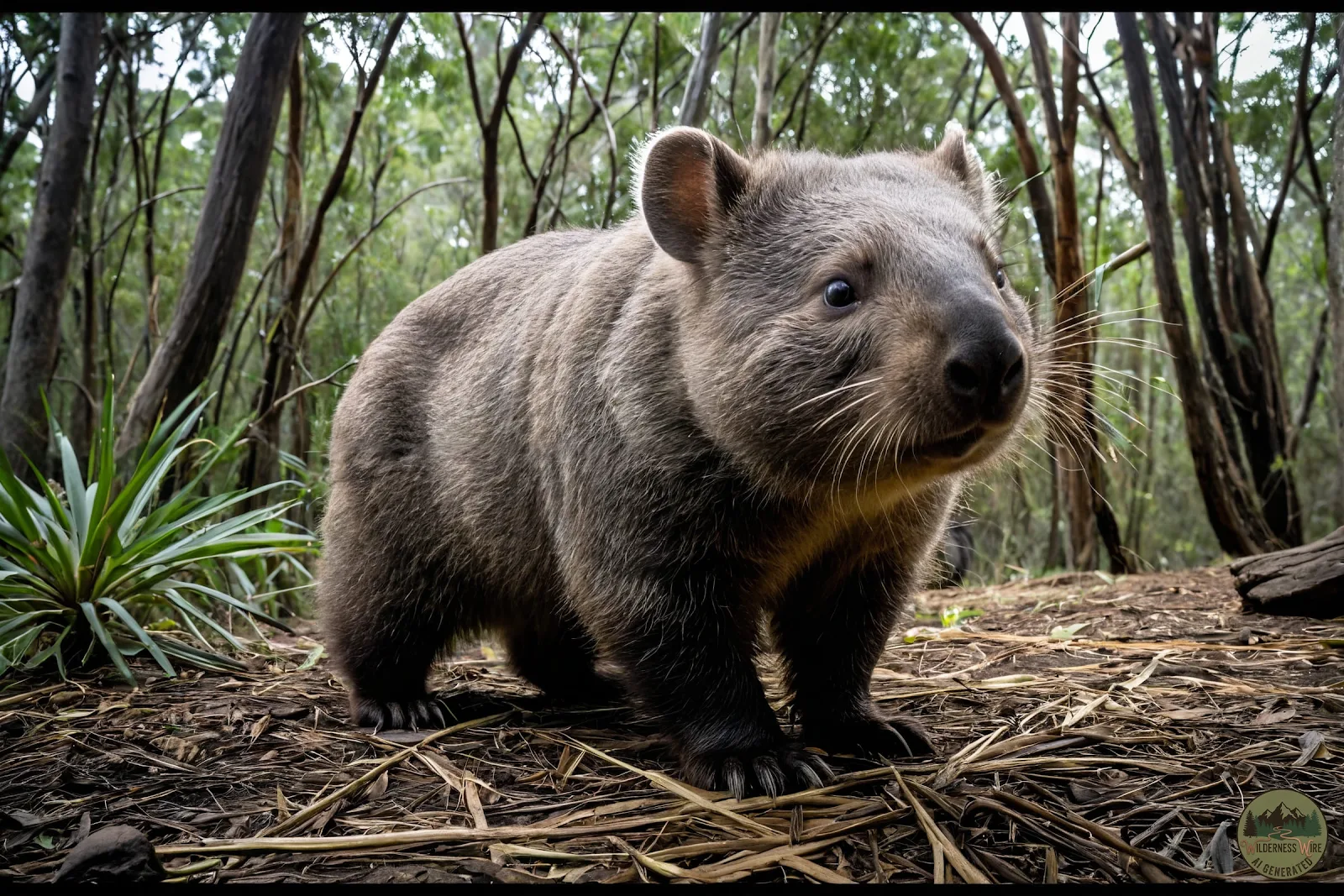
The Australian wilderness is home to some of the world’s most specialized fauna, yet few creatures embody the rugged resilience of the continent quite like the wombat. These stout, short-legged marsupials belong to the family Vombatidae and are the closest living relatives to the koala. However, unlike their arboreal cousins, wombats have evolved to master the subterranean world, transforming into the "bulldozers of the bush." Their existence is a masterclass in evolutionary adaptation, combining brute strength with a suite of physiological features that allow them to thrive in environments ranging from alpine heaths to semi-arid scrublands.
Physically, the wombat is a marvel of biological engineering. Most individuals weigh between 20 and 35 kilograms, though some specimens can reach up to 40 kilograms. Their bodies are barrel-shaped and compact, supported by thick, muscular limbs ending in heavy-duty claws designed for displacement. A wombat’s skeleton is remarkably dense, providing the leverage necessary to move several tons of earth over its lifetime. Their teeth are equally specialized; like those of rodents, a wombat’s incisors never stop growing, a necessary adaptation for a diet consisting of tough, fibrous grasses, roots, and bark that would quickly wear down conventional molars.
The most profound environmental impact of the wombat lies in its role as an ecosystem engineer. Through the construction of vast, complex burrow systems, wombats alter the physical landscape in ways that benefit a multitude of other species. These burrows can extend up to 30 meters in length and reach depths of several meters, providing a stable microclimate that remains cool in the blistering summer heat and insulated during freezing winter nights. Research conducted during recent Australian bushfires revealed an extraordinary phenomenon: these tunnels served as life-saving refuges for wallabies, echidnas, and small reptiles. By creating these underground sanctuaries, wombats inadvertently support the biodiversity of their entire habitat, making them a keystone species in the Australian ecosystem.
One of the most distinctive features of the wombat is its reproductive physiology. As marsupials, females possess a pouch where the young, known as joeys, continue to develop after a brief gestation period. However, in a brilliant evolutionary pivot, the wombat’s pouch opens toward the rear. This backward-facing orientation is a crucial adaptation for a digging animal; it prevents the pouch from filling with dirt and debris while the mother is excavating, ensuring the safety and cleanliness of the developing joey. This allows the mother to remain active and productive in her burrowing duties without risking the health of her offspring.
Beyond their digging prowess, wombats possess a unique anatomical defense mechanism located at the rear of their bodies. The rump of a wombat is composed primarily of tough cartilage and thick skin, with very little fat and no tail to grab onto. When threatened by a predator, such as a dingo or a fox, the wombat will retreat into its burrow and block the entrance with its sturdy backside. This "shield" is nearly indestructible to bites and scratches. If a predator manages to wedge its head into the burrow above the wombat’s rump, the wombat can use its powerful legs to thrust upward, crushing the intruder's skull against the roof of the tunnel. This combination of passive and active defense makes the wombat one of the most difficult prey animals to successfully hunt in the Australian wild.
In recent years, the scientific community has been captivated by one of the wombat’s most peculiar biological quirks: their cubic scat. Wombats are the only known animals in the world to produce cube-shaped droppings. For a long time, it was erroneously believed that the wombat had a square-shaped anus. However, fluid dynamics research published in 2018 and 2021 revealed that the shaping occurs in the final sections of the intestine. The intestinal walls of a wombat have varying degrees of elasticity and thickness; as waste moves through, these uneven contractions mold the feces into distinct cubes. This serves a vital ecological purpose. Wombats use their scat to mark their territory, often placing it on top of rocks or fallen logs. The cubic shape prevents the droppings from rolling away, ensuring the scent marker remains exactly where the wombat intended it to be.
Despite their outward appearance of slow, bumbling movement, wombats are surprisingly agile. When threatened, they can reach speeds of up to 40 kilometers per hour in short bursts, a pace they can maintain for over a minute. This speed, combined with their low center of gravity and immense power, allows them to navigate dense undergrowth with surprising efficiency. Their metabolism, however, is one of the slowest among mammals, taking up to two weeks to fully digest a single meal. This slow metabolic rate is an essential survival strategy for living in nutrient-poor environments where food may be scarce or difficult to process.
There are three extant species of wombat: the Common Wombat, the Southern Hairy-nosed Wombat, and the critically endangered Northern Hairy-nosed Wombat. While the Common Wombat remains relatively widespread, the Northern Hairy-nosed variety is one of the rarest mammals on Earth, with a population that once dwindled to just 35 individuals. Intensive conservation efforts, including the establishment of predator-proof enclosures and translocation programs, have seen their numbers slowly rise, but they remain on the brink of extinction. The primary threats to all wombat species include habitat loss due to agriculture, competition with invasive species like rabbits and cattle, and the devastating spread of sarcoptic mange, a skin condition caused by parasitic mites that can be fatal if left untreated.
The wombat occupies a singular place in the natural history of the Southern Hemisphere. They are a link to an ancient past, surviving the extinction of the megafauna that once dominated the Australian continent—including their massive ancestor, the Diprotodon, which was the size of a rhinoceros. To observe a wombat in the wild is to witness a creature that has been refined by millions of years of environmental pressure into a perfectly adapted specialist. Their presence is a reminder of the complexity of the natural world and the intricate ways in which a single animal can shape the ground beneath our feet. Preserving the wombat is not merely about saving a single species; it is about protecting the subterranean infrastructure that sustains a vast network of Australian life.