Evolutionary brilliance and cultural heritage of the resilient yak on the high Tibetan Plateau.
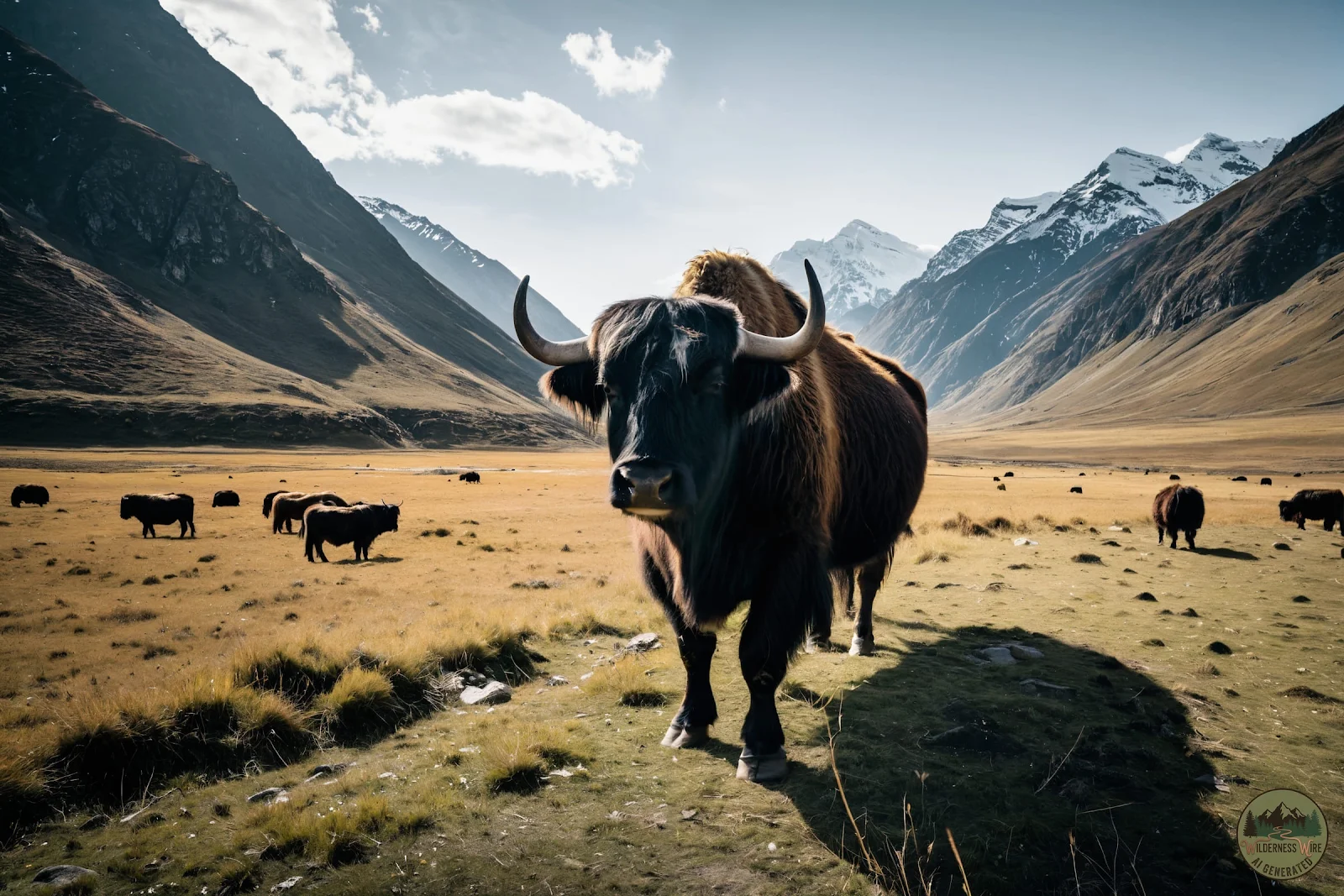
The high-altitude reaches of the Tibetan Plateau and the surrounding Himalayan massifs represent some of the most inhospitable environments on Earth. In this land of thin air, extreme ultraviolet radiation, and temperatures that routinely plunge below forty degrees Celsius, life must be specialized to the point of biological brilliance. At the center of this ecosystem is the yak, a bovine species that has not merely adapted to the "Third Pole" but has become its ultimate biological steward. While often compared to common cattle, the yak is an evolutionary outlier, possessing a genetic and physiological toolkit that separates it from any other member of the Bos genus.
The evolutionary divergence of the yak from its bovine ancestors occurred approximately 4.9 million years ago, a timeline that mirrors the dramatic uplift of the Tibetan Plateau. As the mountains rose, the ancestors of the modern yak were forced to adapt or perish. Those that survived developed a series of profound mutations in their genomic architecture. Modern research has identified specific genes, such as EGLN1 and HIF1, which are critical for sensing and responding to low oxygen levels. Unlike lowland cattle, which suffer from pulmonary hypertension and "brisket disease" when moved to high altitudes, yaks maintain a consistent blood pressure. Their hearts do not work harder to move oxygen; they work smarter, supported by a density of capillaries that allows for more efficient gas exchange at the cellular level.
The physical presence of the yak is a study in thermal engineering. The animal is draped in a triple-layered coat that provides an insulation factor higher than almost any other mammalian fiber. The outermost layer consists of long, coarse guard hairs that can reach the ground, acting as a windbreak and shedding snow and rain. Beneath this lies a mid-layer of shorter hair, and closest to the skin is the khullu—a fine, downy undercoat. This down is harvested by nomadic herders not through shearing, but through combing during the spring molting season. The khullu is prized globally for its softness and warmth, rivaling the finest cashmere, yet it serves a purely utilitarian purpose for the yak: maintaining a stable core temperature when the external environment is lethal.
This extreme insulation, however, creates a biological boundary. The yak is so well-adapted to the cold that it lacks functional sweat glands across the majority of its body. Thermal regulation is primarily achieved through respiration and a limited number of glands on the muzzle. Consequently, yaks are highly susceptible to heat stress. This physiological reality has dictated the migration patterns of both wild and domestic herds for millennia. They are tethered to the frost line; as summer heat rises, the herds move higher into the permafrost zones, returning to the valleys only when the grip of winter returns. This movement makes them an "indicator species" for climate change; as the treeline moves higher and the glaciers retreat, the yak’s available habitat is physically shrinking.
The distinction between the wild yak (Bos mutus) and the domestic yak (Bos grunniens) is vital for understanding the region's biodiversity. The wild yak is a shadow of its domestic cousin—larger, darker, and significantly more elusive. A wild bull can stand two meters tall at the shoulder and weigh over a metric ton. These animals are the architects of the alpine meadows. Their grazing habits are non-destructive; they utilize a sweeping motion with their tongues rather than pulling plants out by the roots, which encourages the growth of hardy sedges and prevents the encroachment of woody shrubs. By maintaining the health of these grasslands, yaks ensure the survival of other high-altitude species, from the Tibetan antelope to the snow leopard.
In the human context, the yak is the foundation of a unique pastoral civilization. For the nomadic populations of the plateau, the yak is a "living treasury." It provides the primary source of protein through milk and meat, the primary source of fiber for clothing and housing, and the primary source of fuel in a landscape where trees are non-existent. Yak dung is a critical resource; when dried, it burns with a steady, low-smoke heat that is essential for survival in high-altitude tents. The cultural identity of the region is so intertwined with the animal that the Tibetan word for yak, 'nor', translates literally to "wealth." Without the yak, human expansion into the highest inhabited regions of the world would have been impossible.
The modern era brings new challenges to this ancient relationship. Hybridization, while historically useful for creating the 'dzo' (a cross between a yak and a cow that is more heat-tolerant and manageable at lower altitudes), now poses a threat to the genetic purity of the wild yak. Furthermore, as the Tibetan Plateau warms at twice the global average rate, the delicate balance of the alpine steppe is shifting. The melting of permafrost is changing the composition of the grasses the yak depends on, often replacing nutritious forage with toxic weeds or bare earth. Conservation efforts are now focusing on protecting "migration corridors" that allow wild herds to move between protected reserves in China, India, and Nepal, ensuring that the genetic diversity of the wild lineage remains intact.
The yak is more than just a beast of burden or a source of wool. It is a biological marvel that represents the limits of mammalian endurance. Its existence is a testament to the power of specialized evolution and a reminder of the fragility of high-altitude ecosystems. To protect the yak is to protect the "water tower of Asia," as the health of the plateau's grasslands, maintained by these bovines, is directly linked to the stability of the watersheds that feed billions of people downstream. As we look toward an uncertain climatic future, the resilience of the yak offers both a subject of scientific wonder and a critical focus for global conservation.