The Majestic Wapiti Exploring the Biology and Natural History of the North American Elk
Wapiti_00002_
The Wapiti, scientifically known as Cervus canadensis, stands as one of the most majestic and formidable members of the deer family, Cervidae. Often referred to in North America as the elk, its name derives from the Shawnee and Cree word "waapiti," which translates to "white rump." This linguistic distinction is crucial for global naturalists, as the term "elk" in Europe refers to the animal North Americans call the moose. The Wapiti is a creature of immense physical presence and ecological significance, acting as a keystone species in many of the temperate forests and meadow ecosystems it inhabits across North America and East Asia.
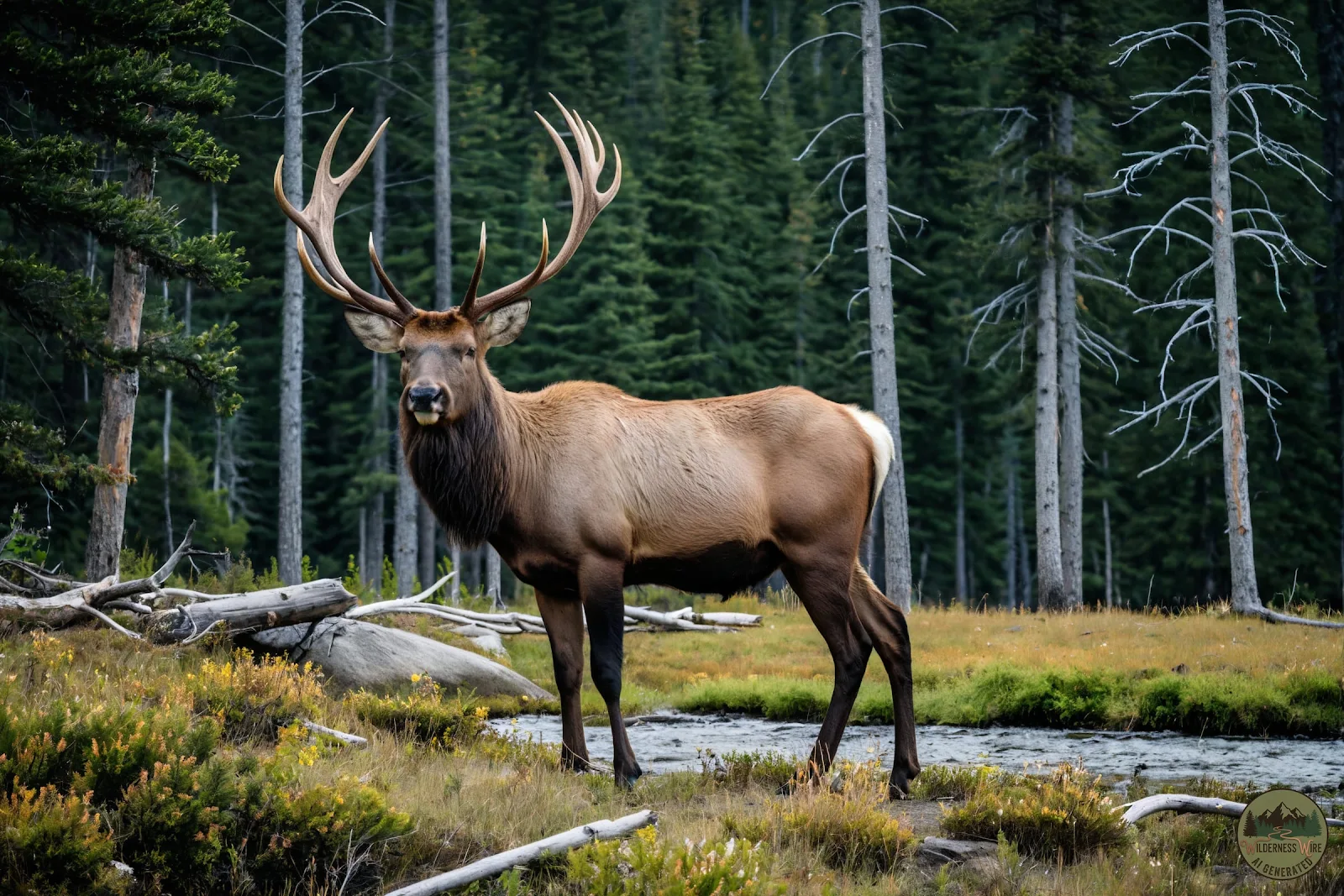
Physically, the Wapiti is a marvel of evolutionary adaptation. Adult bulls are particularly striking, often weighing between 700 and 1,100 pounds, while cows typically weigh between 500 and 600 pounds. Their coats vary seasonally, shifting from a copper-brown in the summer to a thicker, light tan or grayish-brown in the winter, which provides essential insulation against the harsh mountain climates. One of the most defining characteristics of the species is the prominent pale patch on the rump, which serves as a visual signal to other members of the herd during movement through dense brush or low-light conditions.
The antlers of the bull Wapiti are perhaps the most studied and admired biological structures in the cervid world. Unlike horns, antlers are composed of true bone and are shed and regrown annually. During the spring and summer, the growing antlers are covered in a highly vascularized skin known as "velvet," which supplies nutrients to the developing bone. By late summer, the bone hardens, the blood supply is cut off, and the bull rubs the velvet against trees to reveal the formidable tines beneath. A mature bull’s antlers can reach a span of four feet and weigh up to 40 pounds, serving as both a weapon for defense and a tool for sexual selection during the mating season.
The behavior of the Wapiti is dictated by the rhythm of the seasons, with the most dramatic period being the "rut," or mating season, which occurs in late summer and early autumn. During this time, the bulls undergo significant physiological changes, including a surge in testosterone and the swelling of their necks. The forest landscape is often punctuated by the "bugle," a haunting and complex vocalization that begins as a low growl and rises to a high-pitched whistle before ending in a series of grunts. This sound serves a dual purpose: it warns rival bulls to stay away and attracts cows into the bull's "harem." These harems can consist of up to twenty or more females, whom the bull vigorously defends against challengers in displays of dominance that occasionally escalate into violent antler-clashing battles.
Socially, Wapiti are highly gregarious animals. Outside of the rut, they typically segregate by sex. Females and their offspring live in large, organized herds led by a dominant matriarch, while bulls form smaller "bachelor groups" or remain solitary. This social structure provides a defensive advantage against predators such as wolves, mountain lions, and grizzly bears. By living in groups, the Wapiti increase the number of eyes and ears monitoring for threats, and the sheer collective mass of a fleeing herd can deter even the most persistent predators. Their sensory capabilities are finely tuned; their eyes are positioned on the sides of their heads, providing a wide field of vision, and their large ears can rotate independently to pinpoint the slightest rustle in the undergrowth.
Dietary habits of the Wapiti classify them as intermediate feeders, meaning they both graze on grasses and browse on shrubs and trees. This flexibility allows them to thrive in varied environments, from high alpine meadows to lowland river valleys. During the summer, they migrate to higher elevations to take advantage of the nutrient-rich grasses that emerge as the snow melts. In the winter, they descend to lower valleys where the snow is less deep and food is more accessible. Their impact on the ecosystem is profound; by browsing on willow and aspen, they influence the growth patterns of forests. In areas where predators have been reintroduced, such as Yellowstone National Park, the resulting "trophic cascade" has shown that when Wapiti are kept on the move by predators, the riverside vegetation flourishes, which in turn supports bird populations and beaver colonies.
Conservation history regarding the Wapiti is a testament to the resilience of the species and the success of modern wildlife management. In the 19th century, overhunting and habitat loss pushed the Wapiti toward the brink of extinction in many parts of North America. However, through the establishment of national parks, the implementation of regulated hunting seasons, and successful reintroduction programs, the population has rebounded significantly. Today, they are once again found in regions where they had been absent for over a century, including parts of the Appalachian Mountains and the Great Lakes region. They remain a symbol of the wild, untamed spirit of the wilderness, requiring vast, contiguous landscapes to thrive and continue their ancient migratory cycles.
Observing the Wapiti in its natural habitat offers a glimpse into a complex world of instinct and endurance. Whether it is a cow nursing her calf in the quiet of a misty morning or a bull standing silhouetted against a mountain ridge, the animal commands respect. It is a vital link in the ecological chain, a master of its environment, and a reminder of the intricate balance required to sustain life in the world's remaining wild spaces. Their presence ensures that the forests remain dynamic and that the natural heritage of the continents they inhabit remains intact for future generations of naturalists and observers.