The Evolutionary Journey and Conservation of Rare Tree Kangaroos in the Tropical Rainforest
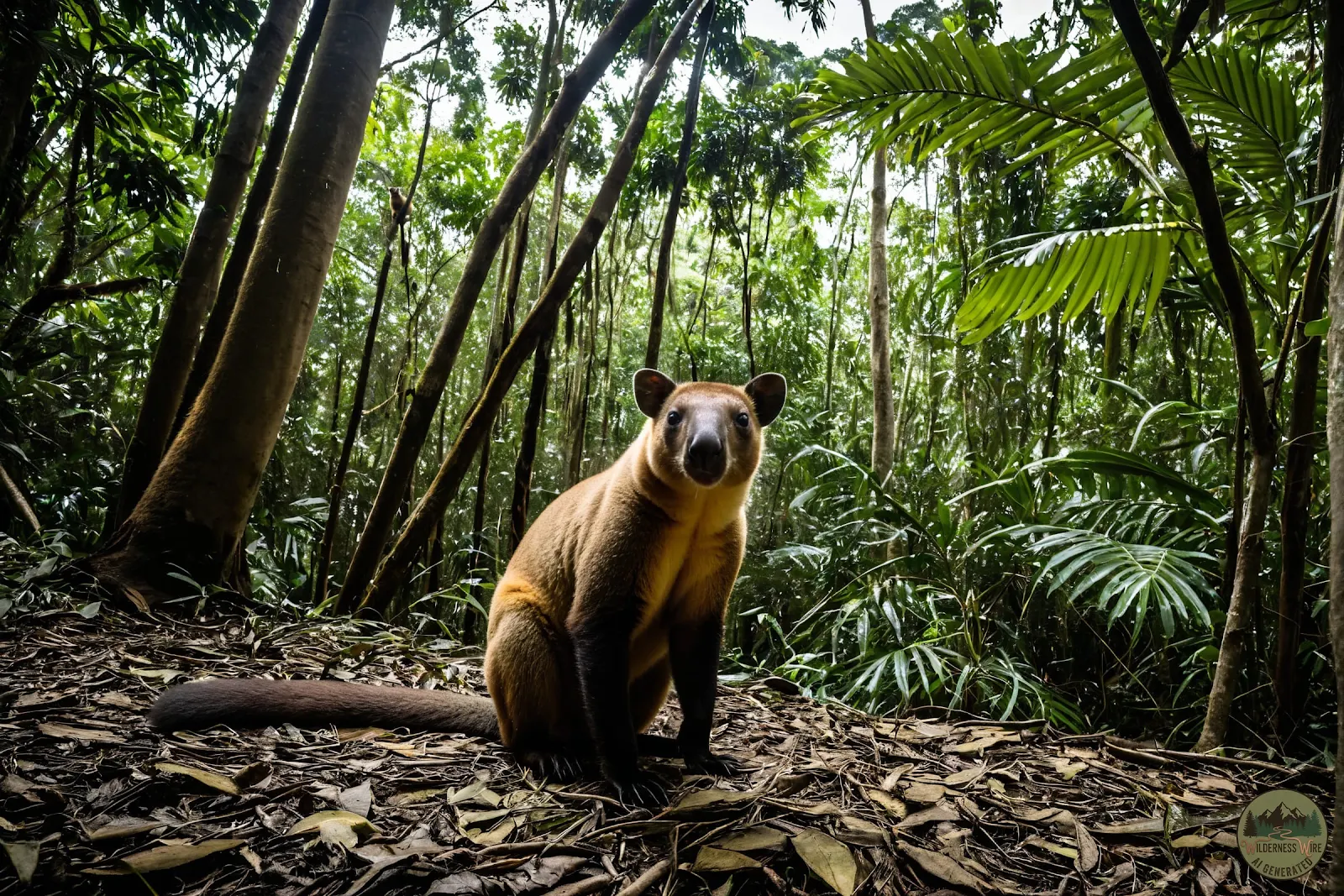
In the high-altitude cloud forests of New Guinea and the tropical north of Australia, an evolutionary curiosity resides within the canopy. While the word "kangaroo" typically evokes images of vast, arid plains and powerful bounds across flat red earth, the tree-kangaroo represents a radical departure from this archetype. These elusive marsupials have executed what biologists often describe as an evolutionary U-turn, returning to the trees millions of years after their ancestors first descended to the ground. This transition has resulted in a creature that possesses the rugged charm of a bear combined with the unmistakable features of a macropod.
The existence of tree-kangaroos is a testament to the versatility of the marsupial body plan. Belonging to the genus Dendrolagus, which translates literally to "tree hare," there are currently 14 recognized species. Most are endemic to the island of New Guinea, though two species—the Lumholtz's and Bennett's tree-kangaroos—are found in the rainforests of Far North Queensland, Australia. Their physiology has been meticulously reshaped by the demands of an arboreal life. Unlike their ground-dwelling cousins, whose hind limbs are elongated for high-speed hopping, tree-kangaroos have developed shorter, broader feet with roughened, sponge-like pads that provide exceptional grip on moss-covered bark. Their long, curved claws act as grappling hooks, allowing them to scale vertical trunks with surprising agility.
One of the most striking adaptations of the tree-kangaroo is its tail. While ground-dwelling kangaroos use their thick, muscular tails as a third leg for balance or a tripod while standing, the tree-kangaroo’s tail is remarkably long, often exceeding the length of its body. It is not prehensile like that of many New World monkeys; it cannot grasp branches. Instead, it serves as a sophisticated counterbalance. As the animal navigates the precarious architecture of the rainforest roof, the tail shifts and sways, acting as a rudder to maintain equilibrium during daring leaps. In some species, these leaps can span distances of up to nine meters between branches, and remarkably, they have been observed jumping from heights of 18 meters to the forest floor without sustaining injury.
The movement of a tree-kangaroo is a blend of specialized mechanics. On the ground, they appear somewhat ungainly compared to the fluid motion of a Red Kangaroo. They can hop, but they are also capable of walking bipedally—a rarity among macropods—moving their hind legs independently. However, once they reach a vertical surface, their true prowess is revealed. They wrap their powerful forelimbs around a trunk and "inchworm" their way upward, using the immense strength in their shoulders to haul their weight. This upper-body strength is another departure from terrestrial kangaroos, which have relatively small, weak forelimbs used primarily for grooming and slow-speed crawling.
Dietary habits also distinguish these forest dwellers. They are primarily folivores, spending a significant portion of their lives consuming the leaves of various rainforest trees, though they supplement this with fruit, bark, sap, and occasionally eggs or small birds. Their digestive systems are specialized to break down the tough cellulose and various secondary metabolites found in tropical foliage. Because their diet is relatively low in energy, tree-kangaroos spend a great deal of time resting to conserve calories, often blending perfectly into the epiphytes and mosses that festoon the high branches, making them notoriously difficult for researchers to spot.
The social structure of tree-kangaroos is generally solitary. Females typically give birth to a single "joey," which, like all marsupials, is born in an extremely underdeveloped state. The tiny joey crawls into its mother’s pouch, where it remains for up to ten months, nursing and growing until it is ready to explore the canopy. Even after leaving the pouch, the young kangaroo may stay with its mother for another year, learning the complex geography of the forest and identifying which leaves are safe to eat. This slow reproductive rate makes populations particularly vulnerable to environmental pressures.
Conservation remains a critical concern for the genus Dendrolagus. In New Guinea, habitat loss due to logging and coffee cultivation, combined with subsistence hunting, has pushed several species toward the brink of extinction. The Wondiwoi tree-kangaroo, for instance, was thought to be extinct for decades until a photographic sighting in 2018 sparked renewed hope. In Australia, habitat fragmentation and the threat of domestic dogs pose significant risks to the remaining populations. Conservation efforts have increasingly focused on community-based models, such as the Tree Kangaroo Conservation Program in the Huon Peninsula. These initiatives work with local indigenous landowners to create protected areas, recognizing that the survival of the species is inextricably linked to the stewardship of the people who share their forest home.
Studying tree-kangaroos offers scientists a window into how specialized niches can drive radical morphological changes over relatively short geological timeframes. They are a bridge between the ancient past and the present, reminding us that evolution is not a straight line but a winding path of adaptation. As "flagship species" for their ecosystems, their health reflects the health of the entire rainforest. To lose the tree-kangaroo would be to lose one of the most unique chapters in the story of mammalian evolution—a story of a creature that looked at the vast plains, turned around, and decided to reclaim the sky.
The mystery surrounding these animals is partly due to the inaccessible nature of their habitat. The cloud forests they inhabit are often shrouded in mist, with steep terrain that discourages human intrusion. This isolation has allowed the tree-kangaroo to remain one of the least understood large mammals on Earth. Modern technology, such as satellite collaring and remote camera trapping, is only now beginning to pull back the curtain on their private lives, revealing complex movement patterns and a sophisticated understanding of their vertical world. Every new piece of data reinforces the importance of preserving the ancient, primary forests that serve as their only sanctuary.