Understanding the Biology and Evolutionary Diversity of Australia’s Highly Specialized Wallaby Species
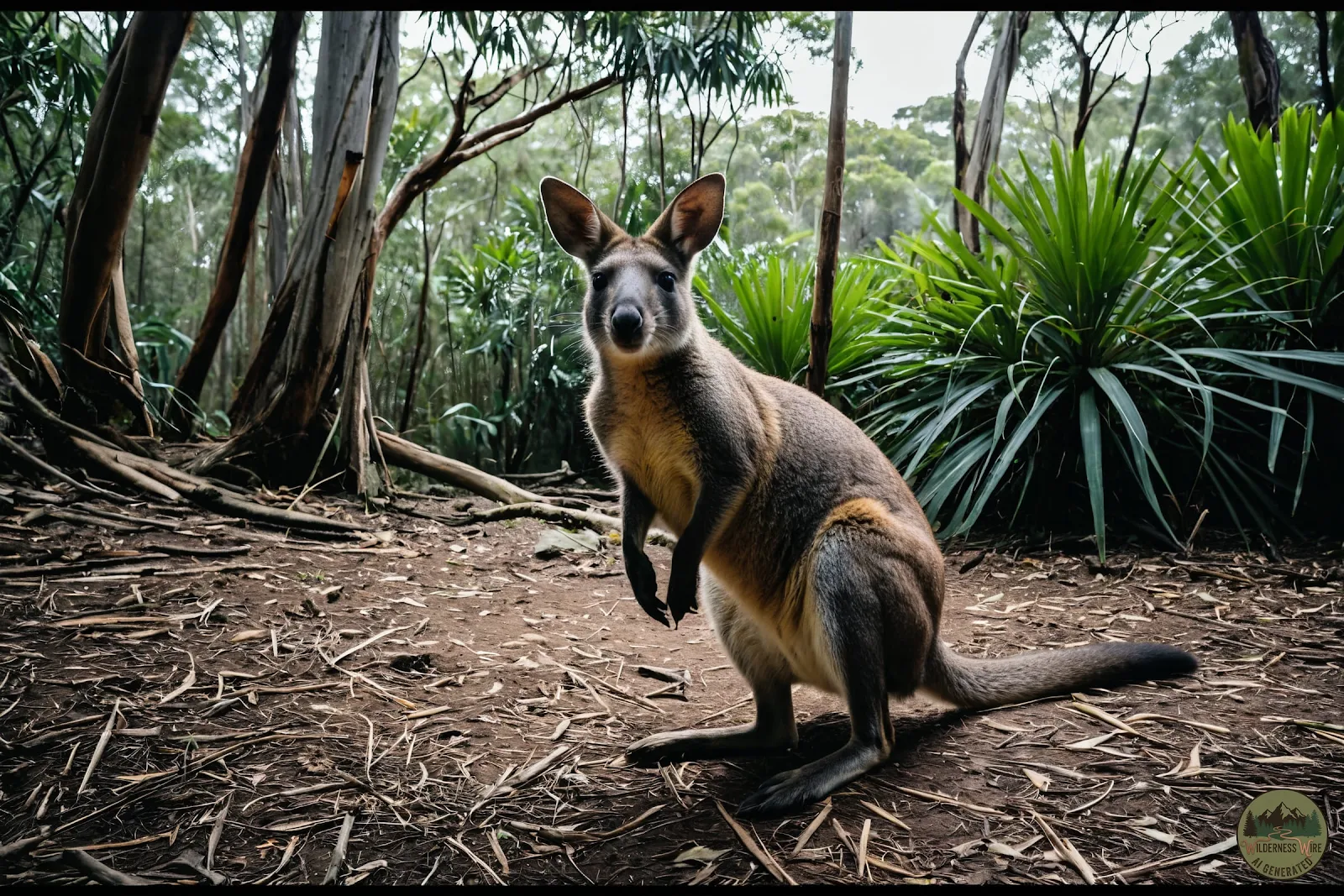
Wallaby_00002_
The Australian continent is home to an extraordinary array of marsupials, but few are as iconic yet misunderstood as the wallaby. While often overshadowed by their larger cousins, the kangaroos, wallabies represent a diverse and highly specialized group of macropods that have adapted to nearly every corner of the Australasian landscape. Ranging from the rugged cliffs of the interior to the dense rainforests of the north, these animals exhibit a remarkable degree of evolutionary plasticity. To understand the wallaby is to understand the complexity of the Macropodidae family, which includes about 50 species that vary significantly in size, behavior, and physiological adaptation.
The distinction between a wallaby and a kangaroo is largely one of scale and habitat rather than a strict taxonomic divide. Generally, the term "wallaby" is applied to any macropod that is smaller than a kangaroo or a wallaroo. However, the differences extend beyond mere height. Wallabies possess specialized dental structures suited for their specific diets; while kangaroos are primarily grazers that consume vast quantities of grass, many wallaby species are browsers. Their premolars are designed to crush the more fibrous leaves and woody stems found in scrublands and forests. This dietary flexibility allows them to thrive in environments where the nutrient density of the vegetation is inconsistent or where competition for ground-level grasses is fierce.
Physiologically, the wallaby is a marvel of biological engineering. Their most recognizable trait, the ability to hop, is an incredibly efficient mode of locomotion. At high speeds, the tendons in their hind legs act like giant springs, storing elastic strain energy that is released during the takeoff phase of each bound. This process is so efficient that wallabies actually consume less energy as they speed up, a phenomenon rarely seen in the animal kingdom. Their powerful tails serve a dual purpose: acting as a balance during high-speed maneuvers and functioning as a "fifth limb" or tripod when the animal is moving slowly or standing still. This pentapedal movement provides stability while the animal reaches for foliage or interacts with its environment.
The diversity within the wallaby group is best illustrated by the rock-wallabies of the genus Petrogale. These animals have adapted to life on vertical terrain, possessing specialized feet with thick, corrugated pads that provide exceptional grip on slick stone surfaces. Unlike their flatland relatives, rock-wallabies move with a startling agility, leaping between boulders and scaling cliff faces to escape predators like dingoes or wedge-tailed eagles. Their ability to navigate such treacherous landscapes is a testament to the evolutionary pressures of the Australian interior, where safety is often found in the most inaccessible places.
In contrast, the scrub wallabies and forest-dwelling species, such as the red-necked wallaby, have developed camouflage and behavioral patterns suited for life in dense undergrowth. These species are often crepuscular or nocturnal, timing their activity to the dawn and dusk hours to avoid the heat of the day and the eyes of predators. Their social structures are typically more solitary or loosely grouped compared to the large "mobs" of kangaroos. This individualistic approach to survival helps them remain inconspicuous in the shadows of the eucalyptus forests they call home.
Reproduction in wallabies is perhaps one of the most fascinating aspects of their biology, centered on the phenomenon of embryonic diapause. A female wallaby has the extraordinary ability to "pause" the development of an embryo if environmental conditions are unfavorable or if she already has a joey in her pouch. This biological insurance policy ensures that the next generation is only brought into the world when resources are sufficient to support them. A mother may simultaneously have a young-at-foot (a joey that has left the pouch but still drinks milk), a second joey developing inside the pouch, and a third embryo in a state of stasis within her uterus. The milk produced by the mother can even vary in nutritional composition between different teats to meet the specific developmental needs of each offspring.
Despite their resilience, wallabies face significant modern challenges. The introduction of invasive species, such as foxes and feral cats, has decimated populations of smaller wallaby species that had no natural defenses against such efficient placental predators. Furthermore, habitat fragmentation caused by urbanization and agricultural expansion has isolated populations, leading to reduced genetic diversity. Conservation efforts in Australia have focused on "rewilding" projects and the establishment of predator-proof sanctuaries, which have seen the successful recovery of species like the Bridled Nail-tail Wallaby, once thought to be extinct.
Interestingly, the wallaby's influence extends beyond Australia. Due to historical exports and occasional escapes from private estates, feral populations of wallabies have established themselves in unlikely places, including the Isle of Man, parts of Scotland, and even New Zealand. These populations provide a unique opportunity for biologists to study how macropods adapt to temperate climates and non-native ecosystems. While they remain an exotic novelty in the northern hemisphere, in their homeland, they are a fundamental component of the ecological tapestry, serving as vital seed dispersers and a primary prey source for top-tier predators.
Ultimately, the wallaby is more than just a smaller version of the kangaroo. It is a group defined by its variety, its sophisticated reproductive strategies, and its mastery of the diverse Australian terrain. From the deep rainforests to the sun-scorched rocks, these marsupials continue to endure, embodying the rugged spirit of the wilderness they inhabit. Their continued survival is not just a matter of national pride for Australians, but a necessity for maintaining the biological integrity of one of the world's most unique environments.