The Remarkable Survival and Cultural Legacy of the Sacred High Altitude Andean Vicuña
Vicuña_00001_
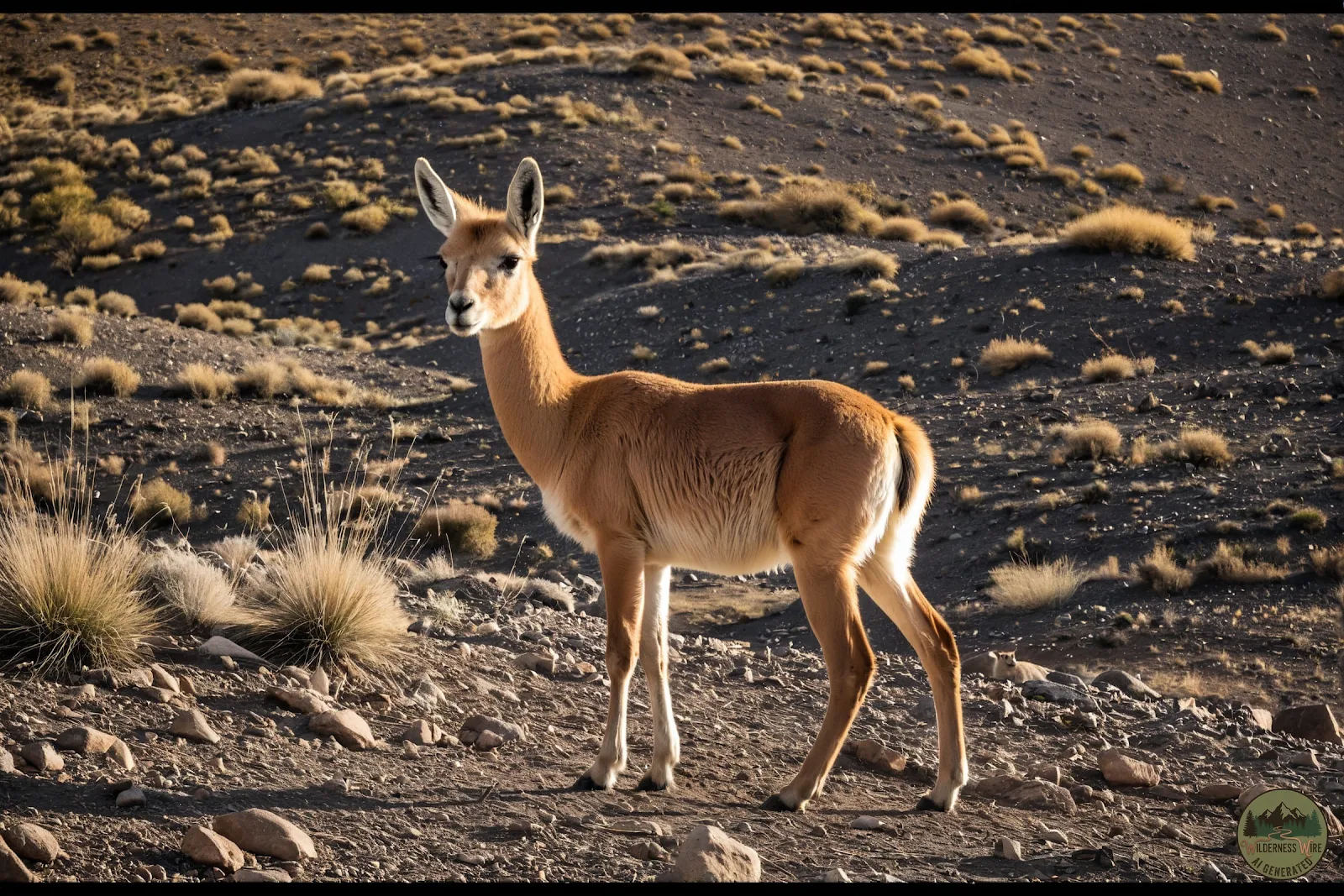
The high-altitude grasslands of the Andes Mountains, known as the Altiplano, present one of the most challenging environments on the planet. Spanning across parts of Peru, Bolivia, Chile, and Argentina, this region is characterized by thin air, intense solar radiation, and dramatic temperature fluctuations that can swing from scorching heat to bone-chilling frost within a single day. Inhabiting this rugged terrain is the vicuña, a graceful camelid that has not only survived these conditions but has evolved specialized biological traits that make it a masterpiece of Andean evolution. As the smaller, wild relative of the llama and the direct ancestor of the domesticated alpaca, the vicuña is a symbol of wildness and resilience in South American culture.
Physically, the vicuña is the most delicate of the four South American camelid species. It stands roughly three feet tall at the shoulder and weighs between 75 and 150 pounds. Its most striking feature, however, is its coat. The vicuña produces the finest animal fiber in the world, measuring roughly 12 to 13 microns in diameter. To put this in perspective, high-quality cashmere is significantly thicker. This ultra-fine wool is a direct evolutionary response to the Altiplano climate; the fibers are hollow and scale-like, allowing them to trap air and provide extraordinary insulation against the freezing night winds while remaining lightweight enough to prevent overheating under the midday sun. This "fiber of the gods" was so highly prized by the Incan Empire that it was reserved exclusively for royalty, and the animals themselves were considered sacred.
The biological adaptations of the vicuña extend far beyond its fleece. Living at elevations between 3,200 and 4,800 meters requires a cardiovascular system capable of extracting oxygen from oxygen-poor air. The vicuña possesses a heart that is proportionally larger than those of other mammals of similar size, and its blood contains an exceptionally high concentration of red blood cells. Furthermore, its hemoglobin has a much higher affinity for oxygen than that of lowland mammals. These internal mechanisms allow the vicuña to sprint at speeds of up to 30 miles per hour across rocky slopes, outrunning predators like the Andean puma or the culpeo fox even in the thin atmosphere of the high peaks.
Another fascinating and unique trait of the vicuña is its dentition. Unlike other ruminants, vicuñas have incisors that grow continuously throughout their lives, a feature more commonly associated with rodents. These teeth are specialized for grazing on the tough, silica-rich perennial grasses of the Puna. Because these grasses are highly abrasive, most herbivores would eventually wear their teeth down to the gums, leading to starvation in old age. The vicuña’s ever-growing teeth ensure that it can continue to process its primary food source for its entire lifespan, which typically reaches about 15 to 20 years in the wild.
Socially, vicuñas exhibit a complex and highly territorial structure. They are typically organized into family groups led by a single dominant male, accompanied by several females and their young, known as crias. The male is a fierce guardian, patrolling the boundaries of a dual-territory system: a feeding territory in the lower grassy areas and a higher sleeping territory on the ridges where they are safer from predators. Young males are expelled from the family group when they reach maturity, forming large "bachelor herds" of up to 50 individuals. These bachelor groups are highly mobile and lack the strict territorial boundaries of the family units, serving as a social pool from which future dominant males emerge to challenge established leaders or form new families.
The history of the vicuña is a narrative of both tragedy and triumphant conservation. During the era of the Inca, the animals were managed through a practice known as the Chaccu. Every few years, thousands of community members would gather to form a massive human chain, herding the vicuñas into stone corrals. The animals were sheared for their wool and then released back into the wild unharmed. However, following the Spanish conquest, this sustainable practice was replaced by indiscriminate hunting. By the mid-20th century, the vicuña population had plummeted from an estimated two million in the 16th century to fewer than 6,000 individuals by the 1960s. The species was on the very brink of extinction.
The recovery of the vicuña is often cited as one of the most successful wildlife conservation stories in history. In 1969, the Vicuña Convention was signed by Andean nations, effectively banning the trade of vicuña products and establishing protected reserves like Pampa Galeras in Peru. Furthermore, the species was listed under Appendix I of CITES (the Convention on International Trade in Endangered Species). As populations stabilized and began to grow, conservationists realized that the long-term survival of the species depended on the involvement of local indigenous communities. This led to a revival of the traditional Chaccu. Today, communities are once again permitted to shear wild vicuñas under strict government supervision, providing a sustainable source of income that incentivizes the protection of the animals from poachers.
Modern genetic research has also shed light on the vicuña’s legacy. For decades, there was a scientific debate regarding the ancestry of the domesticated alpaca. While the llama was clearly descended from the wild guanaco, the alpaca's origin was less certain. In the early 2000s, DNA analysis finally confirmed that the alpaca is the domesticated descendant of the vicuña, likely bred by ancient Andean peoples over 6,000 years ago for its soft fleece. This link underscores the profound relationship between the people of the Andes and this elegant wild camelid, a relationship that has endured through millennia of cultural and environmental change.
Today, with a global population that has rebounded to over 350,000 individuals, the vicuña is no longer considered endangered. However, it remains a "conservation-dependent" species. Climate change poses a new threat, as the melting of Andean glaciers and the changing rainfall patterns affect the availability of water and the health of the high-altitude wetlands (bofedales) where they graze. Maintaining the delicate balance between commercial exploitation of their wool and the biological needs of the wild population remains the central challenge for their future. As an apex grazer and a biological marvel, the vicuña remains an indispensable part of the Andean landscape, standing as a testament to the beauty and complexity of life in the high clouds.