The yak is a biological marvel adapted for survival in the frozen Himalayan heights.
High atop the desolate, windswept reaches of the Tibetan Plateau and the surrounding Himalayan massifs resides one of the most evolutionarily specialized mammals on Earth. Often referred to as the "Boat of the Plateau," the yak is more than just a beast of burden; it is a biological marvel designed to thrive in an environment where most other large mammals would perish within hours. To understand the yak is to understand the extreme constraints of high-altitude life, where oxygen is scarce, temperatures routinely drop below minus forty degrees, and the landscape offers little more than sparse, frozen scrub for sustenance.
The yak belongs to the genus Bos, but it has diverged significantly from its lowland bovine cousins. While domestic cattle are optimized for temperate climates and lush pastures, the yak has undergone radical physiological shifts to inhabit the "Third Pole." One of the most critical adaptations lies within its circulatory system. Yaks possess exceptionally large lungs and a heart that is disproportionately larger than those of cattle living at sea level. More importantly, their blood contains a high concentration of red blood cells and a unique type of fetal-like hemoglobin that persists into adulthood. This specialized hemoglobin allows for a much higher affinity for oxygen, enabling the yak to extract every possible molecule from the thin mountain air. Without this internal chemistry, the physical exertion required to navigate steep mountain passes would be impossible.
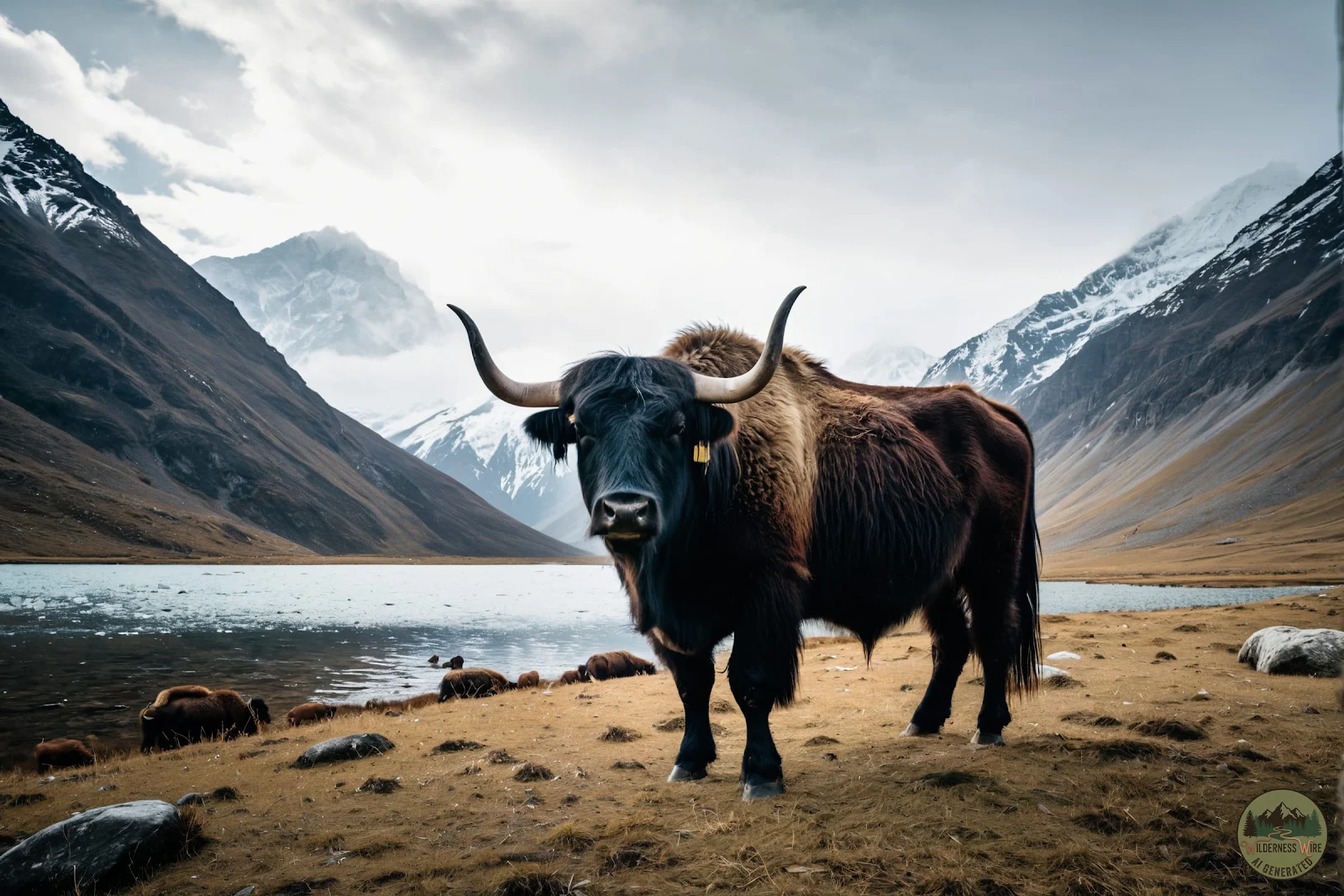
Thermal regulation is another pillar of the yak's survival strategy. Their bodies are encased in a dual-layered coat that provides near-perfect insulation. The outer layer consists of long, coarse guard hairs that hang down like a skirt, often reaching the ground; these hairs shed moisture and act as a windbreak. Beneath this lies a dense, felt-like undercoat of fine wool, known as "khullu." This under-layer traps a pocket of warm air against the skin, maintaining a consistent body temperature even when the animal is submerged in snow. Interestingly, yaks possess very few functional sweat glands. While this is an advantage in the freezing highlands—preventing heat loss through evaporation—it makes them highly susceptible to heat stress at lower altitudes. For a yak, a "warm" day at 5,000 feet can be more physically taxing than a blizzard at 15,000 feet.
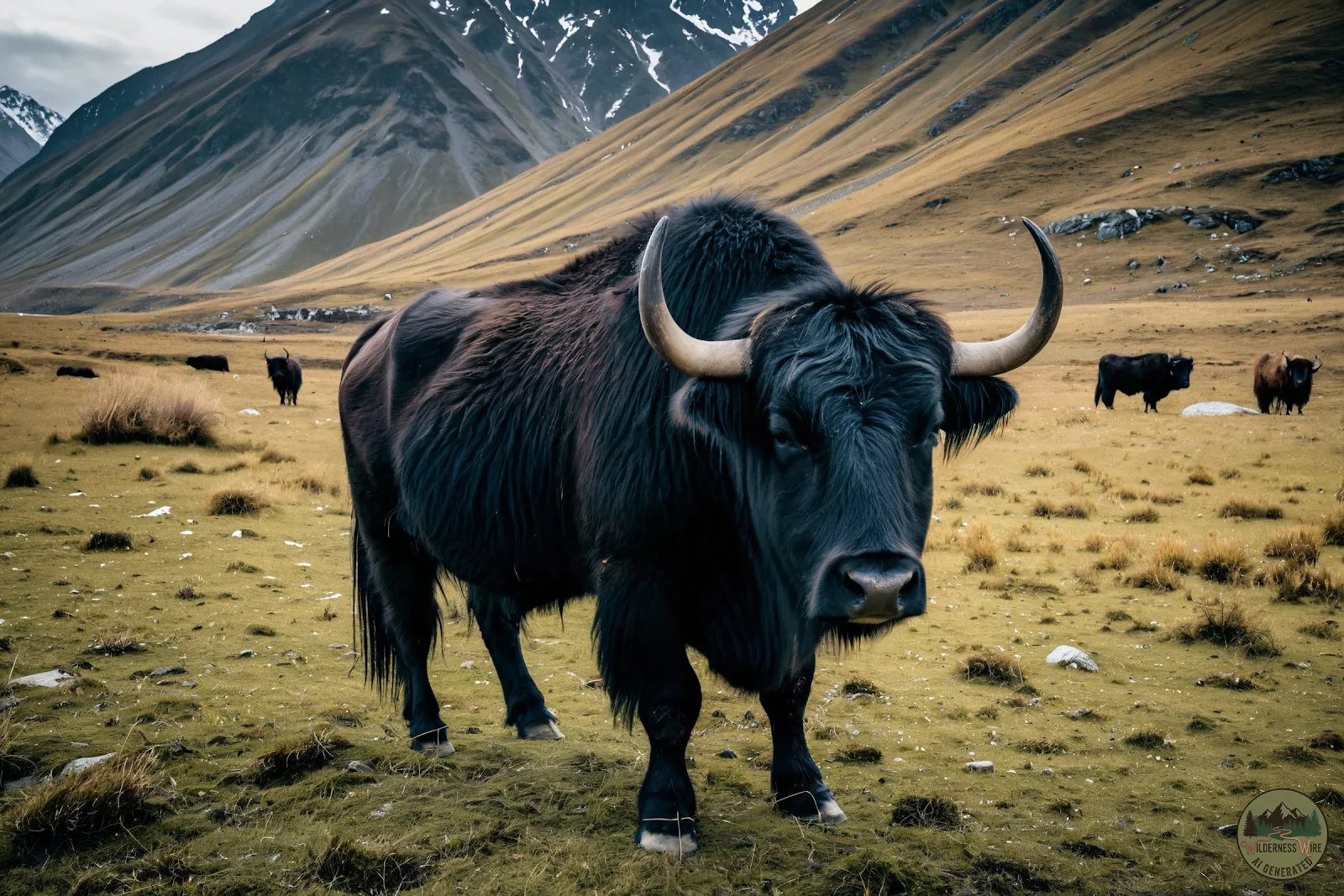
The distinction between the wild yak (Bos mutus) and the domestic yak (Bos grunniens) is significant. Wild yaks are formidable creatures, often weighing up to a ton, making them the largest animals in their native range. They are typically darker in color—almost black—and possess an aggressive, wary temperament honed by the need to defend against predators like the Tibetan wolf and the elusive snow leopard. In contrast, domestic yaks are smaller, more varied in color, and have been bred over millennia for docility. Despite these differences, both share the characteristic "grunting" vocalization. Unlike the lowing or mooing of common cows, the yak produces a short, gutteral grunt, a trait that earned it the Latin name "grunniens," meaning "grunting ox."
Beyond their biological uniqueness, yaks are the keystone of Central Asian nomadic civilizations. For thousands of years, the survival of human populations in the high-altitude deserts of Tibet, Nepal, and Mongolia has been tied inextricably to the yak. The relationship is a profound example of symbiosis. Nomads provide the herds with protection from predators and access to seasonal pastures, and in return, the yak provides everything necessary for human life. Their milk, which has a significantly higher fat and protein content than cow's milk, is processed into "dri" butter and hard cheeses that can be stored for years. Yak dung is often the only available fuel source for cooking and heating in a landscape devoid of trees. Even the animal's hair is utilized, woven into heavy, waterproof tents that house nomadic families through the brutal winters.
The social structure of yak herds reflects their rugged environment. They are highly gregarious animals, forming large groups for protection. During the calving season, the cows and calves form tight-knit clusters, while the bulls often remain solitary or form small bachelor groups until the rut begins. When threatened, a herd will circle up, placing the vulnerable calves in the center while the adults face outward, brandishing their formidable, upward-curving horns. This defensive posture is a highly effective deterrent against mountain predators and demonstrates a level of collective intelligence and cooperation rarely seen in domesticated bovines.
In the modern era, the yak faces new and complex challenges. Climate change is rapidly altering the ecology of the Tibetan Plateau. As permafrost melts and alpine meadows shift, the traditional grazing grounds that have supported yaks for millennia are changing. Furthermore, the encroachment of infrastructure and the pressure of hybridization with domestic cattle threaten the genetic purity of the remaining wild yak populations. Conservationists are now working to establish protected corridors and enforce anti-poaching laws to ensure that the wild "Ghost of the Mountains" does not vanish. These efforts are not just about saving a single species; they are about preserving the ecological integrity of one of the world's last great wildernesses.
To witness a yak in its natural habitat—standing stoically against a backdrop of jagged, ice-capped peaks—is to see an animal in perfect harmony with a hostile world. They are the silent guardians of the heights, a testament to the power of evolutionary specialization. As the world becomes increasingly homogenized, the yak remains a rugged symbol of regional identity and biological resilience. It serves as a reminder that life, in all its persistence, can find a way to flourish even in the thin air at the edge of the sky, provided it has the time and the space to adapt to the rhythm of the mountains.