The Golden Fleece of the Andes: The Biology and History of the Wild Vicuña
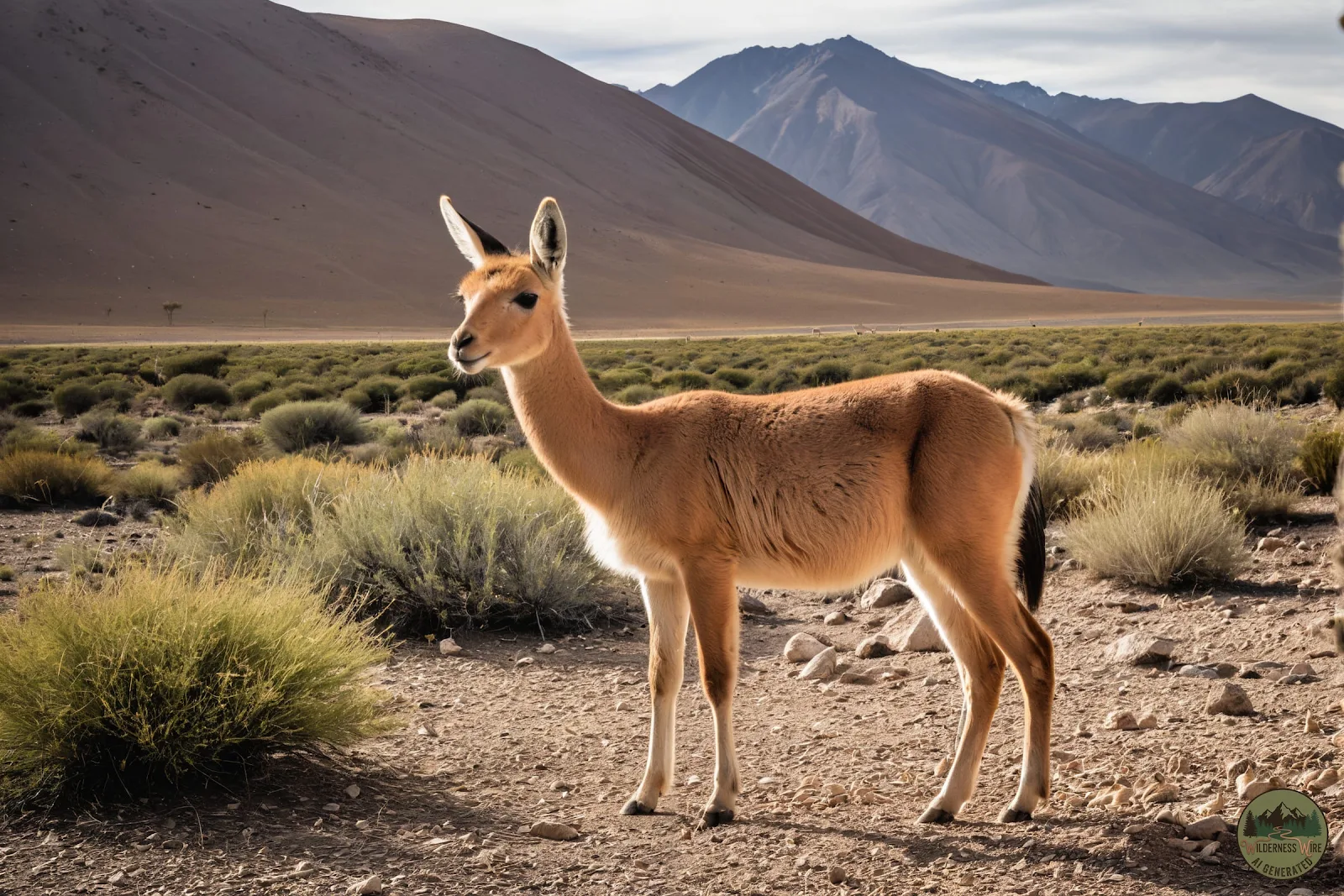
High within the arid, wind-swept plateaus of the central Andes, a creature of singular elegance traverses the Altiplano. The vicuña, a wild relative of the llama and the direct ancestor of the domesticated alpaca, represents one of nature’s most successful adaptations to extreme environments. Thriving at altitudes ranging from 3,200 to 4,800 meters, this slender camelid has become an enduring symbol of South American wilderness. Its presence is not merely a biological curiosity but a testament to the intricate relationship between evolutionary biology, ancient human culture, and modern conservation triumphs.
The vicuña belongs to the family Camelidae, a group that includes the Old World camels and three other South American species: the guanaco, the llama, and the alpaca. Unlike the llama and alpaca, which were domesticated thousands of years ago for transport and bulk wool production, the vicuña has remained essentially wild. Physically, it is the smallest of the camelids, characterized by a graceful, elongated neck, large expressive eyes, and a coat of unparalleled fineness. Its tawny-brown back fades into a creamy white underbelly, topped with a distinctive tuft of long, white hair on its chest—a feature that provides additional warmth against the freezing Andean nights.
The defining characteristic of the vicuña is undoubtedly its fleece, often referred to as the "Golden Fleece of the Andes." This fiber is among the finest and rarest animal fibers in the world, with a diameter typically measuring between 12 and 15 microns. To put this in perspective, a human hair is approximately 75 microns wide, and high-quality cashmere usually ranges from 15 to 19 microns. This extreme fineness creates a fabric that is exceptionally soft, lightweight, and possesses superior thermal properties. Because the scales on the fiber surface are incredibly smooth, the wool can trap air with remarkable efficiency, providing the animal—and subsequently the wearer of its wool—with insulation against both the piercing cold of the mountains and the intense radiation of the high-altitude sun.
Historically, the vicuña occupied a sacred position in Incan society. The Incas viewed these animals as the property of the sun god, Inti, and their wool was reserved exclusively for royalty. To harvest the fiber, the Incas developed a sophisticated communal management system known as the Chaccu. Every few years, thousands of people would gather to form a human chain, slowly driving the wild vicuñas into stone corrals. Once gathered, the animals were sheared and released back into the wild unharmed. This sustainable practice ensured that the population remained healthy while providing the empire with its most prestigious material. Killing a vicuña was a crime punishable by death, reflecting the high value the civilization placed on the living creature.
However, the centuries following the Spanish conquest saw a tragic shift in the animal's fortunes. The regulated Chaccu gave way to indiscriminate hunting. By the mid-20th century, the vicuña was on the brink of extinction. In the 1960s, the global population plummeted to approximately 6,000 individuals, a staggering decline from the estimated two million that roamed the Andes during the time of the Incas. This crisis prompted a monumental conservation effort. In 1969, the Vicuña Convention was signed by Peru and Bolivia (later joined by Chile and Argentina), which banned the trade of vicuña products and established protected reserves, such as Pampa Galeras in Peru.
The recovery of the vicuña is now cited as one of the most successful wildlife conservation stories in history. Through rigorous anti-poaching measures and the reintroduction of modified Chaccu rituals, the population has rebounded to over 350,000. Today, the trade is strictly regulated by CITES (the Convention on International Trade in Endangered Species of Wild Fauna and Flora). Only wool sheared from live animals in sanctioned community events can be legally sold, ensuring that local indigenous communities benefit economically from the presence of the animals on their land. This "conservation through sustainable use" model has provided a powerful incentive for local people to protect the vicuña from poachers.
Beyond its economic and historical significance, the biology of the vicuña is a marvel of specialization. To survive in the low-oxygen environment of the Altiplano, the vicuña possesses a heart that is roughly 50 percent larger than that of other mammals of similar size. Its blood is also unique, containing a higher concentration of red blood cells and hemoglobin with a high affinity for oxygen. These adaptations allow the vicuña to run at speeds of up to 50 kilometers per hour across rocky terrain, an essential skill for evading its primary natural predator, the mountain puma.
Socially, vicuñas are highly organized. They live in two distinct types of groups: family groups and bachelor groups. A family group typically consists of a dominant male, several females, and their offspring, known as "crías." The male is fiercely territorial, defending a specific grazing area and a separate sleeping area at higher elevations to minimize the risk of predation. Young males are eventually expelled from the family group and join bachelor herds until they are strong enough to challenge a dominant male or establish their own territory. This social structure ensures genetic diversity and a coordinated defense against threats.
The diet of the vicuña is equally specialized. They are grazers that rely on the tough, perennial grasses of the Altiplano, such as ichu grass. Unlike many other ruminants, vicuñas have continuously growing incisors, much like rodents, which allow them to cope with the abrasive nature of the silica-rich grasses they consume. Their grazing habits are also remarkably low-impact; they have soft pads on their feet rather than hard hooves, which prevents soil erosion and preserves the delicate Andean topsoil.
The modern luxury market continues to hold vicuña fiber in the highest esteem. Because a single vicuña produces only about 500 grams of wool every two years, and the process of de-hairing (separating the coarse outer guard hairs from the fine down) must be done by hand, the resulting fabric is incredibly expensive. A coat made from pure vicuña can command prices in the tens of thousands of dollars. While this high value once led the species toward extinction, it now serves as its primary shield. By linking the survival of the species to the economic well-being of the Andean people, conservationists have created a symbiotic relationship that honors both the ancient traditions of the Inca and the requirements of modern ecological preservation.
As we look to the future, the vicuña remains a sentinel of the high mountains. It is a reminder that even the most specialized and vulnerable species can be brought back from the brink when local tradition, international law, and scientific management align. The sight of a vicuña herd moving fluidly across the golden grasses of the Altiplano is more than just a beautiful vista; it is a profound example of resilience in one of the harshest landscapes on Earth.