The Evolution and Specialized Biology of Tree-Kangaroos in the Tropical Canopy
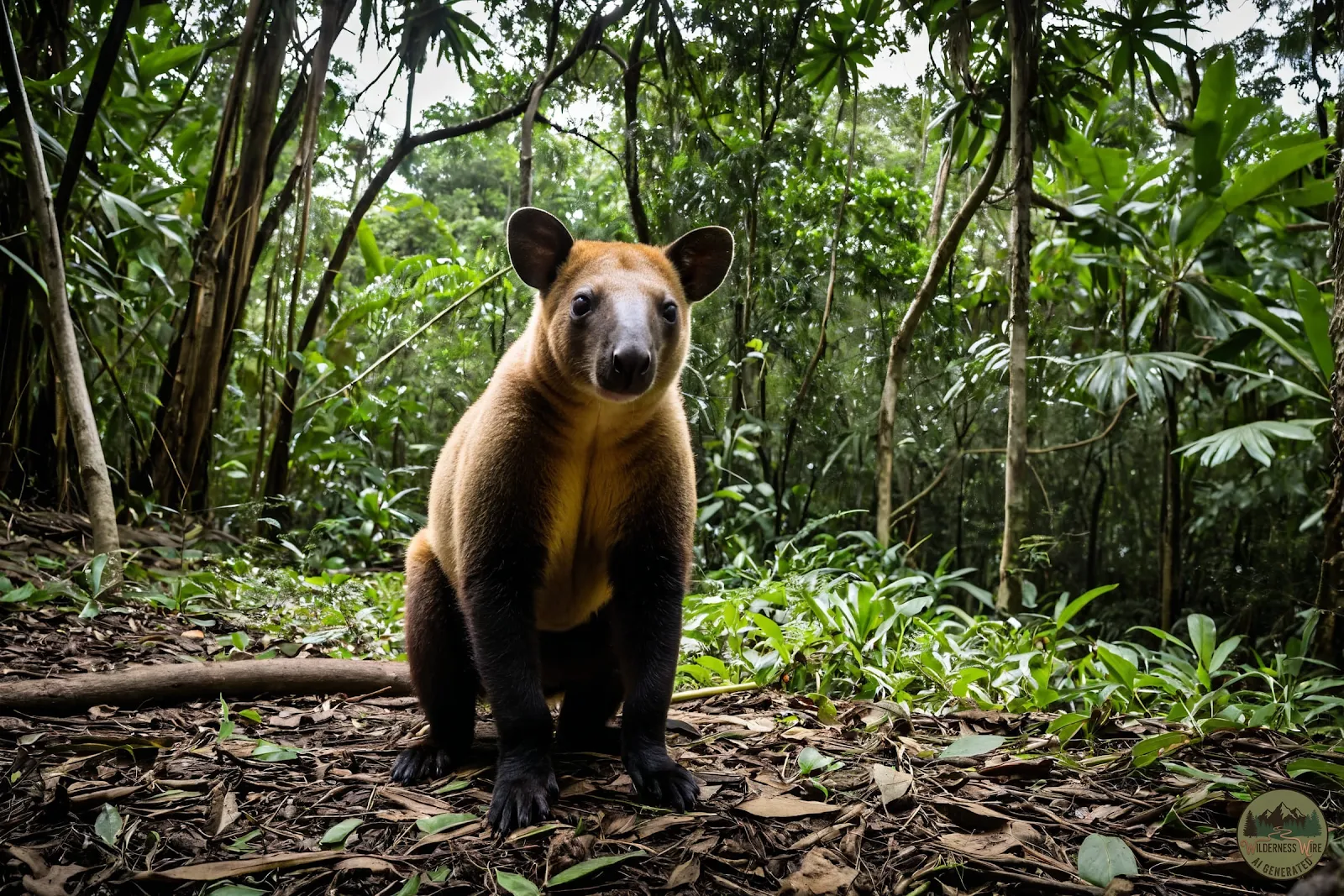
Tree-kangaroo_00002_
In the high-altitude cloud forests and dense tropical jungles of New Guinea and Northeastern Australia, an evolutionary marvel resides within the canopy. The tree-kangaroo, belonging to the genus Dendrolagus, represents one of nature’s most fascinating examples of biological adaptation. While their name immediately evokes the image of the iconic hopping marsupials of the Australian outback, these creatures have undergone a profound physical and behavioral transformation to master a vertical world. Their existence is a testament to the fluidity of evolution, as they are essentially "kangaroos that went back to the trees" after their ancestors had spent millions of years adapting to life on the ground.
The transition from a terrestrial life back to an arboreal one required a complete overhaul of the standard macropod body plan. To the casual observer, the tree-kangaroo possesses a bear-like appearance, with thick fur and powerful limbs. Unlike their ground-dwelling cousins, which have elongated, narrow hind feet designed for high-speed hopping, tree-kangaroos have developed shorter, broader feet equipped with sponge-like pads and long, curved claws. these adaptations provide the necessary grip to navigate mossy branches and slick bark. Furthermore, their hind limbs are capable of independent movement, allowing them to "walk" or crawl along branches, a feat impossible for the rigid, synchronous hopping mechanism of a red or grey kangaroo.
One of the most striking features of the tree-kangaroo is its tail. In terrestrial kangaroos, the tail acts as a tripod or a rudder for balance during high-speed travel. In the Dendrolagus genus, the tail is often longer than the body and serves as a vital counterweight. Although it is not prehensile—meaning it cannot grasp branches like the tails of some New World monkeys—it is remarkably agile. As the animal navigates the precarious heights of the rainforest canopy, the tail shifts constantly, providing a stabilizing force that allows the kangaroo to leap between branches with surprising grace. This agility is coupled with an extraordinary resilience; tree-kangaroos have been observed jumping from heights of over 60 feet to the forest floor without sustaining injury, a testament to their robust skeletal structure and shock-absorbing musculature.
The dietary habits of these marsupials are primarily herbivorous, consisting of a diverse array of leaves, fruit, bark, and occasionally flowers. Their digestive systems have adapted to process high-fiber foliage, which is often abundant in the canopy but low in caloric density. This specialized diet means that tree-kangaroos have a relatively low metabolic rate compared to other mammals of similar size. They spend a significant portion of their day resting to conserve energy, tucked away in the forks of trees where their cryptic coloration—ranging from deep mahogany and golden-yellow to charcoal grey—provides excellent camouflage against predators such as pythons and birds of prey.
Geographically, the diversity of the genus is concentrated in the island of New Guinea, which hosts the majority of the fourteen known species. Australia is home to only two species: Bennett’s tree-kangaroo and the Lumholtz’s tree-kangaroo, both confined to the wet tropics of Queensland. Each species has carved out a specific ecological niche, often separated by mountain ranges or differing altitudes. For instance, the Wondiwoi tree-kangaroo was thought to be extinct for nearly a century before being rediscovered in a remote mountain range in West Papua, highlighting how much of their habitat remains unexplored and how vulnerable these populations can be to environmental changes.
The conservation status of the tree-kangaroo is a matter of international concern. Many species are classified as "Endangered" or "Critically Endangered" by the IUCN. The primary threats are two-fold: habitat loss and hunting. As rainforests are cleared for timber, oil palm plantations, and mining, the fragmented canopies make it difficult for these animals to find food and mates. Furthermore, because they are slow-moving on the ground and have a low reproductive rate—usually producing only one joey per year—they are particularly susceptible to over-hunting by local communities for food or traditional practices. Efforts by organizations like the Tenkile Conservation Alliance have shown that community-led conservation, which provides alternative livelihoods and education to local tribes, is the most effective way to ensure the survival of these unique mammals.
Research into tree-kangaroo biology continues to yield surprising insights into marsupial evolution. Genetic studies suggest that the ancestors of Dendrolagus diverged from terrestrial wallaby-like ancestors roughly 7 to 8 million years ago. This move back to the trees coincided with the expansion of rainforests in the region. Understanding their physiology provides a window into how complex organisms can "reverse" evolutionary traits to exploit new or returning environments. They are not merely "misplaced" kangaroos, but highly specialized specialists that play a crucial role in the health of their forest ecosystems, acting as seed dispersers and indicators of forest integrity.
To see a tree-kangaroo in its natural habitat is to witness a bridge between two worlds. They carry the legacy of the Australian plains into the vertical majesty of the tropical clouds. As flagship species for the conservation of New Guinea’s biodiversity, their survival is inextricably linked to the preservation of the world’s most pristine rainforests. Protecting the tree-kangaroo is not just about saving a single genus; it is about safeguarding an entire evolutionary lineage that remains one of the most enigmatic and charming mysteries of the animal kingdom.