The Remarkable Adaptations and Ecological Importance of Arboreal Tree Frogs in the Global Canopy
Arboreal amphibians represent a fascinating evolutionary branch of the Anura order, having specialized in a life lived far above the forest floor. These creatures, commonly known as tree frogs, are defined not by a single taxonomic group but by a shared set of physiological adaptations that allow them to navigate the vertical world of the canopy. While they belong to several different families—most notably Hylidae, Rhacophoridae, and Centrolenidae—they exhibit convergent evolution, where unrelated species develop similar traits to survive in comparable environments. Their presence in an ecosystem is often regarded by biologists as a primary indicator of environmental health, as their permeable skin makes them hyper-sensitive to changes in air and water quality.
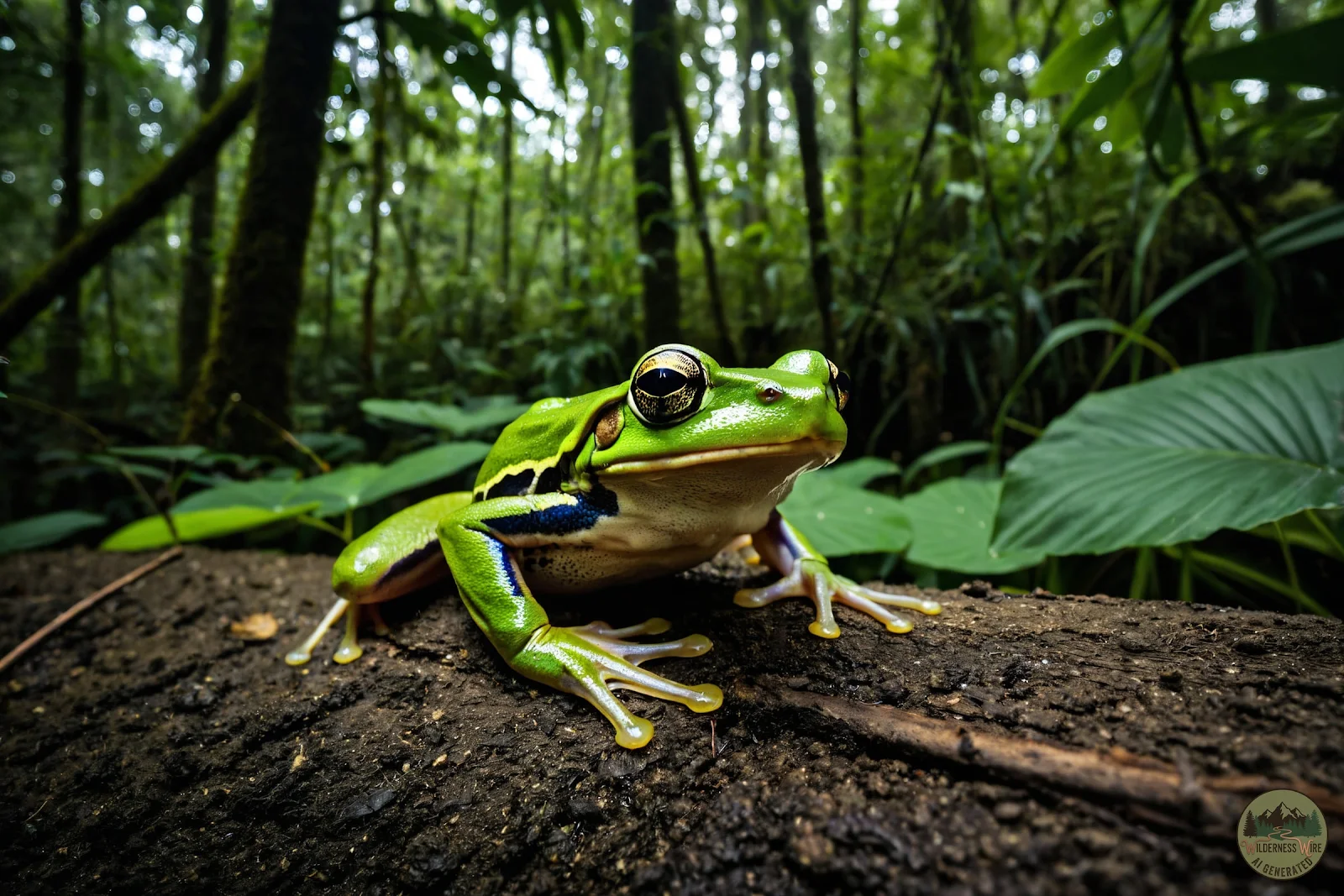
The most striking physical characteristic of these amphibians is their specialized toe pads. Unlike terrestrial frogs that rely on powerful hind legs for horizontal distance, tree frogs have evolved expanded, disc-like tips on their fingers and toes. These pads are not merely suction cups; they are complex biological structures. Under a microscope, the surface of a tree frog's toe pad reveals a pattern of hexagonal epithelial cells separated by deep grooves. These grooves allow for the distribution of mucus, which creates a capillary bridge between the frog and the surface it is climbing. This "wet adhesion" allows the animal to cling to smooth leaves, wet bark, and even vertical glass, even when submerged or in heavy rainfall. The ability to modulate the viscosity of their secretions and the angle of their toes gives them unparalleled mobility in the high-stakes environment of the rainforest canopy.
Beyond their locomotive abilities, tree frogs are masters of physiological regulation. Because they live in elevated positions where they are more exposed to wind and sun than their ground-dwelling cousins, they face a constant threat of desiccation. To combat this, many species have developed a "waxy" coating. They use their limbs to spread lipid secretions over their bodies, effectively sealing in moisture and allowing them to survive in less humid microclimates. Furthermore, their skin serves as a sophisticated chemical laboratory. Many tree frogs produce antimicrobial peptides that protect them from pathogens like the chytrid fungus, which has devastated amphibian populations globally. Some species also harbor alkaloids that make them unpalatable or toxic to predators, signaled by vibrant aposematic coloration that warns birds and snakes of their chemical defenses.
Vision plays a critical role in the arboreal lifestyle. Tree frogs typically possess large, protruding eyes that provide a wide field of view and excellent depth perception, which is essential for judging the distance of leaps between precarious branches. Many species are nocturnal, possessing a highly reflective layer behind the retina called the tapetum lucidum, which enhances their ability to see in low-light conditions. During the day, they utilize various forms of crypsis to avoid detection. Some species can change their skin tone to match the specific shade of a leaf, while others possess "flash colors"—bright patches of orange, red, or blue on their inner thighs that are hidden when the frog is at rest but visible during a leap. These sudden bursts of color are thought to confuse predators, a phenomenon known as startle coloration.
The reproductive strategies of tree frogs are among the most diverse in the animal kingdom. While most amphibians require standing bodies of water like ponds or lakes, many tree frogs have decoupled themselves from these traditional nurseries to avoid aquatic predators. Some species lay their eggs on the underside of leaves overhanging water; when the tadpoles hatch, they drop directly into the stream below. Others utilize the water-filled cavities of bromeliads or tree holes. In a remarkable display of parental care, some species will even return to these tiny "pools" to feed their developing tadpoles with unfertilized eggs. This specialization allows them to occupy niches that are inaccessible to other vertebrates, ensuring a higher survival rate for their offspring in the competitive environment of the jungle.
Ecologically, tree frogs serve as a vital link in the food web. As insectivores, they consume vast quantities of moths, crickets, flies, and beetles, acting as a natural form of pest control. In turn, they are a primary food source for a variety of arboreal snakes, birds, and larger mammals. Their decline often signals a trophic cascade that can destabilize an entire forest ecosystem. Currently, these animals face unprecedented challenges. Habitat fragmentation due to logging and agriculture destroys the corridors they need to migrate and find mates. Additionally, climate change is altering the humidity levels of cloud forests, pushing many species toward higher altitudes where they eventually run out of habitat.
Studying these amphibians provides scientists with deep insights into the mechanics of evolution and the complexities of biodiversity. From the bioengineering marvel of their adhesive toes to the chemical complexity of their skin, tree frogs are more than just charismatic symbols of the wild; they are sophisticated organisms that have mastered one of the most challenging habitats on Earth. Protecting them requires a holistic approach to conservation that preserves not just the trees they inhabit, but the intricate climate and water systems that sustain their delicate existence. As we continue to explore the remaining frontiers of our planet's forests, the tree frog remains a sentinel of the canopy, reminding us of the fragility and resilience of the natural world.