The Remarkable Biology and Survival Secrets of the Agile Australian Wallaby
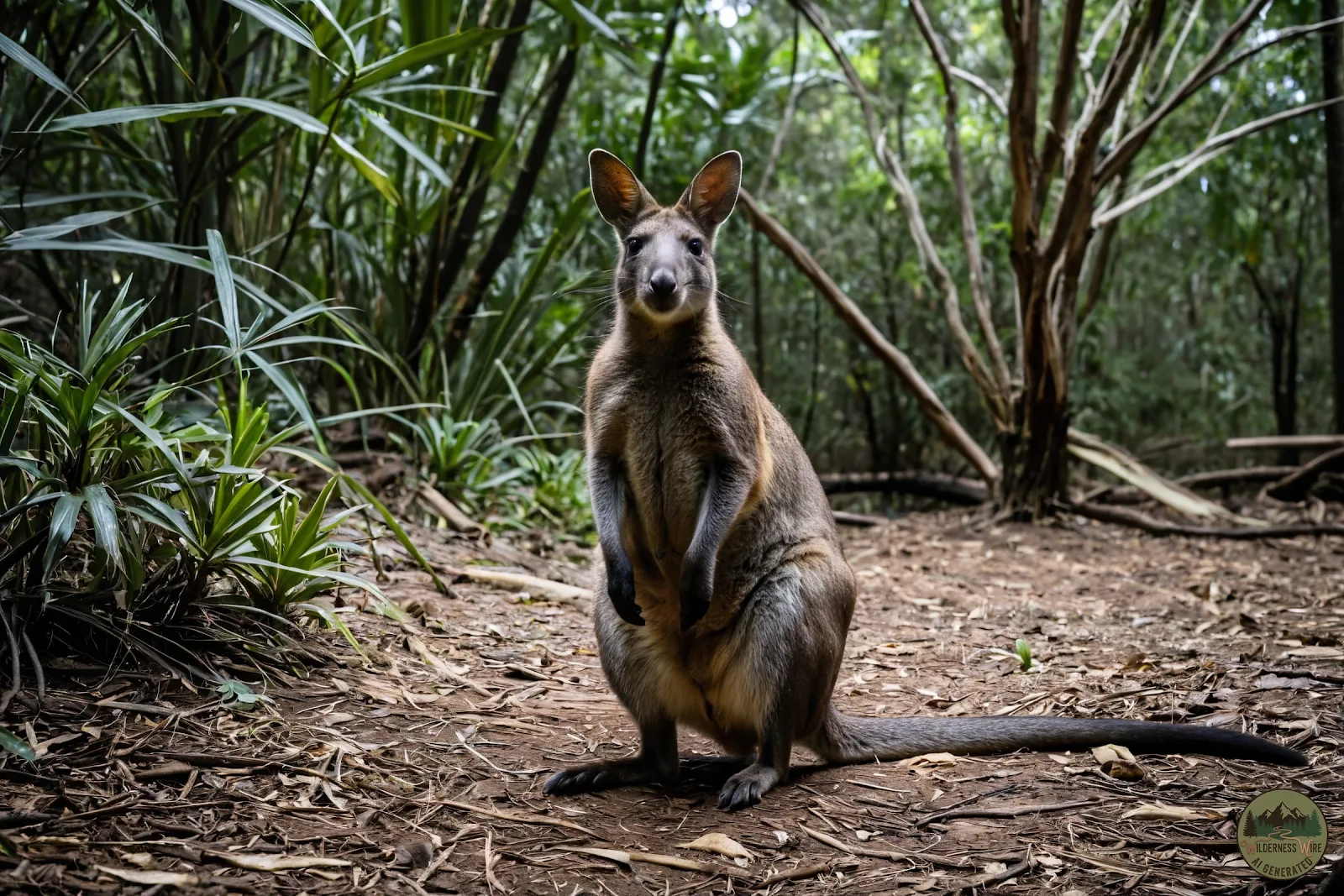
Wallaby_00003_
The Australian landscape is home to an extraordinary array of marsupials, but few are as iconic or as varied as the wallaby. Often overshadowed by their larger cousins, the kangaroos, wallabies represent a diverse group of species within the Macropodidae family. This family name, meaning "large foot," aptly describes the most distinctive physical trait of these animals: their powerful hind limbs designed for saltatorial locomotion, or hopping. While the term wallaby is often used as a catch-all for any mid-sized macropod, these animals possess unique biological adaptations and ecological roles that distinguish them within the Australian wilderness.
Evolutionarily, wallabies have adapted to a staggering range of environments, from the dense, humid rainforests of northern Queensland to the arid, rocky outcrops of the central deserts. There are roughly 30 species of wallabies, generally categorized by their preferred habitats—such as brush wallabies, rock wallabies, and scrub wallabies. Unlike kangaroos, which are primarily adapted for open plains where they can traverse long distances at high speeds, wallabies are built for agility in more complex terrain. Their shorter hind legs and lower center of gravity allow them to navigate thick undergrowth or leap between jagged boulders with a precision that would be impossible for a larger macropod.
One of the most fascinating aspects of wallaby physiology is the biomechanics of their movement. Hopping is a highly efficient form of travel at moderate to high speeds. The tendons in a wallaby's hind legs act like giant springs; as the animal lands, the tendons stretch, storing kinetic energy that is then released to power the next leap. This energy-recycling mechanism allows them to travel great distances in search of food and water without exhausting their metabolic reserves. Interestingly, wallabies cannot move their hind legs independently to walk—except when swimming—and they utilize their muscular tail as a "fifth limb" or a tripod when standing or moving slowly during grazing.
The tail of a wallaby is much more than a counterweight for balance. It is a thick, muscular organ that provides stability during high-speed maneuvers and acts as a rudder when the animal needs to change direction mid-hop. In rock wallabies, the tail is particularly specialized, often being more flexible and used to grip or balance on narrow ledges. Beyond locomotion, the wallaby’s sensory suite is finely tuned for survival. Their large, independent ears can rotate 180 degrees, allowing them to pinpoint the faint rustle of a predator—such as a dingo or a wedge-tailed eagle—long before it becomes a direct threat. Their eyes, positioned on the sides of the head, provide a wide field of view, granting them nearly panoramic vision to monitor the horizon for danger.
Dietary habits also showcase the wallaby's specialized adaptation to the Australian continent. As herbivores, they primarily consume grasses, leaves, and various types of scrub. However, because the Australian soil is often nutrient-poor, wallabies have developed a complex, multi-chambered stomach similar to that of ruminants like cows or sheep. Through a process of fermentation aided by specialized bacteria, they are able to break down tough, fibrous plant matter that would be indigestible to many other mammals. This efficient digestive system, combined with a remarkably low requirement for water, allows many species to thrive in regions where resources are scarce and highly seasonal.
Perhaps the most remarkable feat of wallaby biology lies in their reproductive cycle. Like all marsupials, wallabies give birth to highly underdeveloped young, known as joeys. A newborn joey is roughly the size of a jellybean, blind and hairless, yet it possesses enough instinct and forelimb strength to crawl through its mother’s fur and into the pouch. Once inside, it attaches to a teat, which swells in its mouth to ensure a constant connection. What is truly extraordinary, however, is a process known as embryonic diapause. A female wallaby is capable of "pausing" the development of an embryo in her uterus if she is already carrying a joey in her pouch or if environmental conditions, such as a drought, are unfavorable for raising young. This biological "holding pattern" ensures that the next generation is ready to emerge exactly when the chances of survival are highest.
Conservation remains a critical concern for many wallaby species. While some populations, such as the red-necked wallaby, remain stable and widespread, others are under severe pressure. The introduction of non-native predators like the red fox and the feral cat has devastated smaller wallaby species, which had no evolutionary defense against such efficient hunters. Habitat loss due to land clearing for agriculture and urban development has also fragmented populations, making them more vulnerable to localized extinction. Conservation efforts, including predator-proof fencing and reintroduction programs, are currently underway across Australia to protect endangered varieties like the brush-tailed rock wallaby.
In the broader ecosystem, wallabies serve as vital "ecosystem engineers." By grazing on native vegetation, they help manage plant growth and promote the regeneration of diverse flora through seed dispersal. Their presence is a hallmark of a healthy, functioning environment. Observing these creatures in the wild offers a glimpse into a lineage that has survived millions of years of climatic shifts. Their resilience, combined with their intricate biological adaptations, makes the wallaby not just a symbol of the Australian bush, but a masterpiece of evolutionary engineering that continues to fascinate scientists and nature enthusiasts alike.