The Waterbuck: A Study of Specialized Adaptation Within Africa’s Wetland Ecosystems
Waterbuck_00001_
The waterbuck, scientifically classified as Kobus ellipsiprymnus, is a large and robust antelope that represents one of the most specialized lineages within the Bovidae family. Native to the vast landscapes of sub-Saharan Africa, this species is defined by its inextricable link to permanent water sources. Unlike many African ungulates that have evolved to endure prolonged periods of drought or to extract moisture primarily from their diet, the waterbuck is physiologically dependent on frequent hydration. This dependency dictates its distribution, confining the species to riverine woodlands, floodplains, and reed beds where water is never more than a few kilometers away.
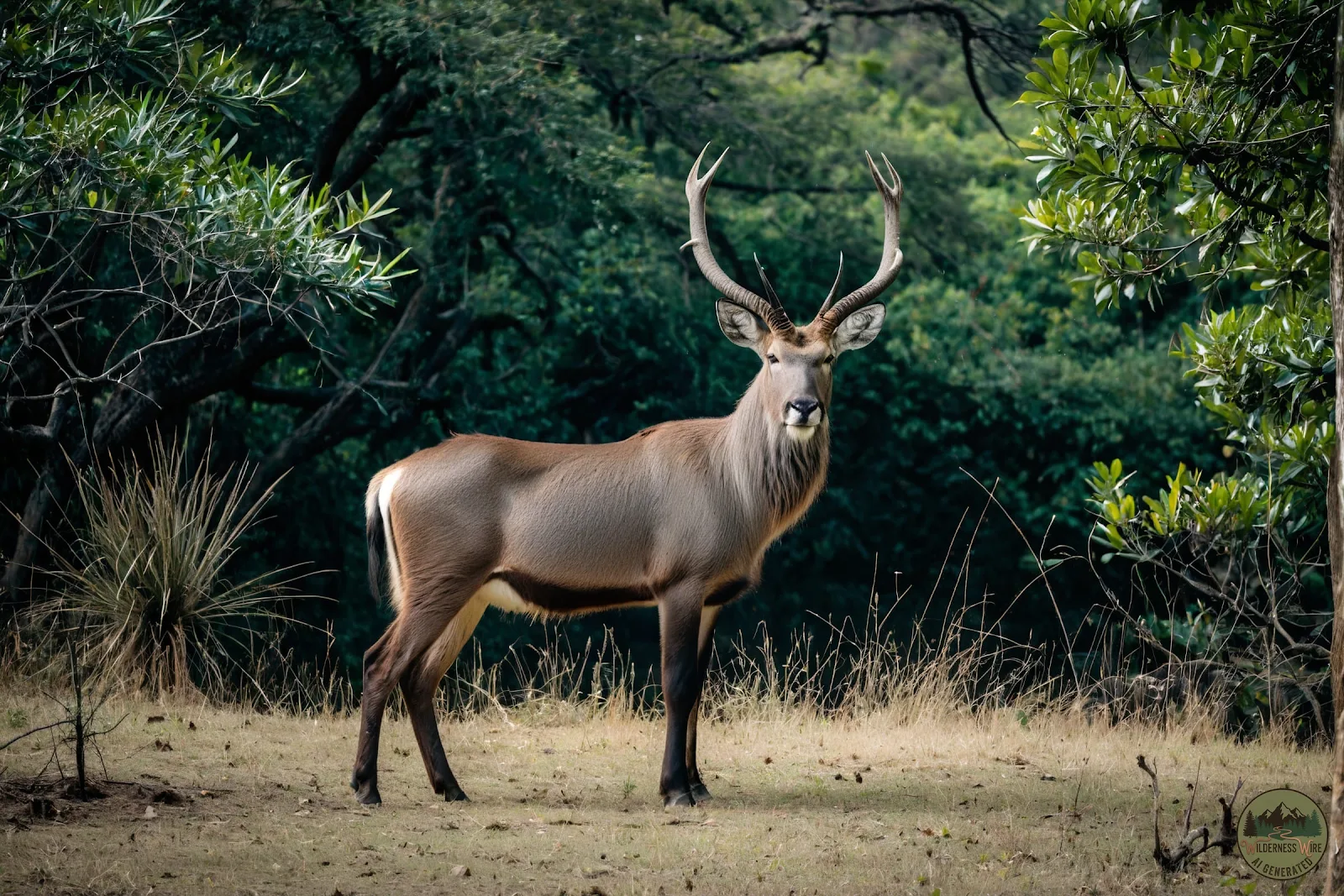
Physically, the waterbuck is a study in rugged adaptation. It possesses a coarse, shaggy coat that distinguishes it from the sleeker hides of impalas or gazelles. This fur is not merely an aesthetic trait; it is infused with a specialized oily secretion produced by sweat glands. This musky substance serves a dual purpose. Firstly, it acts as a highly effective waterproofing agent, allowing the animal to spend significant time in marshy terrain or submerged in water without its skin becoming waterlogged. Secondly, the pungent odor associated with this oil is thought to play a role in inter-species communication and may serve as a deterrent to certain parasites. While folklore often suggests the scent makes the meat unpalatable to predators, ecological observations confirm that lions, hyenas, and leopards frequently hunt them, suggesting the chemical defense is more specialized toward environmental management than predator repulsion.
Taxonomically, the species is divided into two primary groups based on their geographic range and morphological markings: the Common Waterbuck and the Defassa Waterbuck. The most iconic identifier of the Common Waterbuck is a vivid white ring encircling the rump, often described as resembling a toilet seat. In contrast, the Defassa Waterbuck lacks this ring, featuring instead solid white patches on either side of the rump. Despite these visual differences, the two groups are closely related and are known to interbreed in regions where their ranges overlap, such as in parts of East Africa. This hybridization creates a fascinating genetic gradient that serves as a focal point for researchers studying speciation and evolutionary biology in African megafauna.
The social structure of the waterbuck is characterized by a high degree of territoriality among mature males. Unlike many migratory species, waterbuck are relatively sedentary if their habitat remains stable. Dominant bulls establish territories that encompass prime grazing land and access to water, which they defend vigorously against rivals. These territories can span several hundred acres, and the bulls use their impressive, forward-curving, ringed horns to signal status and engage in ritualized combat. These horns, found only in males, are heavily ridged and can grow up to 100 centimeters in length. Younger males and those unable to secure a territory form "bachelor herds," while females and their offspring move in loose, non-territorial groups that may transition between different male territories throughout the year.
Dietary requirements for the waterbuck are quite specific. They are primarily grazers, preferring protein-rich grasses found near waterbodies. However, they are also known to be opportunistic feeders, occasionally browsing on shrubs and herbs when grass quality declines during the dry season. Their digestive system is adapted to process relatively high-fiber material, but because they lack the extreme water-conservation mechanisms of desert-dwelling antelopes, they must remain within reach of a drink at least once or twice daily. This requirement makes them excellent indicators of ecological health; the presence of a thriving waterbuck population is often a sign of a reliable and clean water table within a savanna ecosystem.
Reproduction in waterbuck populations does not follow a strict seasonal calendar in many parts of Africa, although birth peaks often coincide with the rainy seasons when forage is most abundant. Following a gestation period of approximately eight to nine months, a single calf is born. The mother hides the calf in dense vegetation for several weeks, visiting it only to nurse. This "hider" strategy is a vital survival mechanism in a landscape teeming with predators. As the calf grows and gains the stamina to keep pace with the herd, it joins its mother in the open. The bond between mother and calf is strong, but juvenile mortality can be high due to the density of predators that congregate near the same water sources the waterbucks require.
From a conservation perspective, the waterbuck is currently classified as "Least Concern" by the IUCN, but this status masks a more complex reality of regional fluctuations. While populations are stable and even thriving in well-managed national parks and private reserves, they face significant threats in unprotected areas. Habitat fragmentation, driven by agricultural expansion and human settlement, is the primary concern. As riverine forests are cleared and wetlands are drained, the specialized corridors the waterbuck relies upon vanish. Furthermore, because of their large size, they are often targeted by bushmeat hunters. Ensuring the survival of this majestic species requires the preservation of entire watersheds, highlighting the waterbuck's role as an umbrella species for the conservation of African freshwater ecosystems.
In the broader context of the African savanna, the waterbuck occupies a unique ecological niche that bridges the gap between purely terrestrial and semi-aquatic life. Their presence adds a layer of complexity to the grazing guilds of the continent, and their unique physiology remains a subject of great interest to biologists. Whether standing sentinel in the tall reeds or wading through a shallow lagoon, the waterbuck remains a symbol of the vital importance of water in the wilderness—a reminder that even in the heart of the dry plains, life is ultimately governed by the flow of the river.