The Striped Enigma: Nature’s Unique Evolutionary Design and the Social Survival of Zebras
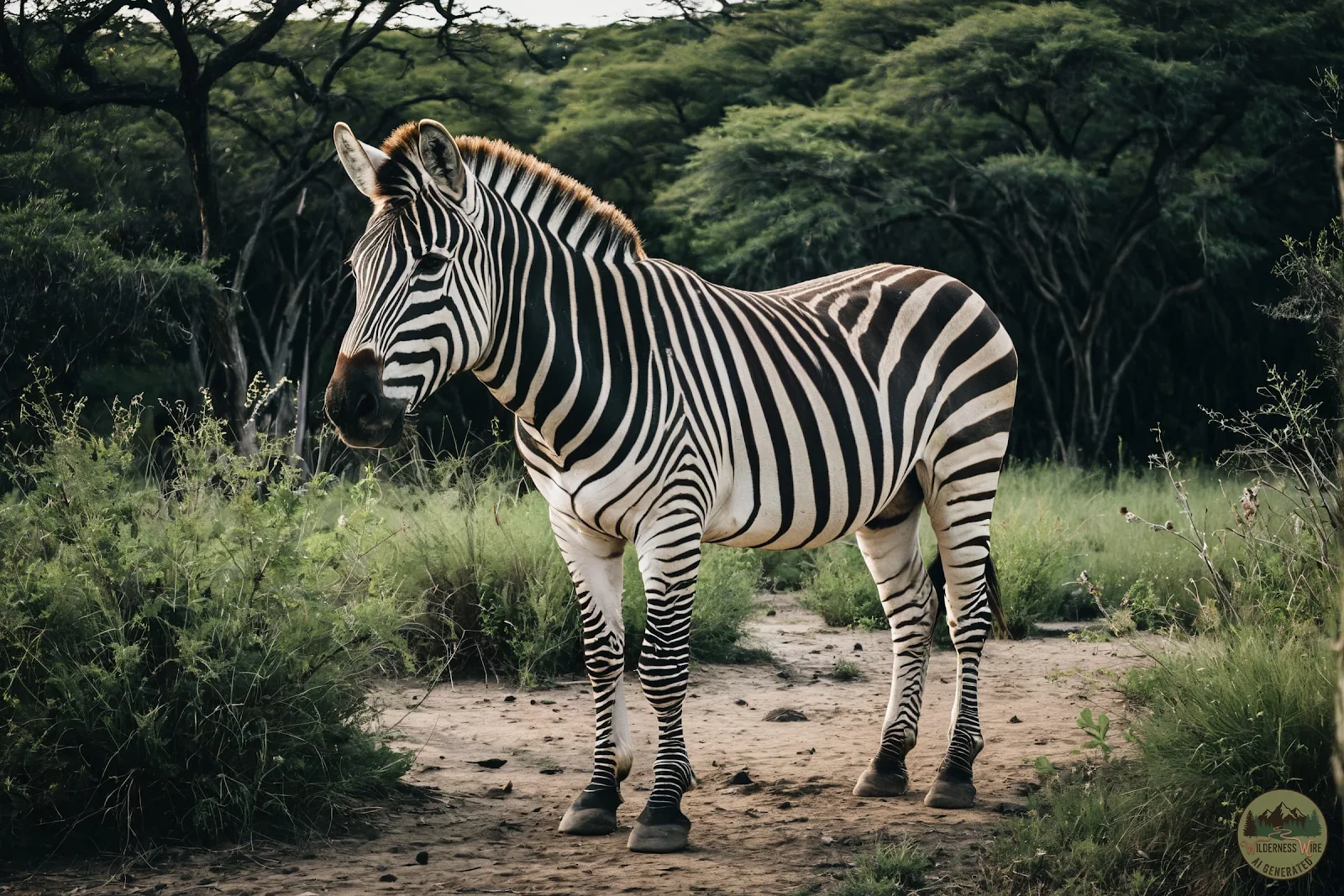
The zebra stands as one of nature’s most compelling enigmas, a creature whose very existence challenges our understanding of evolutionary adaptation and biological design. Belonging to the family Equidae, these striped equines are indigenous to the vast landscapes of sub-Saharan Africa. While they share a common ancestry with horses and donkeys, zebras have developed a suite of unique physical and behavioral traits that allow them to thrive in some of the most predator-dense environments on the planet. Their most striking feature, the monochrome coat, is not merely an aesthetic marvel but a complex survival tool that has been the subject of scientific debate for centuries.
Historically, researchers hypothesized that the zebra's stripes served as a form of camouflage within the tall grasses of the savannah. The theory suggested that the vertical lines mimicked the shadows and stalks of vegetation, helping the animal blend into its surroundings. However, more recent ethological studies have pointed toward a more sophisticated phenomenon known as "motion dazzle." When a herd of zebras bolts in response to a predator, their overlapping stripes create a dizzying optical illusion. This visual confusion makes it exceedingly difficult for a lion or leopard to single out an individual target, judge its speed, or determine its exact direction of travel. In the high-stakes environment of the African plains, a fraction of a second of predator hesitation can be the difference between survival and death.
Beyond predator evasion, contemporary research has introduced the "parasite repellent" hypothesis. Studies conducted in both controlled and wild environments have shown that biting insects, particularly horseflies and tsetse flies, are significantly less likely to land on striped surfaces compared to solid-colored ones. The stripes appear to disrupt the polarized light patterns that these insects use to navigate toward a host. Given that African flies carry debilitating diseases like equine influenza and trypanosomiasis, the development of stripes may be one of the most effective evolutionary responses to the microscopic threats of the wilderness. This functional beauty illustrates how evolution prioritizes utility, turning a visual signature into a defensive shield.
The social structure of the zebra is equally intricate and varies significantly between species. The Plains zebra and the Mountain zebra live in stable, close-knit family groups known as harems, typically consisting of one stallion, several mares, and their offspring. These groups are remarkably cohesive; if a member becomes separated or injured, the rest of the family will often slow their pace or search for the missing individual. In contrast, the Grevy’s zebra, the largest of the three species, exhibits a more fluid social organization. Stallions defend large territories, and associations between individuals are often temporary, dictated by the availability of water and grazing land. This variation in sociality demonstrates the zebra’s ability to adapt its behavioral ecology to the specific demands of its habitat, whether it be the lush grasslands or the arid scrublands.
Communication within these groups is a multisensory experience. Zebras utilize a complex repertoire of vocalizations, ranging from high-pitched barks to soft whinnies and deep snorts. Each sound conveys a specific message, whether it is an alarm call to alert the herd of a prowling hyena or a greeting between familiar individuals. Visual cues are also paramount; the position of a zebra’s ears, the tilt of its head, and the tension in its gait all serve as silent signals to its companions. Furthermore, the grooming rituals—where individuals use their teeth to nibble at each other's necks and backs—strengthen social bonds and reduce tension within the herd, fostering a level of cooperation that is essential for group defense.
The physiological resilience of the zebra is a testament to its evolutionary success. Unlike many other ruminants that require high-quality forage, zebras are "hindgut fermenters." This means they can process and gain nutrition from coarse, fibrous grasses that would be indigestible to other herbivores. This dietary flexibility allows them to act as pioneers in the migratory cycle. During the Great Migration in the Serengeti, zebras are often the first to enter new grazing grounds, cropping the tall, tough grass and paving the way for more selective grazers like wildebeests and gazelles. Their role as "ecological architects" is vital for the health of the entire ecosystem, as they facilitate the growth of the nutrient-rich shoots that sustain a wide variety of species.
Despite their iconic status, zebras face significant challenges in the modern era. Habitat fragmentation, driven by human expansion and agricultural development, has disrupted ancient migratory routes. Competition for water sources with domestic livestock often pushes zebra populations into more marginalized territories where survival is harder. Conservation efforts are now focused on creating wildlife corridors that allow for safe passage between protected areas, ensuring that the genetic diversity of the various species remains robust. Understanding the zebra is not just an exercise in biological curiosity; it is a necessity for preserving the intricate balance of the African wilderness.
Every zebra carries a pattern as unique as a human fingerprint. No two individuals are identical, a fact that may assist in individual recognition within the herd. This uniqueness serves as a metaphor for the creature itself—a blend of fierce independence and deep communal reliance. As we continue to study these remarkable equines, we find that they are much more than just "horses in striped pajamas." They are highly specialized survivors, social strategists, and integral components of the natural world whose presence continues to define the spirit of the wild.