Exploring the Unique Evolutionary History and Ecological Importance of the Arboreal Tree-Kangaroo
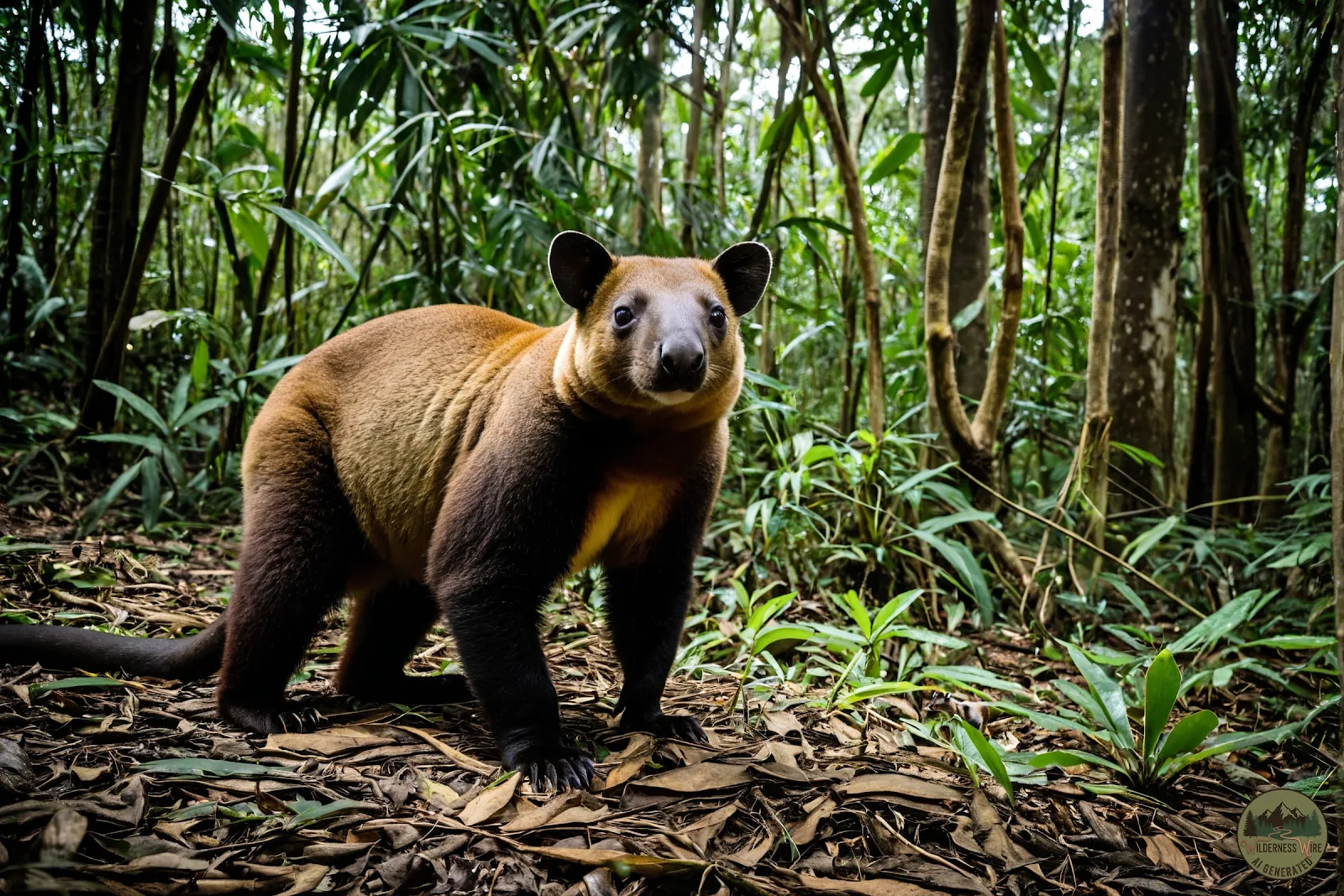
The evolutionary history of the tree-kangaroo is a fascinating study in niche adaptation. Approximately seven to ten million years ago, the ancestors of all modern kangaroos descended from the trees to exploit the expanding grasslands of the Australian continent. However, as the rainforests of the north persisted and evolved, a subset of these early macropods returned to the heights. This secondary adaptation to the canopy required a total overhaul of the kangaroo body plan. Unlike their ground-based cousins, which possess rigid, powerful hind limbs designed for explosive horizontal speed, tree-kangaroos have regained the ability to move their hind legs independently. This allows them to "walk" along thick branches and navigate the complex, three-dimensional geometry of the forest ceiling with surprising agility.
One of the most striking physical features of these animals is their specialized grip. To facilitate climbing, their forelimbs have become significantly more muscular and mobile compared to terrestrial kangaroos. Their paws are broad, equipped with roughened, non-slip pads that provide friction against wet bark, and armed with long, curved claws that act as grappling hooks. While they lack the prehensile tails found in many New World monkeys or some phalangers, their tails are exceptionally long and heavy, serving as a critical counterweight. When a tree-kangaroo leaps between branches—a feat they can perform across distances of up to nine meters—the tail acts as a rudder and stabilizer, ensuring they land precisely on their target.
The diet of these arboreal marsupials is primarily folivorous, consisting of a vast array of leaves, fruit, bark, and occasionally sap or bird eggs. Living in a high-cellulose environment requires a sophisticated digestive system. Much like ruminants, tree-kangaroos possess a large, sacculated stomach where specialized bacteria break down tough plant fibers through fermentation. This slow metabolic process explains their often sedentary nature; they spend a significant portion of their day resting to conserve energy and process their nutrient-poor diet. Because they obtain most of their hydration from the moisture in leaves and moss, they rarely need to descend to the forest floor to drink, which protects them from ground-based predators.
Ecologically, tree-kangaroos serve as vital indicators of forest health. They are found in some of the most remote and mountainous regions of the world, including the Huon Peninsula of Papua New Guinea and the wet tropics of Queensland. Because they require large tracts of undisturbed primary rainforest to thrive, their presence or absence tells researchers a great deal about the integrity of the ecosystem. Unfortunately, this reliance on specific habitats makes them incredibly vulnerable to anthropogenic pressures. Habitat fragmentation due to logging, palm oil expansion, and mining remains the primary threat to their survival. When the canopy is broken, these animals are forced to descend to the ground to move between forest patches, making them easy targets for domestic dogs and local hunting.
The reproductive biology of the tree-kangaroo further complicates their conservation status. They have one of the slowest reproductive rates of any marsupial. A female typically gives birth to a single "joey" after a gestation period of roughly thirty days. The tiny, undeveloped offspring then crawls into the pouch, where it remains for up to ten months. Even after leaving the pouch, the young kangaroo remains dependent on its mother for several more months as it learns the complex geography of the canopy and identifies which leaves are safe to eat. This long period of maternal investment means that populations are very slow to recover from any sudden decline.
Current conservation efforts are increasingly focusing on community-based models, particularly in Papua New Guinea. Indigenous landowners hold the key to the future of species like the Matschie’s or Goodfellow’s tree-kangaroo. Programs that incentivize the protection of "community conservation areas" allow local people to manage their ancestral lands while providing them with sustainable alternatives to hunting and industrial logging. By combining traditional ecological knowledge with modern biological monitoring, these programs offer a glimmer of hope for these "ghosts of the canopy."
In summary, the tree-kangaroo is far more than just a biological curiosity. It is a testament to the fluidity of evolution and the incredible diversity of the macropod lineage. To observe one in the wild—a flash of russet or gold fur amidst the deep greens of the highland jungle—is to witness a survivor of a lost world. Protecting these animals is not merely about saving a single species; it is about preserving the ancient, complex rainforests that they call home, ensuring that the unique evolutionary path they represent does not reach a dead end.