Sea Lions: Agile, Intelligent Masters of Aquatic and Terrestrial Worlds
Sea lions, charismatic pinnipeds found across various oceanic regions, represent a remarkable testament to evolutionary adaptation, seamlessly bridging life in aquatic and terrestrial environments. These highly intelligent marine mammals, often observed lounging on rocky coastlines or gracefully navigating the depths, are distinguished from their true seal cousins by several key anatomical features, notably the presence of external ear flaps and their unique ability to rotate their hind flippers forward, allowing for more agile movement on land. This dual proficiency enables them to efficiently forage in the ocean and retreat to shore for rest, breeding, and protection from predators.
Sea Lion_00004_
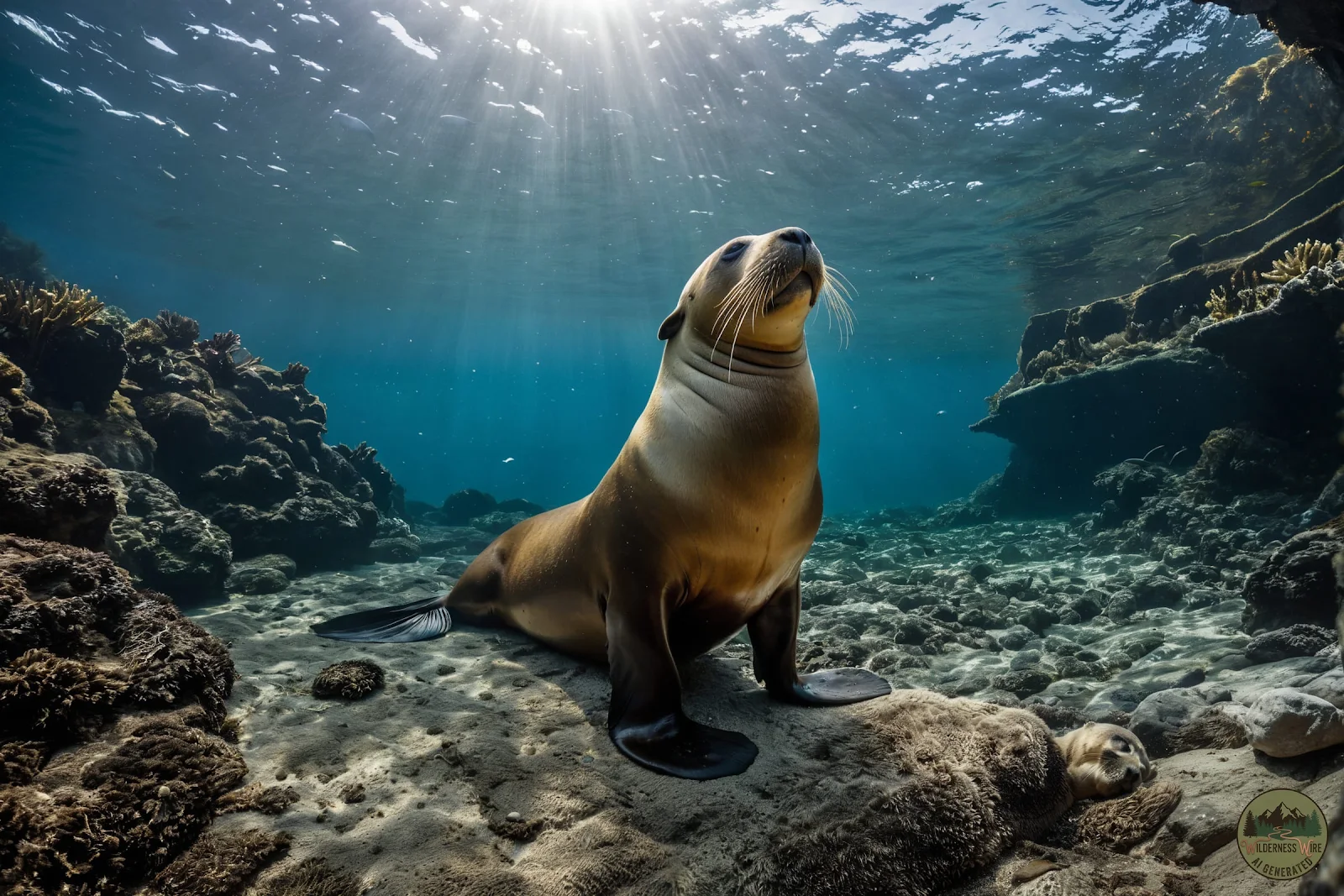
Their sleek, torpedo-shaped bodies are perfectly engineered for hydrodynamic efficiency, allowing them to cut through water with impressive speed and agility. Powerful foreflippers, acting as primary propulsion, enable them to "fly" through the water, executing swift turns and dives with ease. The thick layer of blubber beneath their skin serves a dual purpose: providing essential insulation against cold ocean temperatures and acting as an energy reserve. Their dense, short fur, while not as insulating as a sea otter's, contributes to their streamlined profile. A sea lion's sensitive whiskers, or vibrissae, are crucial sensory organs, detecting subtle changes in water pressure and currents, helping them locate prey even in murky conditions or complete darkness. Their large, forward-facing eyes are adapted for underwater vision, offering excellent perception in their aquatic hunting grounds.
Sea lions exhibit a broad global distribution, with different species inhabiting coastal waters from subpolar regions to tropical zones. The California sea lion (Zalophus californianus), perhaps the most widely recognized, thrives along the west coast of North America, often seen in bustling harbors and marinas. Other notable species include the Steller sea lion (Eumetopias jubatus), the largest of the eared seals, found across the northern Pacific; the South American sea lion (Otaria flavescens) gracing the coasts of South America; and the Australian sea lion (Neophoca cinerea), endemic to Australia. Each species has adapted to the specific ecological niches of its habitat, though all share a common reliance on accessible coastal areas for breeding and rest.
As apex predators within their ecosystems, sea lions play a vital role in maintaining marine food web balance. Their diet primarily consists of a variety of fish, including anchovies, sardines, hake, and rockfish, but they are also opportunistic hunters, consuming squid, octopus, and even small sharks when available. Their teeth, though not specialized for tearing like those of terrestrial carnivores, are well-suited for grasping slippery prey, which they typically swallow whole or in large chunks. Hunting often occurs in groups, where cooperation can lead to more successful foraging, especially when herding schools of fish. Their remarkable diving capabilities allow them to pursue prey to considerable depths, with some species capable of holding their breath for over 10 minutes and diving hundreds of meters.
The social structure of sea lions is highly developed, particularly during the breeding season. They congregate in large, often boisterous colonies known as rookeries on isolated beaches, rocky outcrops, and offshore islands. Males, or bulls, arrive first, establishing territories through a combination of vocalizations, displays, and occasional aggressive confrontations. Dominant bulls, typically larger and more experienced, secure prime territories that attract multiple females, forming harems. Females give birth to a single pup after a gestation period that can range from 9 to 12 months, depending on the species, incorporating a period of delayed implantation. Pups are born relatively helpless but develop rapidly, suckling for several months while learning essential survival skills from their mothers and other colony members. Vocal communication is extensive within colonies, with distinct barks, roars, and growls serving various social functions, from establishing dominance to locating pups amidst the crowded rookery.
Beyond their physical prowess and social complexity, sea lions demonstrate significant cognitive abilities. They are renowned for their intelligence, often displaying problem-solving skills and learning complex behaviors, which has made them popular subjects in marine research and animal shows. Their capacity for mimicry and response to cues underscores a sophisticated neural architecture. Researchers have observed them using tools in captivity and exhibiting advanced memory skills, highlighting a species with considerable mental faculties. This intelligence contributes to their adaptability in varied environments and their ability to navigate complex social interactions.
Despite their resilience, sea lion populations face numerous anthropogenic threats. Entanglement in discarded fishing gear, such as nets and lines, is a significant cause of injury and mortality across all species. Ocean pollution, particularly plastic debris and chemical contaminants, poses severe health risks, affecting their immune systems and reproductive success. Habitat degradation, driven by coastal development and human disturbance at their rookeries, further exacerbates their challenges. Climate change also represents a growing threat, altering ocean currents, affecting prey distribution, and increasing the frequency of extreme weather events that can impact breeding success and pup survival. Conservation efforts are crucial and include establishing marine protected areas, regulating fisheries, promoting responsible tourism, and public education campaigns to reduce pollution and human disturbance. International agreements and national laws aim to safeguard these magnificent animals and their vital habitats.
Distinguishing sea lions from true seals is relatively straightforward once one knows what to look for. Sea lions possess visible external ear flaps (pinnae), whereas true seals have only small ear openings. On land, sea lions use their large, rotatable hind flippers to "walk" on all fours, enabling them to move with surprising agility and speed. True seals, with their hind flippers permanently pointed backward, undulate their bodies in a caterpillar-like motion, making them much less mobile on terra firma. In the water, sea lions primarily use their powerful foreflippers for propulsion, while true seals propel themselves with their hind flippers and lower body. These distinctions highlight divergent evolutionary paths, leading to different lifestyles and adaptations within the pinniped family.
In conclusion, sea lions are more than just captivating marine creatures; they are integral components of coastal ecosystems, embodying a unique blend of strength, intelligence, and social complexity. Their continued presence serves as a vital indicator of ocean health. Protecting these remarkable animals requires a concerted global effort, ensuring that future generations can witness their grace in the wild and appreciate the intricate balance of marine life they represent.