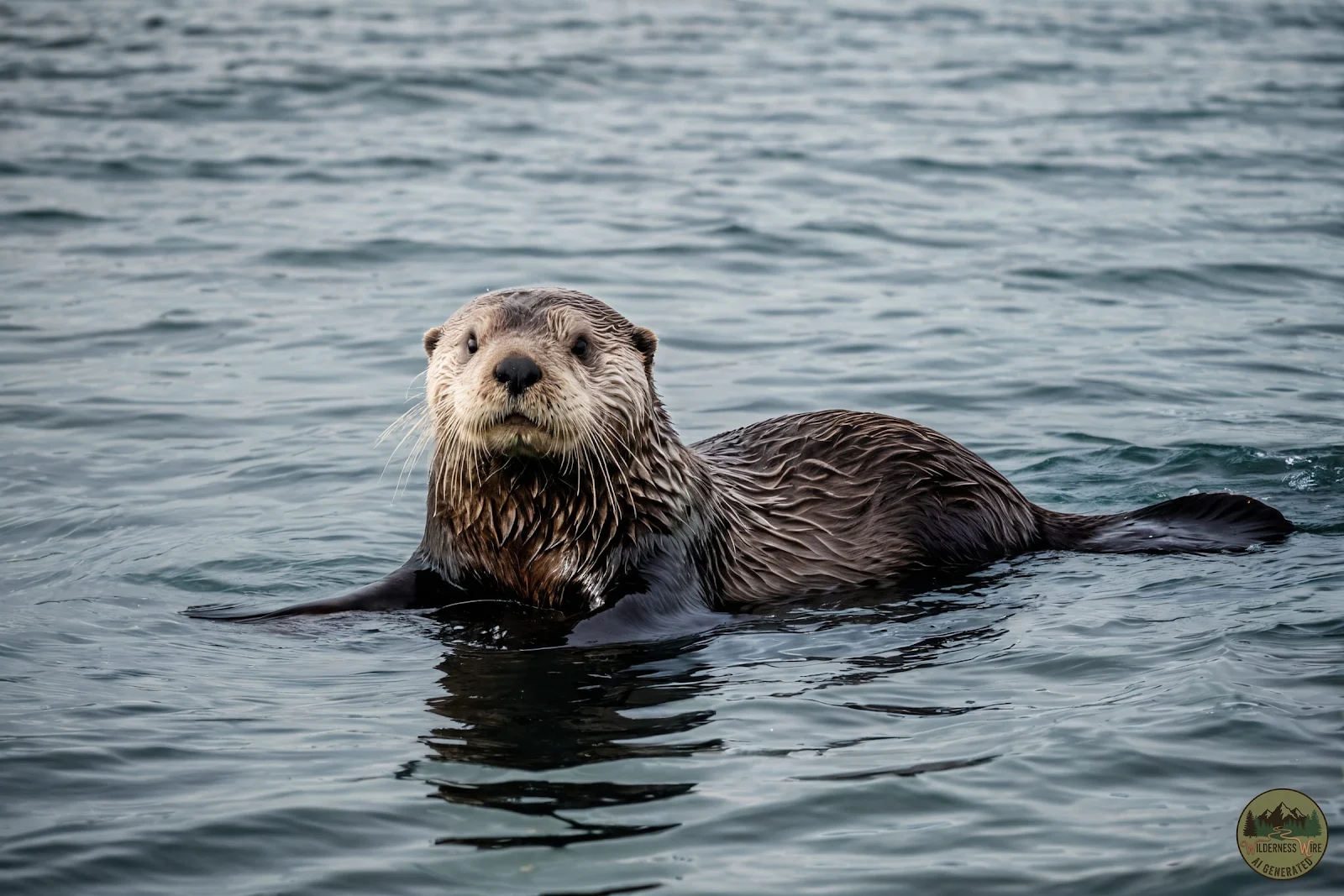
The cool, nutrient-rich waters of the North Pacific are home to one of the ocean's most charismatic and vital inhabitants: the sea otter. With their endearing faces, playful demeanor, and remarkable adaptations, these marine mammals are more than just a joy to observe; they are a cornerstone of their coastal ecosystems, playing a disproportionately large role in maintaining the health and biodiversity of kelp forests and rocky shorelines. Their story is one of both dramatic decline and inspiring recovery, underscoring the delicate balance of marine environments and the profound impact of human actions.
Unlike most marine mammals, sea otters possess no blubber to insulate them from the frigid ocean. Instead, they rely on an extraordinarily dense fur coat – the densest of any animal on Earth, with up to a million hairs per square inch. This intricate pelt traps a layer of air against their skin, providing crucial insulation. Maintaining the integrity of this air layer is paramount, which is why sea otters spend a significant portion of their day meticulously grooming. They roll, rub, and comb their fur, ensuring it remains clean, waterproof, and fluffed, a constant battle against the cold that drives much of their daily activity. Without this pristine coat, they quickly succumb to hypothermia, highlighting their unique evolutionary pathway to life in cold water.
Their diet is as fascinating as their fur. Sea otters are prodigious eaters, consuming up to 25% of their body weight daily to fuel their high metabolism and maintain body temperature. Their menu is varied, consisting primarily of benthic invertebrates such as sea urchins, clams, mussels, crabs, and snails. What sets them apart is their innovative use of tools. Floating on their backs, they often place a flat rock on their chest as an anvil, then smash hard-shelled prey against it until it breaks open. This remarkable behavior makes them one of the few non-primate species known to regularly use tools in the wild, showcasing a significant level of cognitive ability and problem-solving. Each otter often develops a preferred foraging style and even a favorite "tool rock," which they may tuck into a loose fold of skin under their armpit for later use.
The ecological significance of sea otters cannot be overstated. They are a classic example of a "keystone species." Their voracious appetite for sea urchins, in particular, has a cascading effect throughout the ecosystem. Unchecked, sea urchin populations can decimate kelp forests by grazing on the holdfasts that anchor the kelp to the seafloor, turning vibrant underwater forests into barren "urchin barrens." By keeping urchin numbers in check, sea otters allow kelp forests to thrive. These kelp forests, in turn, provide critical habitat, food, and shelter for countless other marine species, from fish and invertebrates to sea lions and grey whales. They act as nurseries for young fish, provide protection from strong currents, and absorb significant amounts of carbon dioxide, playing a role in mitigating climate change. The presence of sea otters is therefore a direct indicator of a healthy and balanced coastal ecosystem.
Sea otters exhibit complex social behaviors. While they can be solitary, they often gather in single-sex groups called "rafts," sometimes numbering in the hundreds. These rafts provide a measure of safety from predators and perhaps also facilitate social learning. When resting or sleeping, otters often hold hands or entangle themselves in kelp strands to prevent drifting away, a heartwarming behavior that speaks to their communal nature. Females typically give birth to a single pup, which they meticulously care for on their belly for several months, grooming it constantly and teaching it essential foraging and survival skills. The bond between a mother and her pup is incredibly strong, a testament to the dedication required to raise young in such a demanding environment. Pups are born unable to dive and float like corks due to their buoyant baby fur, making them entirely dependent on their mothers for food and protection.
Historically, sea otters once thrived along the entire North Pacific rim, from northern Japan, through the Aleutian Islands, along the coast of Alaska, and down to Baja California. However, the relentless maritime fur trade of the 18th and 19th centuries pushed them to the brink of extinction. Their dense, luxurious fur was highly prized, leading to a catastrophic decline in their population, with only a few isolated groups surviving. A small colony off the coast of Big Sur, California, thought to be extinct, was miraculously rediscovered in the early 20th century. Thanks to strict international protections, including the Fur Seal Treaty of 1911 and the Marine Mammal Protection Act of 1972, sea otter populations have slowly begun to recover in many parts of their historical range.
Despite these conservation successes, sea otters still face numerous threats. Oil spills are particularly devastating because they destroy the insulating properties of their fur, leading to hypothermia. Entanglement in fishing gear, disease, and predation by sharks also pose significant risks. As apex predators in their shallow-water ecosystems, sea otters are also susceptible to environmental toxins and pollutants that accumulate in their prey. Climate change, with its potential impacts on kelp forest ecosystems and prey availability, adds another layer of uncertainty to their future. Continued monitoring, habitat protection, and responsible human practices are crucial to ensuring the long-term survival of these endearing and ecologically indispensable creatures. The journey of the sea otter from near extinction to a symbol of coastal resilience is a powerful reminder of nature's capacity for recovery and our responsibility to protect it.