The Biology and Remarkable Aerial Adaptations of the Australian Sugar Glider
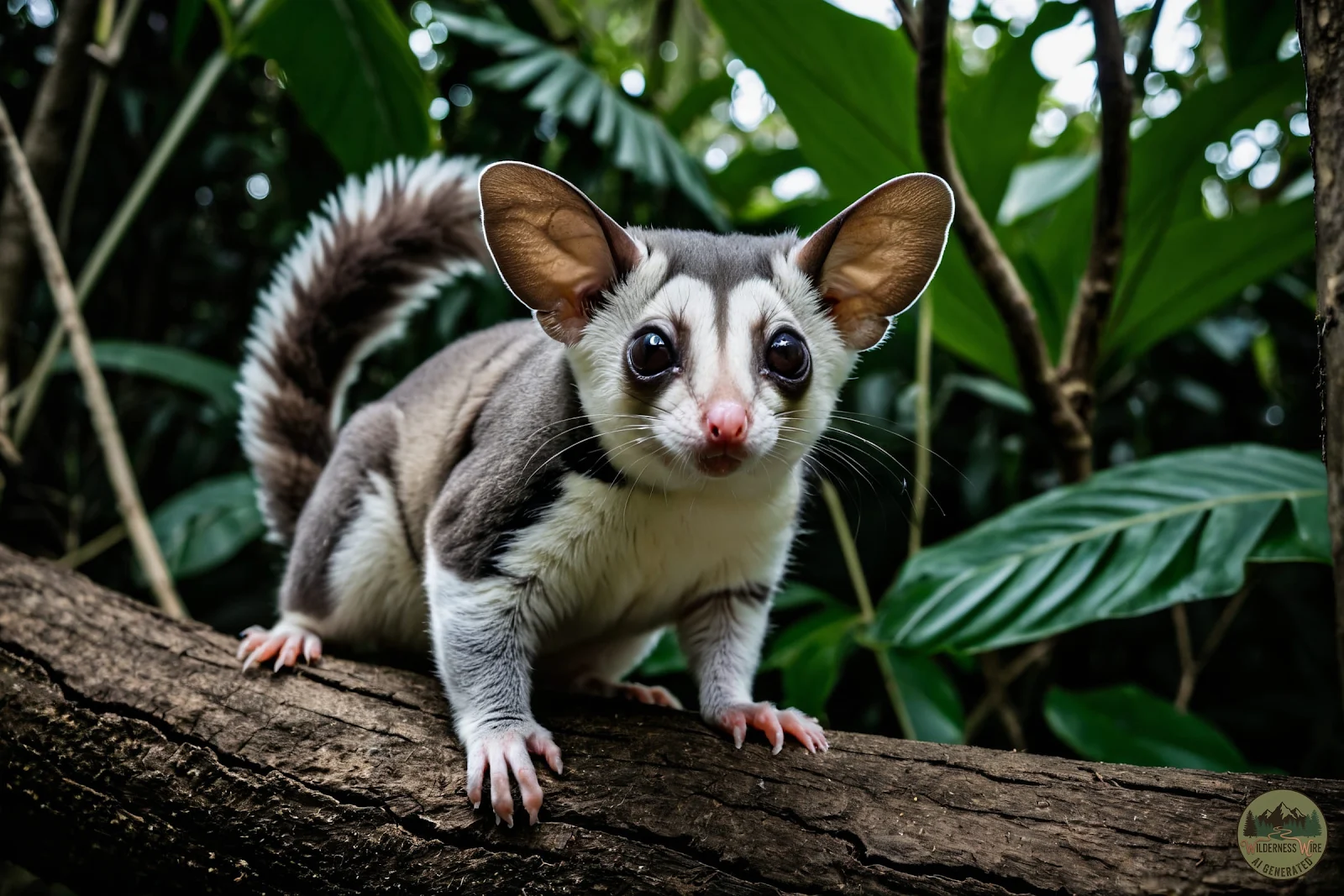
In the dense, twilight canopy of the Australian bush and the rainforests of New Guinea, a specialized group of arboreal mammals executes feats of aerial navigation that seem to defy the standard constraints of small-mammal biology. The sugar glider, known scientifically as Petaurus breviceps, is a small, omnivorous marsupial that represents a pinnacle of convergent evolution. Though it shares a striking physical resemblance to the North American flying squirrel, the two are separated by millions of years of divergent evolution. The sugar glider is not a rodent, but a member of the Diprotodontia order, making it more closely related to kangaroos and opossums than to any placental squirrel.
The defining characteristic of this species is the patagium, a thin, fur-covered membrane that extends from the fifth finger of the forelimb to the first toe of the hind limb. When the glider launches into the air, it extends its limbs to stretch this membrane, creating an aerofoil that allows it to glide distances of up to 50 meters or more. This is not true flight, like that of a bird or a bat, but rather a highly controlled descent. By adjusting the tension of the patagium and using its long, bushy tail as a rudder, the sugar glider can change direction mid-air to avoid predators or navigate toward a specific landing site on a distant tree trunk.
Ecologically, the sugar glider serves as a vital component of its ecosystem, particularly in the role of a pollinator and seed disperser. Its name is derived from its preference for sugary foods, specifically the sap and gum of eucalyptus and acacia trees. During the winter months, when insects are scarce, these marsupials use their sharp lower incisors to gouge the bark of trees, stimulating the flow of sap. This dietary specialization requires a highly efficient digestive system capable of processing complex polysaccharides. However, their diet is not limited to plant matter; they are opportunistic omnivores that consume a wide variety of protein sources, including spiders, beetles, moths, and occasionally small birds or lizards.
The social structure of the sugar glider is remarkably complex for a creature of its size. They are highly gregarious animals, living in colonial groups that can include up to seven adults and their associated young. These colonies share a communal nest, usually a hollowed-out tree cavity lined with dry leaves. Within these groups, a strict hierarchy is maintained through scent marking. Dominant males possess specialized scent glands on their foreheads and chests, which they use to mark both their territory and their subordinates. This chemical signaling is essential for group cohesion and territorial defense, allowing members to recognize one another in the total darkness of the nocturnal forest.
Adaptation to a nocturnal lifestyle has dictated much of the sugar glider's physiology. Their large, protruding eyes are optimized for gathering light in low-visibility environments, providing them with excellent night vision and depth perception—a critical requirement for calculating the distance and angle of a glide. Furthermore, their ears are large and thin-skinned, capable of independent movement to pinpoint the ultrasonic rustling of insects or the approach of an owl, their primary natural predator. When temperatures drop significantly, sugar gliders have the ability to enter a state of torpor, a temporary hibernation-like state where their metabolic rate and body temperature decrease to conserve energy. This is a crucial survival strategy in environments where food availability fluctuates with the weather.
From a reproductive standpoint, the sugar glider follows the classic marsupial blueprint but with its own unique timing. The gestation period is incredibly short, lasting only about 15 to 17 days. Following birth, the underdeveloped young, known as joeys, crawl into the mother’s pouch, where they attach to a teat and continue their development for another 60 to 70 days. This externalized gestation allows the mother to carry multiple young without the physiological bulk that would hinder her ability to glide. Interestingly, female sugar gliders are capable of "embryonic diapause," a biological process where they can delay the development of a second embryo until the first has left the pouch or conditions become more favorable for survival.
While the sugar glider is currently listed as a species of "Least Concern" by the IUCN, their populations face increasing pressure from habitat fragmentation and deforestation. Because they rely so heavily on old-growth forests with established tree hollows, the clearing of land for agriculture or urban development significantly impacts their ability to nest and feed. Furthermore, the exotic pet trade has seen a surge in the demand for these animals due to their "cute" appearance and social nature. However, many conservationists argue that their complex social needs, dietary requirements, and nocturnal habits make them ill-suited for domestic life, often leading to nutritional deficiencies and psychological distress in captivity.
Studying the sugar glider provides scientists with profound insights into the mechanics of gliding and the evolution of marsupial intelligence. Their ability to navigate three-dimensional space with precision, combined with their sophisticated social hierarchies, places them among the most fascinating subjects of Australian mammalogy. As we continue to explore the intricate web of life within the world’s remaining wilderness, the sugar glider remains a symbol of the delicate balance between specialized adaptation and environmental stability. Understanding the nuances of their behavior and biology is not just a pursuit of academic interest, but a necessary step in ensuring the preservation of the biodiversity that characterizes their native habitats.