 Sika Deer_00005_
The Sika deer, scientifically classified as *Cervus nippon*, is a medium-sized deer species native to much of East Asia. Its name, "Sika," is derived from the Japanese word "shika" (鹿), meaning deer, a testament to its prominent presence and cultural significance in Japan. These adaptable creatures are renowned for their striking seasonal coat changes, the elaborate antlers of the males, and their surprisingly diverse vocalizations. While often admired for their beauty, their ecological role varies significantly between their native habitats and the numerous regions where they have been introduced.
Originally found across a vast geographical range including Japan, Taiwan, parts of mainland China, Korea, and Russia, the Sika deer has demonstrated remarkable resilience and a capacity to thrive in diverse environments. Their preferred habitats range from dense temperate and subtropical forests to open woodlands, marshlands, and even mountainous terrains. This adaptability has unfortunately also contributed to their success as an invasive species in many parts of the world, including the United Kingdom, Ireland, continental Europe, New Zealand, Australia, and the United States, where they were introduced for ornamental purposes or hunting.
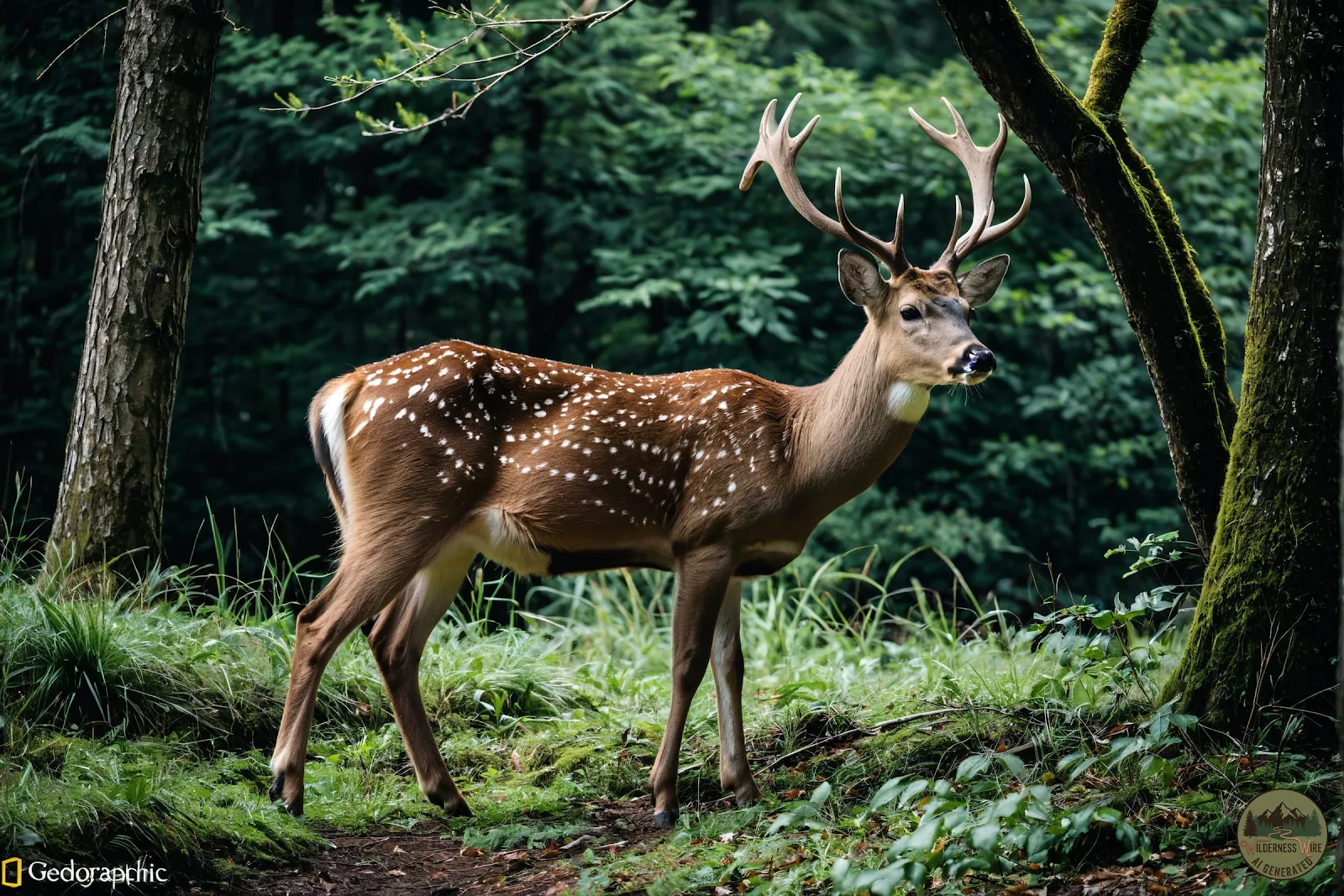
Physically, Sika deer possess a graceful yet robust build. Adults typically stand between 70 to 110 centimeters (28 to 43 inches) at the shoulder, with their weight varying considerably based on subspecies and geographical location, ranging from 30 to over 100 kilograms (66 to 220 pounds). One of their most distinctive features is their coat, which undergoes a dramatic transformation with the seasons. In summer, their pelage is a rich reddish-brown, often adorned with prominent white spots arranged in a pattern reminiscent of a fawn's, though these spots may be less defined or absent in some subspecies. A striking white rump patch, often edged with black, is always present and flares dramatically when the animal is alarmed, serving as a warning signal to others. During winter, the coat typically darkens, becoming a shaggier, greyish-brown to black, and the spots may fade or disappear entirely, offering better camouflage against the colder landscape.
Males, known as stags, grow impressive antlers that are shed annually, typically between April and May, with new growth commencing almost immediately. The antlers can reach lengths of up to 70 centimeters (28 inches) and usually feature three to four points or tines per antler in mature individuals, though more points can occasionally be observed. The size and complexity of the antlers are often indicators of the stag's age, health, and dominance within the herd. Females, or hinds, are generally smaller than stags and do not grow antlers. Both sexes possess a distinctive preorbital gland, located near the eye, which they use for scent marking to communicate with other deer.
Sika deer exhibit a flexible social structure, which can vary greatly depending on the season, habitat, and population density. During much of the year, hinds typically live in small, cohesive groups with their fawns, while stags may form bachelor groups or remain solitary. However, during the autumn rutting season, typically from September to November, this changes dramatically. Stags become highly territorial and vocal, establishing rutting stands where they will defend their patch of ground and attempt to gather a harem of hinds. Their calls during this period are particularly noteworthy; they emit a series of loud, high-pitched whistles, screams, and roars, which are far more varied and intense than the calls of many other deer species. These vocalizations serve to attract hinds, intimidate rival stags, and communicate their presence across the landscape.
Their diet is equally versatile. Sika deer are primarily herbivores, classified as mixed feeders, meaning they both graze on grasses and herbs and browse on the leaves, twigs, and bark of trees and shrubs. This dietary flexibility allows them to exploit a wide range of food sources and adapt to various foraging conditions, contributing to their success in diverse environments. They are also known to consume fruits, fungi, and lichens when available.
Reproduction usually occurs in the autumn, with a gestation period of approximately seven to eight months. Hinds typically give birth to a single fawn, occasionally twins, in late spring or early summer. The fawns are born with spotted coats that provide excellent camouflage in the undergrowth and are weaned by around 6-10 months of age, though they may remain with their mother for up to a year. Sexual maturity is typically reached at around 1.5 to 2 years for both sexes, though males may not successfully breed until they are older and more dominant.
The conservation status of Sika deer is a complex issue, reflecting their dual role as both an endangered native species and a problematic invasive one. In their native range, several subspecies, such as the Formosan Sika deer (*Cervus nippon taiouanus*) and the Japanese Sika deer (*Cervus nippon nippon*), faced severe population declines or even extinction in the wild due to habitat loss, poaching, and interbreeding with introduced red deer. Conservation efforts, including captive breeding and reintroduction programs, have seen some success, particularly with the Formosan Sika deer in Taiwan, bringing them back from the brink.
Conversely, in regions where they have been introduced, Sika deer are often considered a pest species. Their browsing habits can lead to significant damage to native vegetation, hindering forest regeneration and altering ecosystem dynamics. They also pose a significant threat to native deer populations through hybridization, particularly with red deer (*Cervus elaphus*), leading to concerns about the genetic integrity of both species. Managing these introduced populations often involves culling and habitat management strategies to mitigate their ecological impact.
Understanding the Sika deer requires appreciating this intricate balance – a charismatic and adaptable animal whose survival is precarious in its ancestral homelands, yet whose very success as an invader creates significant ecological challenges elsewhere. Their distinctive appearance, complex social behaviors, and unique vocalizations continue to fascinate researchers and nature enthusiasts alike, underscoring the enduring appeal and complexity of wildlife conservation.