Understanding the Biology Ecology and Conservation of the Tiger as an Iconic Apex Predator
The tiger (Panthera tigris) remains one of the most formidable and enigmatic apex predators on the planet. As the largest member of the Felidae family, it represents a peak of evolutionary design, combining raw power with an intricate system of stealth and sensory acuity. Unlike many other large carnivores that rely on group dynamics for survival, the tiger is a solitary specialist, navigating a variety of landscapes ranging from the frozen taiga of the Russian Far East to the humid mangrove swamps of the Sundarbans. This independence requires a sophisticated biological toolkit, allowing the animal to maintain a massive caloric intake while managing territories that can span hundreds of square kilometers.
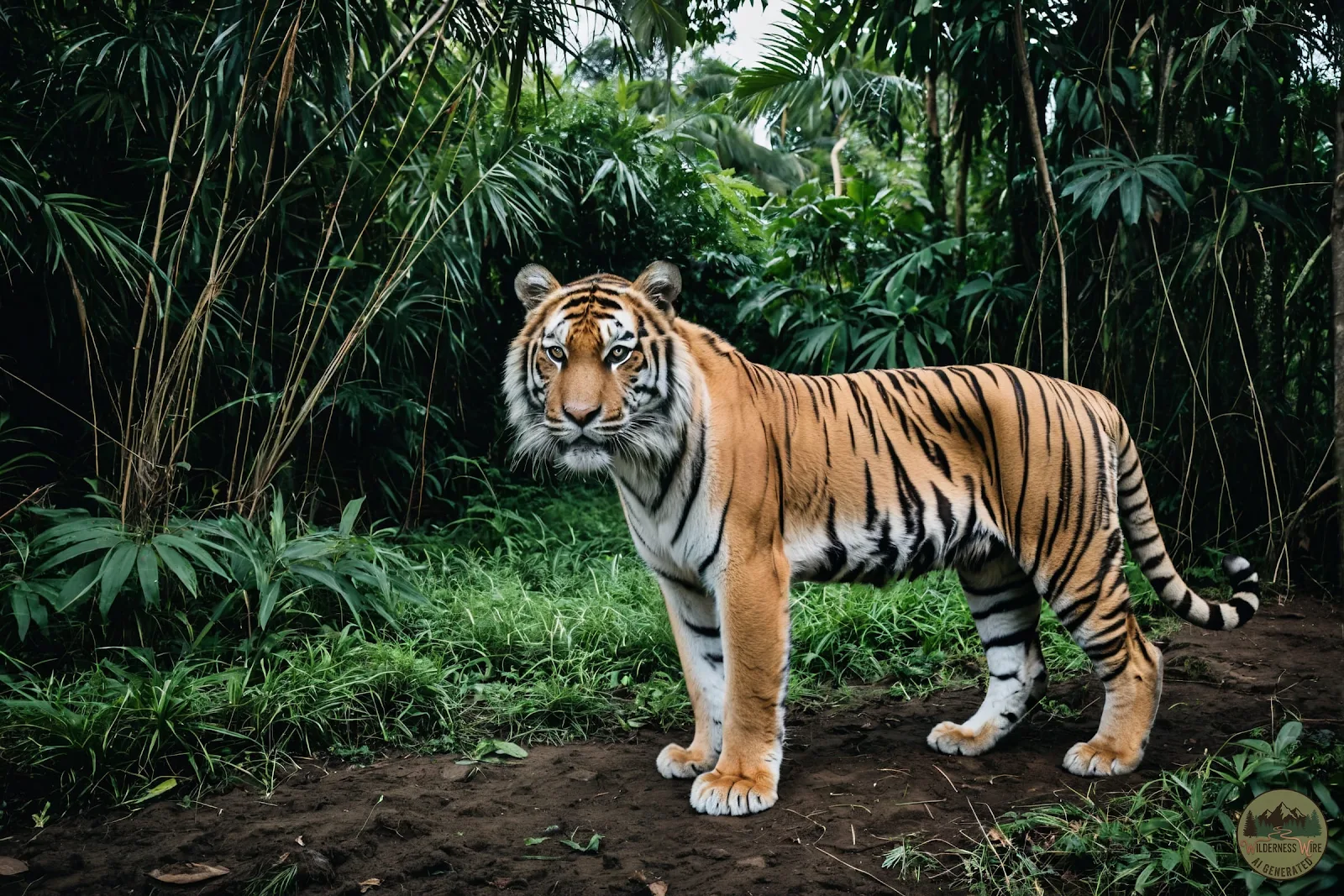
Physiologically, the tiger is built for the "stalk and spring" method of hunting. Its muscular skeletal structure is optimized for short bursts of extreme speed and the physical leverage necessary to take down prey significantly larger than itself, such as water buffalo, gaur, and wild boar. The most iconic feature of the tiger, its disruptive coloration, serves as a masterclass in natural camouflage. The dark vertical stripes break up the animal's outline against the dappled light of the forest floor or the vertical lines of tall grasses. Interestingly, these stripe patterns are unique to each individual, functioning much like a human fingerprint, and the pattern is not merely on the fur but is also pigmented directly onto the skin.
Beyond its physical presence, the tiger possesses sensory adaptations that place it at the top of the food chain. Their night vision is roughly six times better than that of a human, aided by a reflective layer behind the retina called the tapetum lucidum. This structure reflects light back through the retina, maximizing the capture of even the smallest amount of ambient light. This adaptation, combined with a highly developed sense of hearing and sensitive vibrissae (whiskers) that can detect subtle changes in air pressure or physical contact in the dark, makes the tiger a dominant nocturnal hunter. While they are capable of hunting during the day, their peak efficiency occurs under the cover of twilight or total darkness.
The territorial nature of the tiger is a critical aspect of its ecology and conservation. A male tiger's home range usually overlaps with those of several females, but rarely with those of other males. They mark these boundaries using scent glands, urine, and deep claw marks on trees—a behavior known as "scatting" or "marking." These chemical signals provide a complex "bulletin board" for other tigers, conveying information about the individual's identity, reproductive status, and the time since they last passed through the area. This system of indirect communication reduces the need for physical confrontation, which can be lethal even for the victor, thereby ensuring the survival of the strongest individuals within a shared landscape.
Currently, the tiger is divided into several recognized subspecies, though recent genetic research has debated whether these should be grouped into just two broader categories: continental and island tigers. The Siberian (or Amur) tiger is the largest, possessing a thick coat and a layer of fat to survive sub-zero temperatures. In contrast, the Sumatran tiger is the smallest and most darkly colored, adapted for the dense, tropical vegetation of the Indonesian islands. Each subspecies faces unique challenges, yet they all share a common vulnerability to habitat fragmentation and the loss of prey biomass. When the forest is divided by roads or human settlements, tigers are forced into closer contact with livestock and people, leading to conflict that rarely ends in the animal's favor.
Conservation efforts over the last few decades have seen a shift from simple protectionism to a more holistic "landscape-level" approach. High-tech monitoring, such as camera trapping and satellite telemetry, has provided researchers with unprecedented data on tiger movement and population density. These studies show that tigers are surprisingly resilient when given enough space and a sufficient prey base. For example, India's "Project Tiger" has utilized these insights to create corridors that allow tigers to move between protected reserves, maintaining genetic diversity by preventing isolated populations from inbreeding. The success of these programs is vital, as the tiger is a keystone species; its presence regulates the population of herbivores, which in turn prevents overgrazing and maintains the structural integrity of the forest ecosystem.
The relationship between tigers and human culture is one of deep-seated reverence and historical tension. In many Asian traditions, the tiger is viewed as a symbol of strength, royalty, and protection. However, this same admiration has historically fueled the demand for tiger parts in traditional medicines and as status symbols, leading to a devastating poaching crisis in the late 20th and early 21st centuries. Today, international law and domestic enforcement have made significant strides in curbing this trade, though the black market remains a persistent threat. The future of the species depends on the continued international cooperation of the 13 tiger-range countries and the recognition that the tiger is not just a relic of the wilderness, but a functional necessity for a healthy planet.
In conclusion, the tiger is more than just a magnificent predator; it is a complex biological entity that requires vast, undisturbed wilderness to survive. To witness a tiger in its natural habitat is to see an animal perfectly synchronized with its environment. As we move further into a century defined by climate change and biodiversity loss, the tiger remains a powerful indicator of our success or failure in preserving the natural world. Ensuring their survival requires a commitment to protecting the large-scale ecosystems they inhabit, which ultimately benefits countless other species and the global climate at large.