The Resilient Tasmanian Devil: Navigating Disease and Ecological Challenges to Protect a Unique Species
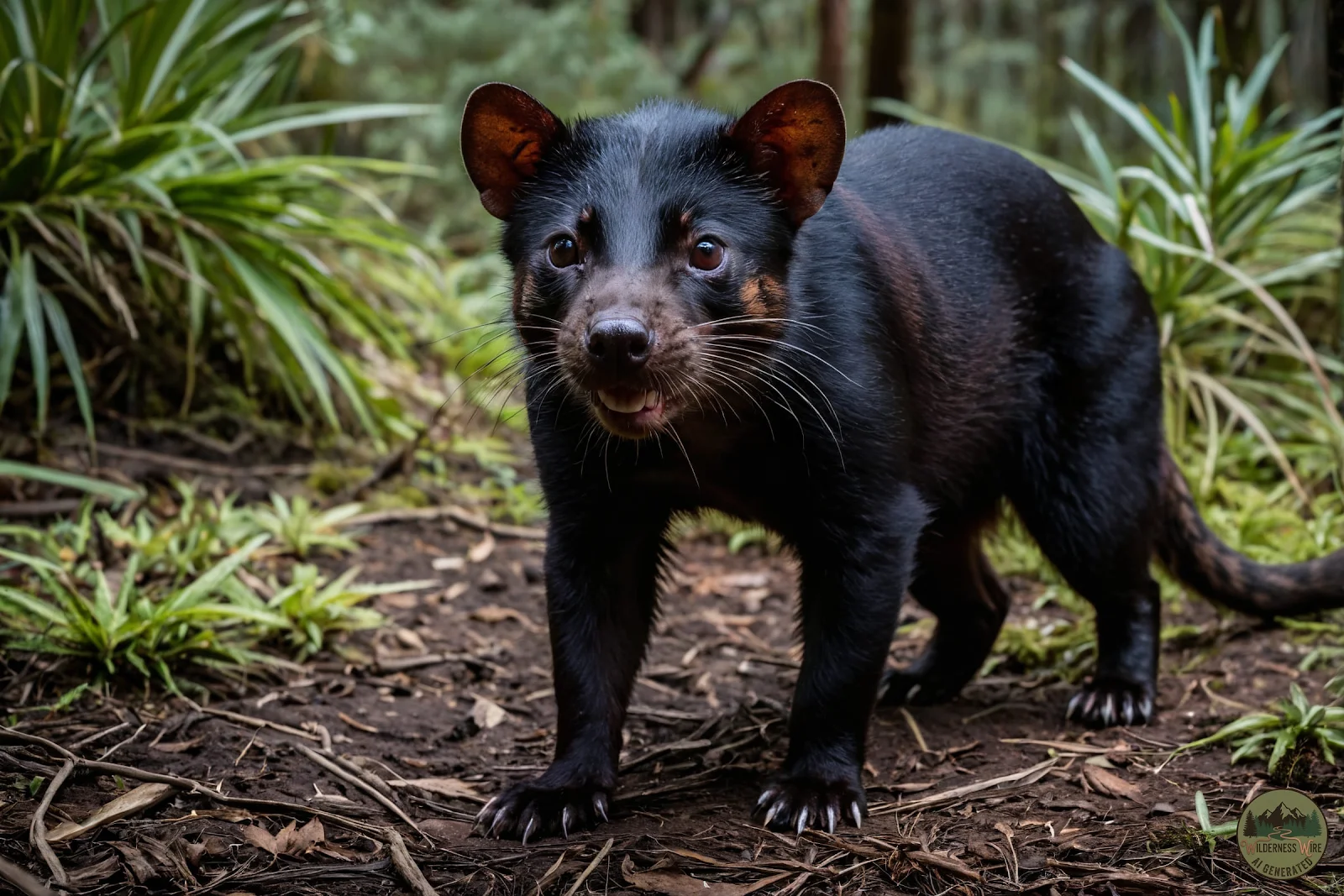
The rugged wilderness of the Australian island state of Tasmania serves as the final stronghold for one of the world’s most misunderstood and biologically fascinating creatures. As the largest surviving carnivorous marsupial, the Tasmanian devil (Sarcophilus harrisii) occupies a unique ecological niche that has fascinated naturalists for centuries. Once found across the Australian mainland, these resilient marsupials were restricted to Tasmania roughly 3,000 years ago, likely due to the introduction of the dingo and changing climatic conditions. Today, they represent a critical link in the island's biodiversity, serving as both a primary scavenger and a symbolic figure of wildlife conservation.
Physically, the Tasmanian devil is a marvel of evolutionary engineering, built for power rather than speed. Characterized by a squat, muscular build and black fur often punctuated by white patches on the chest and rump, the devil possesses an anatomical feature that distinguishes it from almost any other mammal of its size: a massive head and neck. This structure supports jaw muscles capable of generating one of the most powerful bites per unit of body mass in the animal kingdom. Their dentition is specialized for bone-crushing, allowing them to consume entire carcasses—including bones, fur, and skin—leaving little to waste in the forest ecosystem. This "vacuum cleaner" role is essential for maintaining hygiene within their habitat, as it prevents the buildup of decaying organic matter and reduces the spread of disease among other wildlife populations.
The behavior of these marsupials is equally distinctive, often characterized by high-pitched screeches and guttural growls that earned them their "devilish" moniker among early European settlers. However, much of this vocalization is part of a complex social hierarchy rather than pure aggression. When devils congregate around a large carcass, they engage in communal feeding rituals. These gatherings are noisy affairs, involving posturing, lunging, and vocal displays intended to establish dominance and secure a share of the meal. Interestingly, while they appear ferocious, these interactions serve as a mechanism to minimize actual physical combat, though scuffles do occur and are a primary means of social interaction among the species.
The life cycle of the Tasmanian devil reflects the specialized reproductive strategies of the Dasyuridae family. Like other marsupials, females give birth to highly underdeveloped young after a very short gestation period of about three weeks. A single female may give birth to upwards of 40 tiny, grain-of-rice-sized joeys, but she only possesses four teats in her rear-facing pouch. This leads to a fierce biological competition for survival immediately upon birth; only the first four to reach the pouch and successfully attach can survive. These four lucky individuals will remain in the pouch for about four months, eventually emerging to stay in a den while the mother hunts, finally reaching independence at roughly ten months of age.
In recent decades, the species has faced a catastrophic biological threat that has pushed it to the brink of extinction. Devil Facial Tumour Disease (DFTD), first discovered in the mid-1990s, is one of the few known transmissible cancers in the world. Spread primarily through the biting that occurs during social interactions and feeding, the disease causes large tumors around the face and neck, eventually preventing the animal from eating and leading to death within months. Since its discovery, DFTD has decimated wild populations, with some areas seeing declines of over 80%. This crisis has sparked an international scientific effort to understand the genetics of the disease and to develop potential vaccines or treatments, while also highlighting the fragility of species with low genetic diversity.
The ecological impact of the devil's decline has been profound, illustrating the concept of a "trophic cascade." In the absence of the Tasmanian devil, populations of invasive species such as feral cats and red foxes often expand, putting immense pressure on smaller, native marsupials like the eastern quoll and various bandicoot species. The devil acts as a "top-order" predator on the island, and its presence provides a level of protection for many of Tasmania's smaller endemic species by suppressing the activity and numbers of these invasive predators. Consequently, the survival of the devil is not just a matter of preserving a single species, but of maintaining the stability of an entire ecosystem.
Conservation strategies have evolved rapidly to meet these challenges. One of the most successful initiatives has been the establishment of "insurance populations"—healthy, disease-free devils kept in captivity or on isolated islands where the cancer is not present. Maria Island, off the east coast of Tasmania, serves as a successful wild sanctuary where an introduced population has thrived, providing a reservoir of genetic diversity and animals that can eventually be reintroduced to the Tasmanian mainland. Furthermore, recent pioneering efforts have seen the reintroduction of the Tasmanian devil to the Australian mainland for the first time in millennia. Small, controlled populations in protected sanctuaries in New South Wales are being monitored to see if they can once again fill the ecological void left by their ancestors.
As research continues, there are signs of evolutionary hope. Scientists have observed that some wild populations are beginning to show genetic adaptations to the disease, with certain individuals demonstrating a natural immune response to the tumors. This suggests that the species is fighting back on a molecular level, adapting in real-time to a threat that once seemed insurmountable. The resilience of the Tasmanian devil, combined with intensive human intervention and habitat protection, provides a glimmer of optimism for their long-term survival. They remain an iconic symbol of the wild—vocal, hardy, and indispensable to the natural heritage of the Australian continent.