The Resilient Steenbok: Specialized Survival Strategies of a Diminutive African Savanna Antelope
Among the vast panoramas of the African savanna, where the charismatic megafauna often dominate the attention of observers, the steenbok (Raphicerus campestris) represents a masterclass in subtle adaptation and solitary survival. This diminutive antelope, belonging to the tribe Neotragini, is a fixture of the Southern and Eastern African landscapes. While it may lack the sheer physical presence of the eland or the social complexity of the impala, the steenbok possesses a specialized biological toolkit that allows it to thrive in environments ranging from the semi-arid fringes of the Kalahari to the lush transitions of the bushveld.
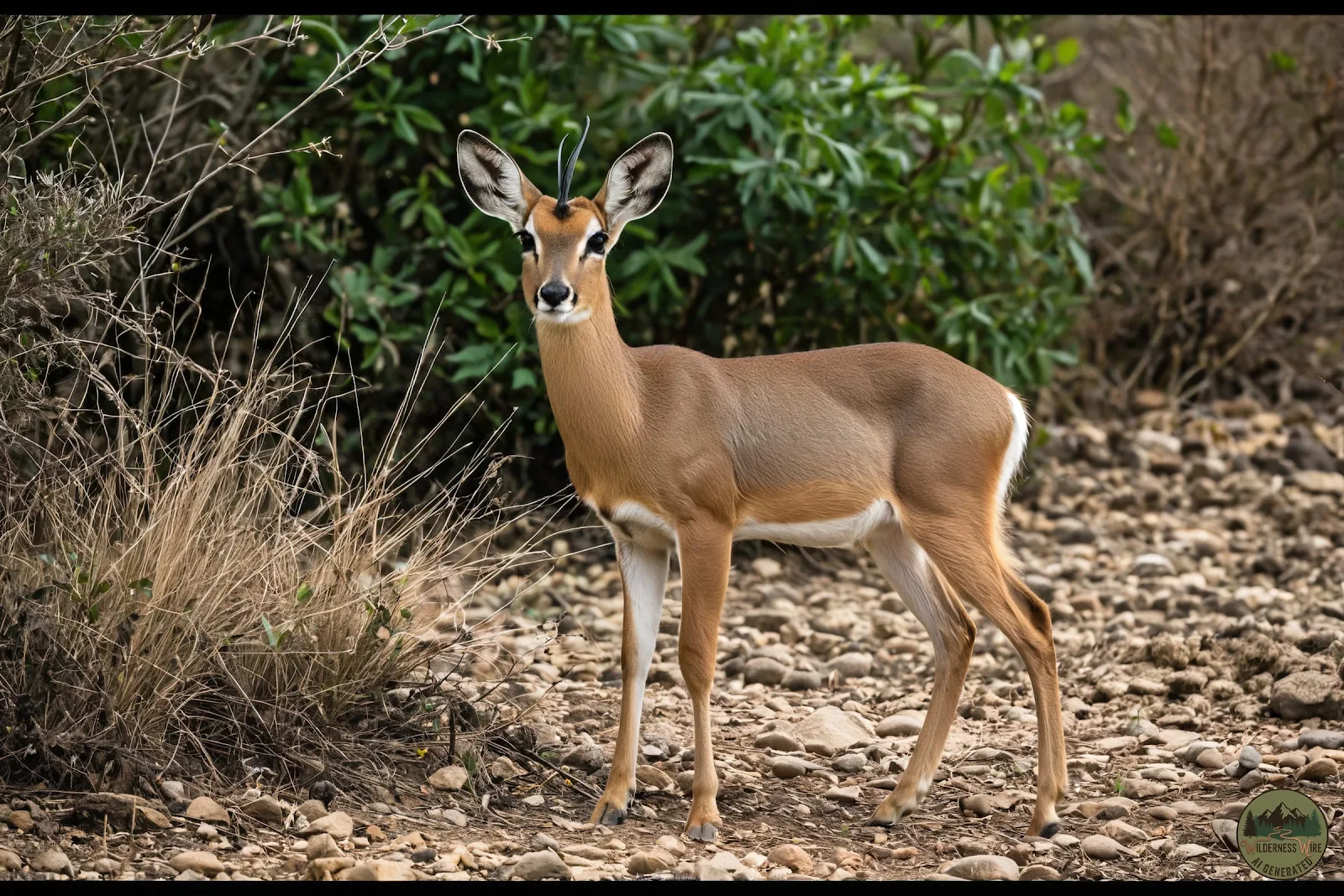
The physical appearance of the steenbok is characterized by a refined, almost delicate aesthetic. Its coat typically displays a bright reddish-fawn or brick-red hue, which serves as exceptional camouflage against the parched earth and dormant grasses of its native range. One of its most striking features is its oversized, highly mobile ears. These ears are not merely for show; they function as sensitive acoustic receptors capable of detecting the faint rustle of a predator—such as a caracal or a leopard—long before the threat becomes visible. In the harsh sunlight, the large surface area of the ears also assists in thermoregulation, helping the animal dissipate heat through a network of fine blood vessels.
A notable anatomical distinction between the sexes is the presence of horns, which are found only on the males. These horns are remarkably straight, smooth, and sharp, rising vertically from the forehead to a length of approximately 7 to 19 centimeters. Unlike many larger antelope that use their horns for defense against predators, the steenbok's horns are primarily used for intraspecific competition, allowing males to defend their territories during brief but spirited encounters. Underpinning their visual profile is a stark white underbelly and a small, almost invisible tail, which further aids in breaking up their silhouette against the shimmering horizon.
The steenbok’s ecological success is largely due to its status as a highly selective "concentrate selector" or intermediate feeder. While many herbivores are forced to migrate in search of seasonal rains and fresh grass, the steenbok is largely sedentary. It sustains itself on a diet of high-quality plant material, including young leaves, shoot tips, flowers, and fruits. Perhaps most impressively, the steenbok is almost entirely independent of standing water. It extracts the necessary moisture from its food, particularly from succulent plants and underground bulbs or tubers which it unearths with its sharp hooves. This ability to thrive in water-scarce regions gives the species a significant advantage over more water-dependent competitors.
Behaviorally, the steenbok is a solitary creature, a trait that sets it apart from many of the gregarious bovids found on the continent. While a male and female may share a territory and form a monogamous pair bond, they spend the vast majority of their time alone, coming together only for the purpose of mating. This solitary nature is a tactical choice; a single, small animal is much harder for a predator to spot than a large group. When threatened, the steenbok employs a "freeze and flee" strategy. It will crouch low in the grass, remaining motionless until the predator is nearly upon it, before suddenly bolting in an erratic, zigzagging pattern. If the terrain allows, they have even been known to seek refuge in the abandoned burrows of aardvarks to escape danger.
Territorial maintenance is a rigorous process for the steenbok. They are unique among many small antelope for their meticulous sanitation habits. When a steenbok defecates or urinates, it first scrapes a depression in the earth with its forehooves, completes its business, and then carefully covers the waste with soil. This behavior is thought to serve two purposes: it masks their scent from predators and marks their territory in a way that minimizes the visual cues available to rivals. Furthermore, both sexes possess preorbital glands located just in front of the eyes, which they use to scent-mark twigs and stalks within their home range, creating a chemical map of their domain.
The reproductive cycle of the steenbok is not strictly seasonal, though births often peak during the rainy season when nutritional resources are most abundant. After a gestation period of roughly seven months, a single lamb is born. The mother hides the lamb in dense vegetation for several weeks, returning only to suckle and groom the offspring. This "hider" strategy is essential for the survival of the young, which are particularly vulnerable to avian predators and smaller carnivores. The lamb grows rapidly, reaching sexual maturity within six to twelve months, ensuring the continuity of the species in a high-pressure environment.
From a conservation perspective, the steenbok is currently classified as a species of Least Concern by the International Union for Conservation of Nature (IUCN). Their adaptability to human-altered landscapes, such as farmland and suburban fringes, has allowed them to remain widespread. However, they are not immune to the pressures of habitat fragmentation and the encroachment of domestic dogs. In many ways, the steenbok serves as a biological indicator of the health of the scrubland ecosystem. Their presence suggests a balance of floral diversity and sufficient cover, maintaining the intricate web of life that defines the African wilderness. Understanding the steenbok is to understand the complexity of survival on a small scale, proving that in the natural world, resilience is often found in the most unassuming packages.