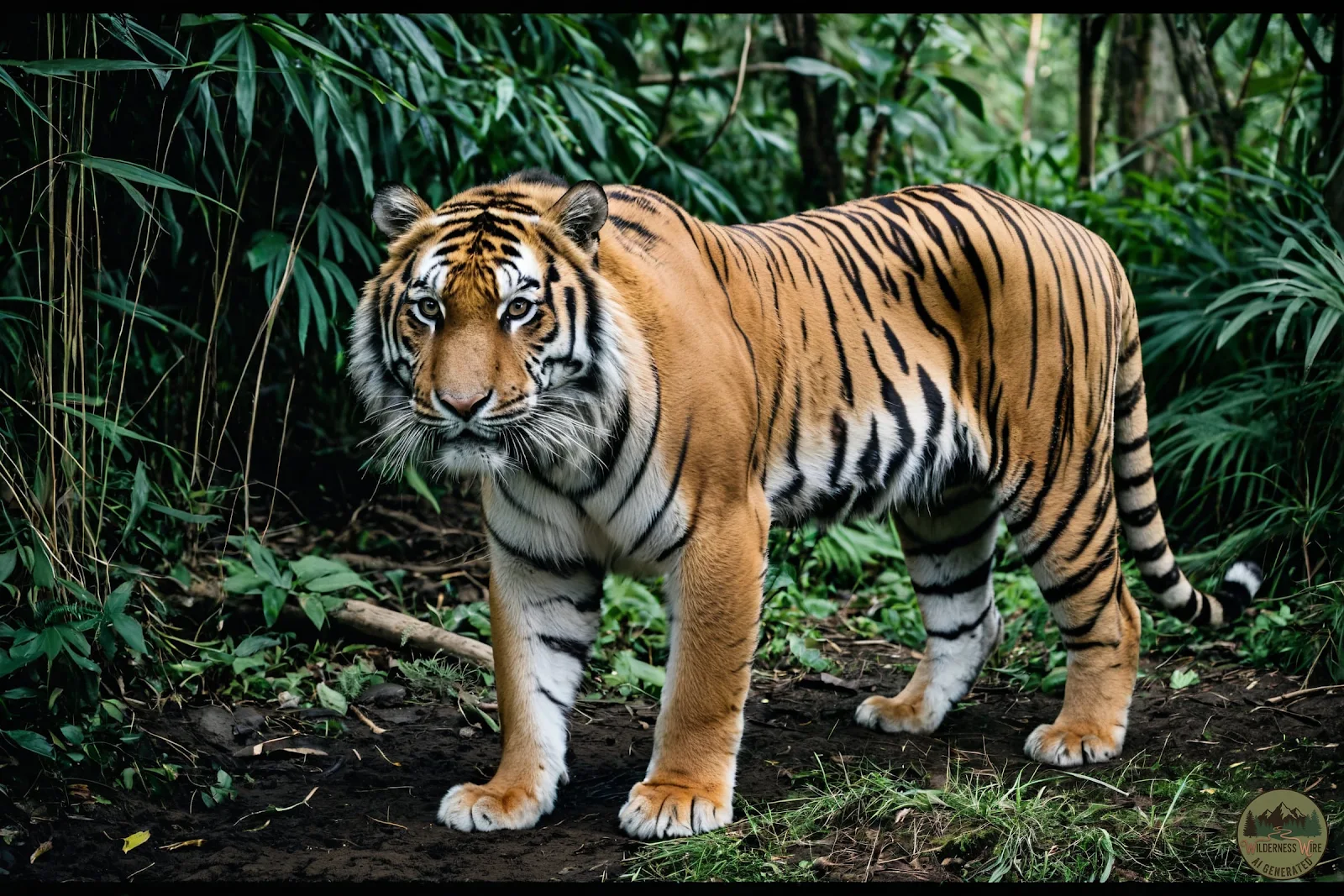
The tiger, scientifically known as Panthera tigris, stands as the largest extant cat species in the world and a quintessential symbol of wild power and grace. Belonging to the genus Panthera, which includes lions, leopards, and jaguars, the tiger represents an evolutionary pinnacle of solitary ambush predators. Its ancestral lineage dates back millions of years, with genetic evidence suggesting that the Panthera lineage diverged from other felids approximately 10.8 million years ago. Today, the tiger is not merely a single entity but a collection of distinct subspecies, each adapted to the specific nuances of their geographic locales—from the frigid coniferous forests of the Russian Far East to the tropical mangrove swamps of the Sundarbans.
The most striking physical characteristic of this apex predator is its coat, a masterpiece of disruptive coloration. The dark vertical stripes against a white to reddish-orange background serve a critical purpose in the dappled light of dense forests and tall grasses. Interestingly, these stripe patterns are as unique to an individual tiger as a human fingerprint is to a person. This pattern is not merely fur-deep; the pigmentation is actually embedded in the skin, meaning that even if a tiger were shaved, its distinctive markings would remain visible. This camouflage allows the tiger to remain virtually invisible until it is within striking distance of its prey, a necessary adaptation for an animal that relies on stealth rather than sustained high-speed chases.
Beyond its aesthetic markings, the tiger's physiology is a testament to biological engineering for power. A mature male can weigh upwards of 600 pounds, yet it possesses a level of agility that allows it to leap distances of over 20 feet in a single bound. Its muscular structure is heavily concentrated in the forelimbs and shoulders, providing the necessary torque to grapple with and bring down prey that may be three to four times its own body weight, such as water buffalo or gaur. The skeletal structure is further bolstered by a massive skull and a specialized jaw morphology that allows for a wide gape and a bite force capable of snapping the vertebrae of large ungulates with clinical precision.
Tigers are predominantly solitary animals, maintaining vast territories that they defend with fierce loyalty. The size of a tiger's range is largely determined by the density of available prey; in areas where food is abundant, territories are smaller, whereas in the resource-scarce landscapes of Siberia, a single male may roam over hundreds of square miles. They communicate their presence through a complex array of olfactory and auditory signals. Scent marking through urine, glandular secretions, and deep "clawing" of trees serves as a chemical boundary map for other tigers. Their vocalizations are equally sophisticated, ranging from the low-frequency infrasonic roars that can travel through dense jungle for miles to the "chuffing" sound used as a non-threatening greeting between individuals.
The hunting strategy of the tiger is one of patience and calculated risk. Unlike the social hunting dynamics of a lion pride, a tiger hunts alone. It utilizes its acute senses of hearing and vision—the latter of which is six times more effective than a human's in low-light conditions—to track movement. Once a target is identified, the tiger uses the terrain to close the gap, often belly-crawling until it is within thirty to fifty feet. The final attack is an explosive burst of speed, usually aimed at the throat or the back of the neck. Despite this formidable skill set, the success rate of a tiger hunt is surprisingly low, with only about one in ten attempts resulting in a successful kill. This high failure rate underscores the importance of the tiger's role in natural selection, as they predominantly cull the old, weak, or sick individuals from a herd, thereby maintaining the health of the prey population.
Reproduction and cub-rearing represent the most social phase of a tiger's life. After a gestation period of roughly 100 days, a tigress typically gives birth to a litter of two to four cubs. For the first few months, the cubs are entirely dependent on their mother, hidden away in dens located in thick vegetation or rocky crevices. The mortality rate for cubs is high, often due to predation by other carnivores or infanticide by competing males. As they grow, the mother spends an immense amount of energy teaching them the intricacies of the hunt. It takes nearly two years for a young tiger to master the skills necessary for independence, at which point they must venture out to find their own territory—a journey that is becoming increasingly difficult due to habitat fragmentation.
The current status of tigers in the wild is a subject of intense global concern. Once found throughout much of Asia, their range has been reduced by more than 90% over the last century. This decline is attributed to a combination of habitat loss, depletion of prey species, and illegal poaching driven by the black market demand for tiger parts. However, the tiger serves as what ecologists call an "umbrella species." By protecting the vast landscapes required for a single tiger to thrive, we effectively protect thousands of other species, from insects to primates, and preserve the vital ecosystem services that these forests provide, such as carbon sequestration and water regulation.
Modern conservation efforts have shifted toward the concept of "landscape-scale" management, emphasizing the need for wildlife corridors that connect isolated pockets of habitat. This connectivity is essential for maintaining genetic diversity; without it, small populations face the risk of inbreeding depression, which can lead to reduced fertility and increased susceptibility to disease. Organizations and governments are increasingly recognizing that the survival of the tiger is intrinsically linked to the well-being of local human communities. Integrated conservation programs that offer sustainable livelihoods and mitigate human-wildlife conflict are proving to be the most effective way to ensure that this magnificent predator continues to roam the wild forests of Asia for generations to come. To witness a tiger in its natural habitat is to see a creature that embodies the raw, unyielding spirit of the wilderness—a reminder of the complex and beautiful biological heritage of our planet.