 Tiger_00004_
The tiger (Panthera tigris) stands as one of the most recognizable and formidable apex predators on the planet. As the largest member of the Felidae family, it represents a pinnacle of evolutionary specialization, fine-tuned over millions of years to dominate diverse landscapes ranging from the frozen taiga of the Russian Far East to the humid mangrove swamps of the Sundarbans. Unlike many other large felids that hunt in prides, the tiger is a master of solitary persistence, relying on a combination of immense physical power, stealth, and a highly developed sensory suite to maintain its position at the top of the food chain.
The evolutionary history of the tiger is a testament to the resilience and adaptability of the Panthera lineage. Genetic evidence suggests that the common ancestor of modern big cats diverged approximately 6 to 10 million years ago, with the tiger lineage becoming distinct in East Asia. From this ancestral hub, tigers migrated across the continent, adapting to varying climates and prey bases. This radiation resulted in the various subspecies we recognize today, such as the massive Amur (Siberian) tiger and the smaller, darker Sumatran tiger. Each subspecies has developed specific physiological traits suited to its environment; for instance, the Amur tiger possesses a thicker coat and a layer of fat to withstand sub-zero temperatures, while the Sumatran tiger has evolved a smaller frame to navigate the dense, tangled undergrowth of Indonesian rainforests.
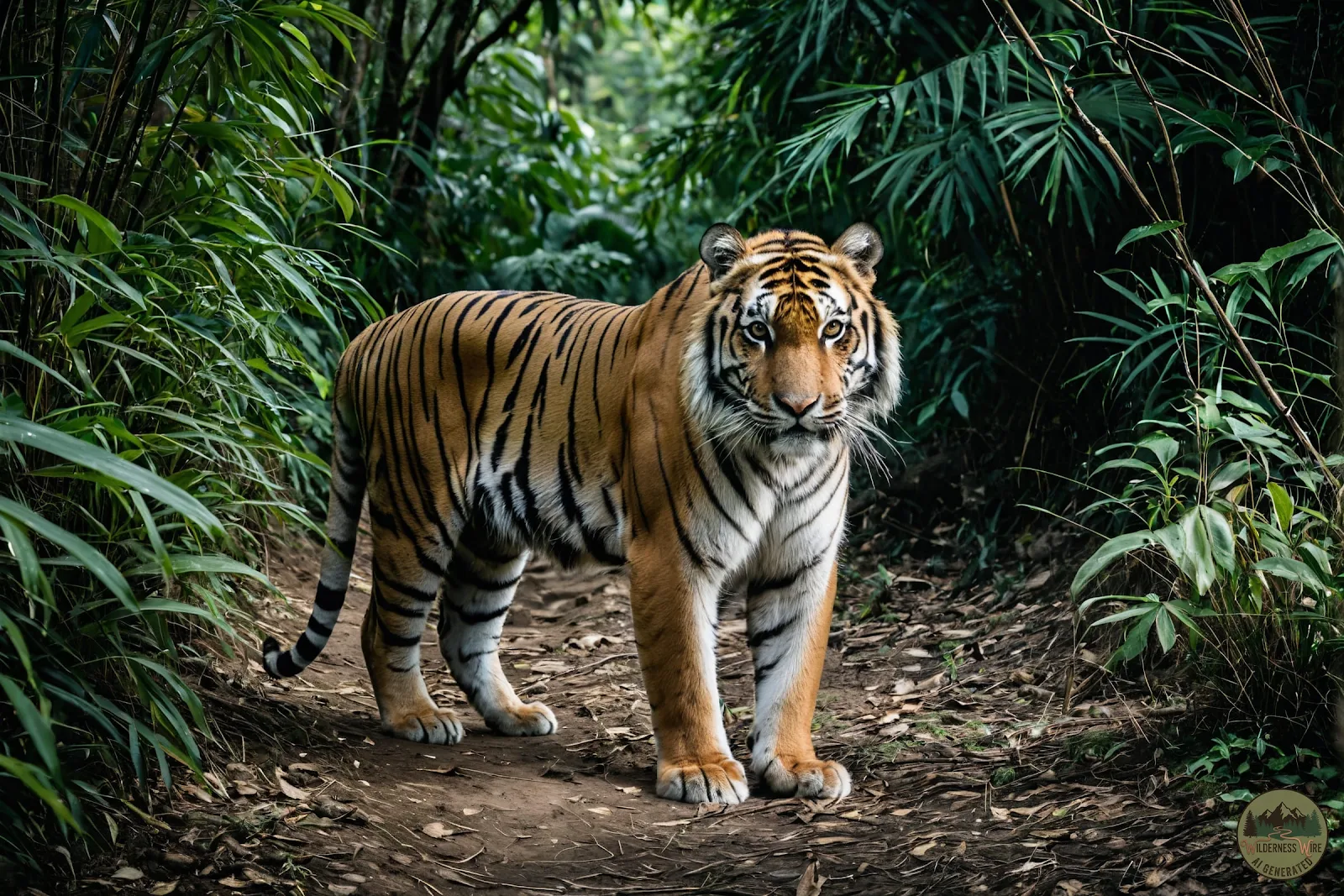
A tiger’s most striking feature, its coat, serves a purpose far beyond aesthetics. The pattern of dark vertical stripes against an orange-to-reddish-brown background is a classic example of disruptive coloration. In the dappled light of a forest or the tall, dry grasses of the savannah, these stripes break up the animal's silhouette, making it nearly invisible to prey until it is within striking distance. Interestingly, these patterns are not merely fur-deep; the skin of the tiger is also pigmented with the same unique markings. Much like a human fingerprint, no two tigers share the same stripe pattern, a biological trait that researchers utilize to identify and track individual animals in the wild through camera-trapping technology.
Physiologically, the tiger is built for explosive power rather than long-distance endurance. Their hind legs are longer than their front legs, a skeletal adaptation that facilitates leaping distances of up to 10 meters in a single bound. Their paws are equipped with large, retractable claws that act as grappling hooks when securing struggling prey. Underlying this exterior is a dense muscular structure; a large male Bengal tiger can weigh over 250 kilograms, yet move with a silent, fluid grace that belies its mass. Their skull structure is shortened and broadened to support massive jaw muscles, allowing them to deliver a crushing bite to the neck or throat of their quarry, effectively severing the spinal cord or inducing suffocation.
The sensory world of the tiger is finely tuned for nocturnal activity. Their eyes have a high concentration of rod cells, which are sensitive to low light, and a reflective layer behind the retina called the tapetum lucidum. This structure reflects light back through the retina, increasing the amount of light available to the photoreceptors and giving their eyes a distinctive "glow" in the dark. Furthermore, their sense of hearing is acute, capable of detecting the low-frequency sounds produced by prey moving through underbrush, while their long vibrissae, or whiskers, provide tactile feedback about their immediate surroundings in total darkness.
Socially, tigers are intensely territorial. The size of a tiger’s home range is dictated primarily by the density of prey and the availability of water. A male’s territory typically overlaps with those of several females, but males will fiercely defend their boundaries against other wandering males. These territories are maintained through a complex system of chemical communication. Tigers utilize scent marking—spraying a mixture of urine and anal gland secretions onto trees and rocks—and physical signs like "scrapes" in the dirt or claw marks on bark to signal their presence and reproductive status. This olfactory landscape allows tigers to avoid direct physical confrontations, which could result in injuries that might impede their ability to hunt.
Despite their power, the hunting success rate of a tiger is remarkably low, with only about one in ten attempts resulting in a kill. This reality necessitates a strategic approach to predation. Tigers are "stalk and ambush" hunters. They utilize cover to approach within 10 to 20 meters of their target before launching a high-speed charge. Their diet is varied, consisting primarily of large ungulates such as chital, sambar deer, and wild boar, though they are opportunistic enough to take down larger animals like water buffalo or smaller prey like porcupines if the situation demands it.
The current state of tiger conservation is a narrative of both tragedy and hope. At the dawn of the 20th century, an estimated 100,000 tigers roamed the wild; today, that number has plummeted to fewer than 5,000. This decline is the result of relentless poaching for the illegal wildlife trade, habitat fragmentation, and the depletion of prey species. However, concentrated international efforts and the establishment of protected corridors have seen populations stabilize and even increase in certain regions, such as India and Nepal. The survival of the tiger is not merely about preserving a single species; as an umbrella species, the protection of the tiger necessitates the protection of vast tracts of forest and biodiversity, which in turn maintains the ecological health of the entire landscape. To observe a tiger in its natural habitat is to witness a masterwork of natural engineering, a creature that embodies the raw, unyielding spirit of the wilderness.