The Evolutionary Adaptations and Critical Ecological Impact of the Iconic Neotropical Rainforest Toucan
The Neotropical canopy of Central and South America is home to an array of biological marvels, but few creatures command as much immediate attention or embody the vibrant complexity of the rainforest as the toucan. Belonging to the family Ramphastidae, these birds are defined by their oversized, multi-colored bills and striking plumage. While they have become global icons of tropical biodiversity, the biological reality of the toucan reveals a series of sophisticated evolutionary adaptations that allow them to thrive in some of the most competitive ecosystems on Earth. Far from being a mere aesthetic curiosity, the toucan's morphology is a masterclass in specialized engineering and ecological utility.
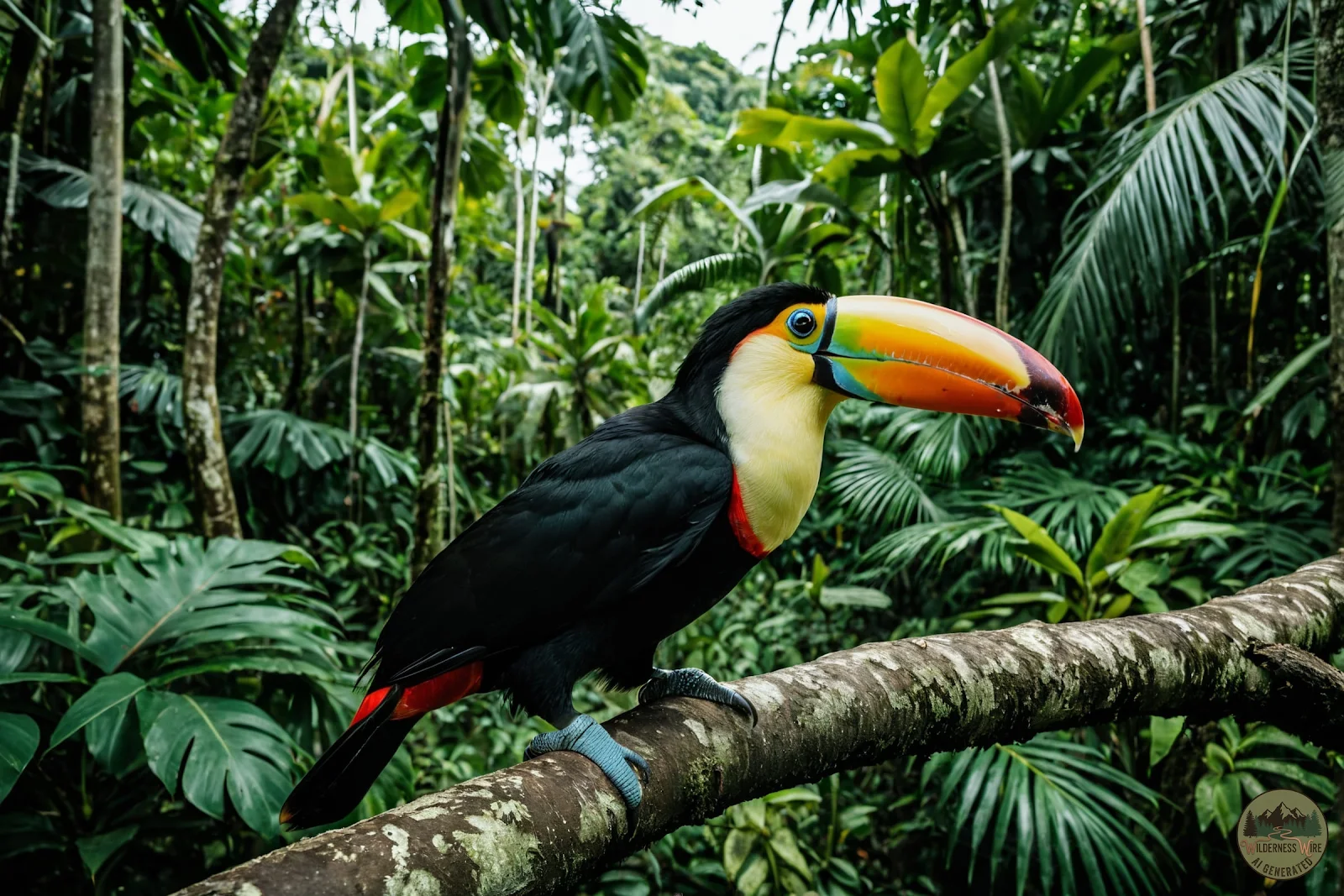
The most distinctive feature of the toucan is undoubtedly its massive bill, which in some species can account for more than a third of the bird’s total body length. For decades, naturalists debated the primary function of such an unwieldy-looking appendage. Early theories suggested it was used for defense or to attract mates, similar to the peacock's tail. However, modern physiological research has revealed that the bill is a highly efficient thermal radiator. The beak is honeycombed with a complex network of blood vessels; by increasing or decreasing blood flow to the bill, toucans can rapidly dissipate body heat or conserve it. This capability is crucial in the humid, fluctuating temperatures of the tropical rainforest, where maintaining homeostasis is a constant challenge. Despite its size, the bill is remarkably light, composed of a protein called keratin—the same material found in human fingernails—covering a structure of cancellous (spongy) bone. This allows the bird to maintain its balance and maneuverability while flying and foraging.
Ecologically, toucans serve as vital "gardeners of the forest." As primarily frugivorous (fruit-eating) birds, they play a critical role in seed dispersal. Their large bills allow them to reach fruits on branches that are too thin to support their weight, and they are capable of consuming larger fruits than most other avian species in their habitat. Once the fruit is consumed, the toucan eventually regurgitates or excretes the seeds, often far from the parent tree. Because toucans have relatively short digestive tracts, the seeds pass through their system quickly, which increases the likelihood that the seeds will remain viable and germinate. This process of ornithochory is fundamental to the regeneration of rainforest flora, making the toucan a "keystone species" whose presence directly influences the health and diversity of the entire ecosystem.
Beyond their diet of fruit, toucans are opportunistic omnivores. They are known to supplement their diet with insects, lizards, and occasionally the eggs or nestlings of other birds. This dietary flexibility provides them with essential proteins and minerals that fruit alone cannot provide, particularly during the breeding season. Their bill, which is serrated like a steak knife, is perfectly adapted for gripping and tearing, allowing them to process a wide variety of food sources with precision. This versatility ensures their survival across different micro-habitats within the forest, from the dense understory to the high canopy.
Socially, toucans are gregarious birds that typically live in small flocks of six to twelve individuals. Their communication is complex, involving a series of croaks, rattles, and bill-clacking sounds that help maintain group cohesion. One of the most fascinating social behaviors observed in toucans is "bill-fencing," where two birds tap their beaks together or engage in a playful struggle. While this may appear aggressive, it is often a form of social bonding or a means of establishing hierarchy within the flock. During the breeding season, they are cavity nesters, taking up residence in holes in trees that have been hollowed out by woodpeckers or created by decay. Unlike many other birds, toucans do not create their own cavities; they rely on the existing architecture of the forest, which makes them particularly sensitive to the loss of old-growth trees.
The physical movement of a toucan is also a point of interest. Despite their large wings, they are not particularly strong long-distance fliers. Their flight is typically heavy and undulating, consisting of a few quick flaps followed by a glide. Instead, they excel at hopping between branches. This is made possible by their zygodactyl feet—two toes point forward and two point backward—which provide an exceptionally strong grip. This foot structure allows them to hang at precarious angles while reaching for fruit or navigating the tangled vines of the canopy. When they sleep, toucans employ a unique space-saving technique: they tuck their bills under their wings and fold their long tails over their backs, transforming into a compact ball of feathers that fits snugly within the confines of a tree hollow.
Conservation of the toucan is inextricably linked to the preservation of their habitat. While they are not currently as threatened as some other tropical species, they face significant pressure from deforestation and the illegal pet trade. The loss of primary rainforest not only reduces their food supply but also eliminates the ancient trees they require for nesting. Furthermore, because they are so vital to seed dispersal, a decline in toucan populations can lead to a "trophic cascade," where the forest's ability to regenerate itself is severely compromised. Understanding the toucan is therefore not just about appreciating its unique beauty, but about recognizing the intricate web of life that sustains the world's most biodiverse regions. They are a testament to the specialized adaptations required to survive in the wild, serving as both a symbol of the rainforest's splendor and a reminder of its fragility.