The Biology, Behavior, and Vital Conservation Efforts for the World’s Largest Wild Cat
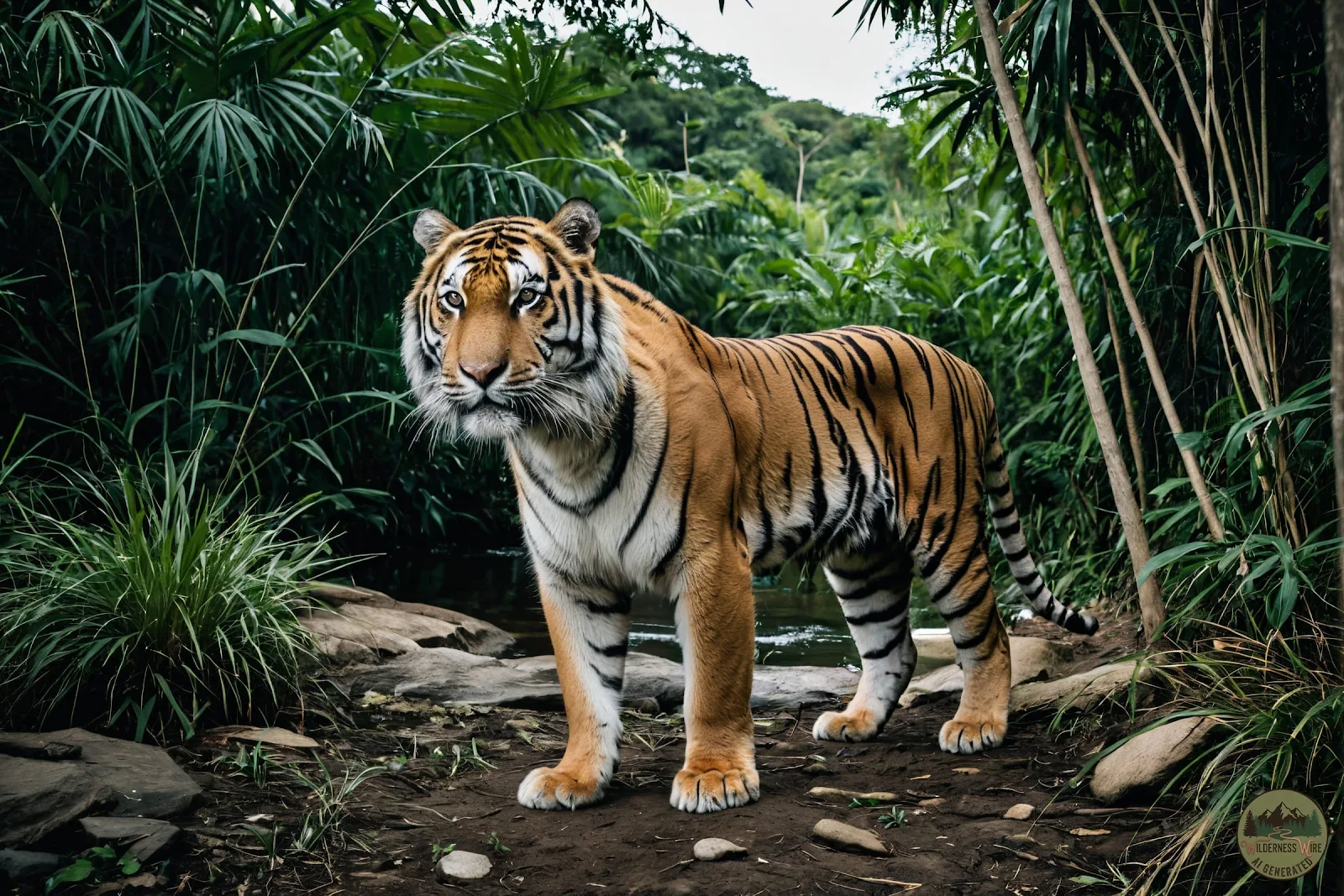
The tiger, scientifically known as Panthera tigris, stands as the largest extant cat species in the world and a member of the genus Panthera. Recognizable by its dark vertical stripes on orange-brown fur with a lighter underside, it is an apex predator, primarily preying on ungulates such as deer and wild boar. This majestic creature is not merely a symbol of strength and ferocity in human culture but is a cornerstone of the ecosystems it inhabits. Its presence or absence serves as a vital indicator of the health of the environment, making the study of its biology and behavior essential for global conservation efforts.
Physiologically, the tiger is a marvel of evolutionary engineering. Their bodies are built for power rather than sustained speed. A tiger's hind legs are longer than its front legs, a trait that allows them to leap distances of up to 10 meters in a single bound. This skeletal structure is complemented by a dense muscular frame that can weigh up to 300 kilograms in the case of the Siberian subspecies. One of the most fascinating aspects of their anatomy is their paws. A tiger’s forepaws are equipped with long, retractable claws that act as grappling hooks to secure struggling prey. The pads on their feet allow them to move silently through the undergrowth, a necessity for an ambush predator that relies on the element of surprise.
The iconic stripes of a tiger are as unique as a human fingerprint. No two tigers have the same pattern, which allows researchers to identify individuals in the wild using camera trap technology. These markings are not merely superficial; the pattern is actually pigmented into the skin itself. If a tiger were to be shaved, the distinct stripe pattern would still be visible on its hide. This disruptive coloration is a masterclass in camouflage. In the dappled light of a forest or the tall grasses of a savanna, the vertical lines break up the tiger's silhouette, making it nearly invisible to its prey until it is too late.
While often portrayed as solitary and aggressive, the social structure of tigers is nuanced. They are indeed territorial, with males maintaining larger home ranges that overlap with several females. However, unlike many other felids, tigers have been observed sharing kills in a somewhat communal fashion, particularly between mothers and their sub-adult offspring. Communication is maintained through scent marking, vocalizations, and visual signals. A tiger’s roar can be heard from over three kilometers away, serving as both a warning to rivals and a call to potential mates. Interestingly, they also utilize "chuffing"—a soft, snorting sound—as a non-threatening greeting between individuals.
The hunting strategy of a tiger is a testament to its patience and tactical intelligence. Despite their power, tigers are only successful in about one out of every ten hunts. This low success rate necessitates a highly calculated approach. They utilize cover to creep as close as possible to their target before launching a high-speed burst. Because they lack the cardiovascular endurance for long chases, the first few seconds of an attack are critical. They typically aim for the throat or the back of the neck, using their immense bite force—estimated at around 1,000 pounds per square inch—to sever the spinal cord or crush the windpipe of their prey.
The ecological significance of the tiger cannot be overstated. As a keystone species, they regulate the populations of herbivores, which in turn prevents overgrazing and maintains the structural integrity of the forest. When tiger populations decline, the resulting explosion in deer and wild boar populations can lead to the degradation of local flora, affecting everything from soil quality to the availability of water. Consequently, protecting tigers involves protecting vast swathes of forest and grassland, which sequester carbon and provide essential services to human communities, such as flood control and clean air.
Historically, the tiger’s range extended across much of Asia, from the frozen forests of the Russian Far East to the tropical swamps of Indonesia. Today, they are confined to less than 7% of their ancestral range. This fragmentation has led to the recognition of several subspecies, including the Bengal, Amur (Siberian), Sumatran, Indochinese, and Malayan tigers. Each has adapted to its specific environment; for instance, the Amur tiger possesses a thicker coat and a layer of fat to survive sub-zero temperatures, while the Sumatran tiger is smaller and more adept at navigating dense, tropical island jungles.
The conservation status of tigers remains a critical concern for biologists. Threatened by habitat loss, poaching, and the depletion of prey species, the global wild population is estimated to be fewer than 5,000 individuals. However, recent decades have seen a shift in international efforts. Initiatives like "TX2," an ambitious goal set by tiger-range countries to double the wild tiger population, have shown promising results in regions like India and Nepal. These successes are built on a foundation of community-based conservation, where local people are incentivized to protect tigers rather than view them as a threat to livestock.
The future of the tiger depends on our ability to coexist with one of nature’s most formidable predators. It requires a sophisticated understanding of their spatial needs and a commitment to maintaining wildlife corridors that allow for genetic exchange between isolated populations. As we continue to study these magnificent cats, we gain not only a deeper appreciation for their beauty and power but also a clearer understanding of the delicate balance that sustains life on our planet. The tiger remains a primary symbol of the wild—a reminder of the untamed world that requires our respect and protection.