Himalayan Tahr: Exploring the Biology and Ecology of the Ultimate High Altitude Mountaineer
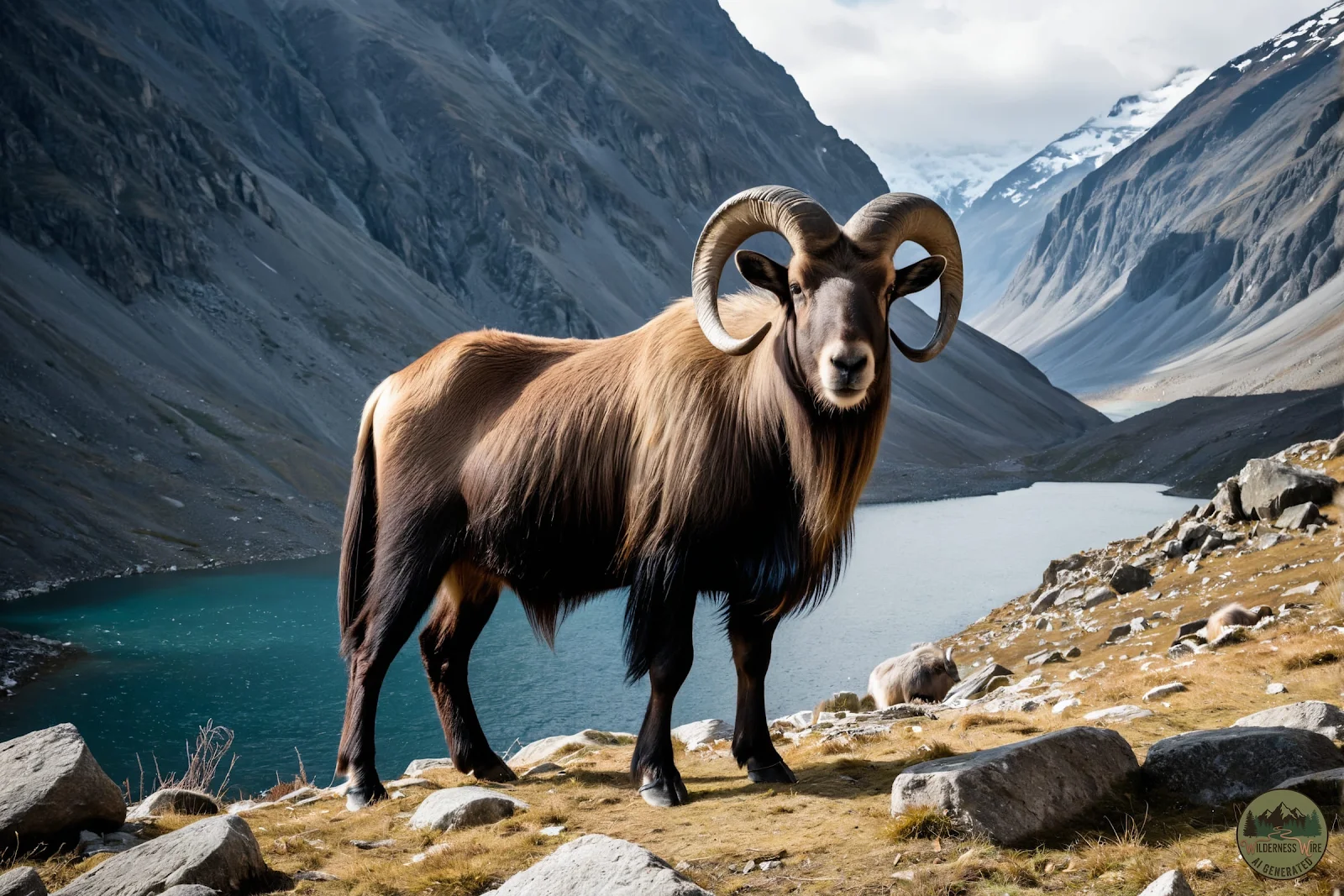
The Himalayan tahr (Hemitragus jemlahicus) stands as a testament to the evolutionary ingenuity required to survive in some of the most vertical and unforgiving landscapes on Earth. Native to the rugged mountain ranges of the Himalayas, spanning across northern India, Nepal, and southern Tibet, these large ungulates are often described as the quintessential mountain dwellers. While they share a common ancestry with goats and sheep, the tahr occupies a unique taxonomic niche within the subfamily Caprinae. Their physiology, social behavior, and specialized adaptations allow them to thrive at altitudes ranging from 2,500 to 5,000 meters, where oxygen is thin and the terrain is treacherous.
Physically, the Himalayan tahr is a striking creature, characterized by its robust build and a dense, shaggy coat that changes significantly with the seasons. During the harsh winter months, their fur thickens and turns a deep reddish-brown or dark charcoal, providing essential insulation against sub-zero temperatures. One of the most distinctive features of the mature male, or bull, is the magnificent mane that drapes over the neck and shoulders, extending down to the knees. This mane not only serves as a thermal layer but also plays a crucial role in social signaling, making the bull appear larger and more formidable during the mating season. Both sexes possess horns, though they are notably more substantial in males. These horns curve backward and slightly inward, reaching lengths of up to 45 centimeters, and are used primarily for intra-species wrestling and defense against predators.
The true secret to the tahr’s success in the high-altitude wilderness lies in its specialized hoof structure. Unlike many other hoofed mammals, the tahr possesses hooves with a hard, sharp outer rim and a soft, flexible, rubbery core. This biological design functions much like a high-performance climbing shoe, providing exceptional grip on smooth, icy surfaces and the ability to "stick" to narrow rocky ledges. This agility allows them to traverse vertical cliffs that are inaccessible to most predators, such as the snow leopard or the Himalayan wolf. When threatened, a tahr will instinctively retreat upward into the most difficult terrain, relying on its superior balance and strength to outmaneuver any pursuer.
Dietary flexibility is another hallmark of the species. As generalist herbivores, Himalayan tahrs are both grazers and browsers. They consume a wide variety of alpine grasses, herbs, shrubs, and the leaves of stunted mountain trees. Their digestive systems are highly efficient, allowing them to extract nutrients from tough, fibrous vegetation that other animals might find unpalatable. Interestingly, their feeding patterns follow a vertical migration; as the snow line recedes in the summer, they move higher into the alpine meadows to feast on nutrient-rich new growth. When winter snows cover the high peaks, they descend into subalpine forests and scrublands, where they can find shelter and access to woody browse.
The social structure of the Himalayan tahr is complex and varies throughout the year. For much of the year, adult males and females live in separate herds. Female groups, which include juveniles and yearlings, tend to be larger and more stable, providing protection through collective vigilance. Males, on the other hand, often form smaller bachelor groups or live solitary lives. The two sexes come together during the "rut," or mating season, which typically occurs from October to January. During this time, the competition for dominance among bulls is intense. Unlike many other caprids that engage in head-butting, tahr bulls often use their horns to hook and push their rivals, accompanied by elaborate displays of their manes to assert status without resorting to fatal violence.
Beyond its native range, the Himalayan tahr presents a fascinating case study in invasive ecology. In the early 20th century, these animals were introduced to the Southern Alps of New Zealand for trophy hunting. In the absence of natural predators like the snow leopard, the population exploded, leading to significant concerns regarding their impact on the indigenous flora. The New Zealand government eventually implemented strict management programs to control their numbers. Similar introduced populations exist in parts of South Africa and even the United States. This contrast is striking: while the tahr is managed as a pest or a resource in its introduced ranges, it is classified as "Near Threatened" in its native Himalayan habitat due to hunting and competition with domestic livestock for grazing land.
Conservation efforts in the Himalayas are increasingly focused on protecting the tahr as a "flagship species" for alpine ecosystems. Because they are a primary prey source for the endangered snow leopard, the health of tahr populations is intrinsically linked to the stability of the entire mountain food web. Climate change poses a new, modern threat, as shifting timberlines and unpredictable snowfall patterns alter the availability of their traditional feeding grounds. Protecting the Himalayan tahr requires a delicate balance of habitat preservation and the management of human-wildlife conflict, particularly as local herders move their goats and sheep higher into the mountains, encroaching on the tahr’s natural territory.
To witness a Himalayan tahr in its natural environment is to see a master of gravity. Whether they are resting on a ledge barely wider than their bodies or leaping across a chasm with effortless grace, they embody the spirit of the high mountains. Their presence in the landscape is not merely a biological fact but a symbol of the resilience required to inhabit the roof of the world. Understanding the tahr provides deeper insight into the fragile balance of mountain ecology and the extraordinary ways in which life adapts to the extremes of our planet.