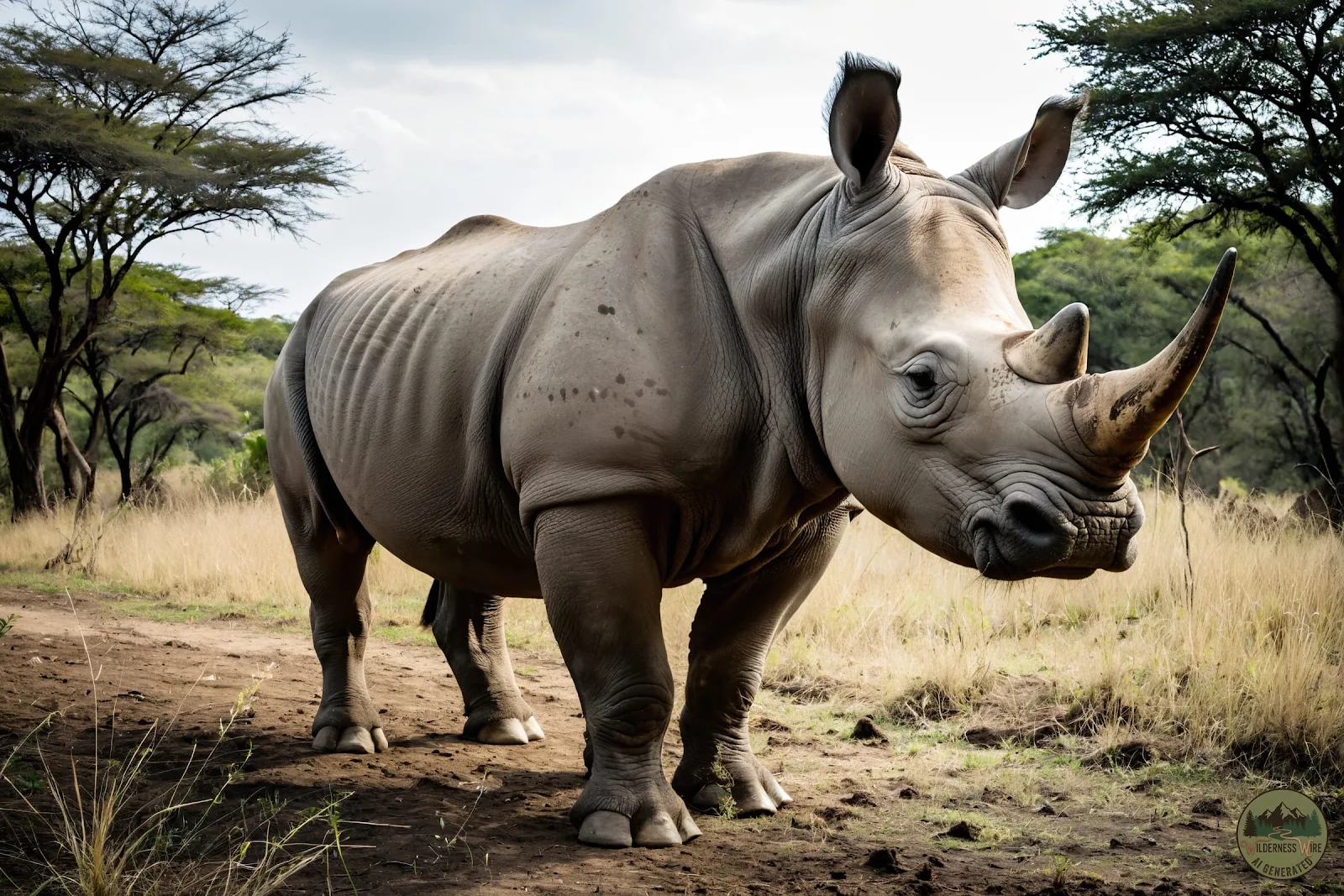
 A rhinoceros in its natural habitat
The rhinoceros, a creature of immense power and ancient lineage, stands as one of Earth's most recognizable and awe-inspiring megafauna. With its distinctive horn or horns, thick hide, and formidable presence, the rhino has roamed the planet for millions of years, adapting to a variety of landscapes from African savannas to the dense forests of Asia. Today, these magnificent animals face an existential crisis, a poignant reminder of humanity’s impact on the natural world. Understanding the rhinoceros is to delve into a story of incredible biological resilience, unique ecological roles, and a desperate fight for survival.
There are five extant species of rhinoceros, each with its own set of characteristics, geographical distribution, and conservation challenges. In Africa, we find the White Rhinoceros (Ceratotherium simum) and the Black Rhinoceros (Diceros bicornis). Despite their names, both are typically grey, with their monikers thought to derive from misinterpretations: "white" possibly from the Afrikaans word "weit" (wide), referring to its broad, square lip adapted for grazing, and "black" perhaps to distinguish it from the white rhino, or from the dark mud it often wallows in. White rhinos are generally larger and more social, primarily grazers, feeding on grasses. Black rhinos, in contrast, are browsers, possessing a prehensile, hooked lip perfectly suited for grasping leaves and twigs from bushes and trees. They are also typically more solitary and known for their aggressive temperament.
In Asia, three distinct species endure: the Greater One-Horned Rhinoceros (Rhinoceros unicornis), the Javan Rhinoceros (Rhinoceros sondaicus), and the Sumatran Rhinoceros (Dicerorhinus sumatrensis). The Greater One-Horned Rhino, found in parts of India and Nepal, is easily identified by its single horn and thick, folded skin that gives it an armored appearance. These rhinos are semi-aquatic, often seen wallowing in rivers and swamps. The Javan Rhinoceros, once widespread across Southeast Asia, is now critically endangered, clinging to existence in only a single national park on the island of Java. It shares many characteristics with its Indian cousin, including a single horn and folded skin, but is smaller. The Sumatran Rhinoceros, the smallest and hairiest of all rhinos, is also the most ancient in lineage and arguably the most critically endangered, with mere dozens remaining across fragmented populations in Sumatra and Borneo. It is the only Asian rhino with two horns and prefers dense tropical forests.
The most striking feature of any rhinoceros is undoubtedly its horn. Unlike the horns of bovids, which are bone covered in keratin, a rhino's horn is composed entirely of keratin, the same protein that makes up human hair and fingernails. These horns are not attached to the skull but grow from the dermal layer of the skin. They serve various functions in the wild: for defense against predators, for sparring between males, and for digging up roots or breaking branches during foraging. However, it is precisely this unique anatomical feature that has driven rhinos to the brink of extinction. Driven by demand in some Asian markets for traditional medicine (despite no scientific evidence of medicinal value) and as status symbols, rhino horns fetch exorbitant prices on the black market, fueling a brutal poaching crisis.
Beyond their iconic horns, rhinos possess other remarkable adaptations. Their skin, often several centimeters thick, acts as a robust shield against thorns, insects, and the elements. While their eyesight is notoriously poor, often leading them to charge at perceived threats, their other senses compensate magnificently. Rhinos have an acute sense of smell, capable of detecting predators or potential mates from considerable distances, and their large, mobile ears can pick up faint sounds across their environment. They are also surprisingly agile for their size, capable of reaching speeds of up to 55 kilometers per hour over short distances. Wallowing in mud is a common and crucial behavior, serving not only to cool their massive bodies but also to protect their skin from sun exposure and parasitic insects.
The life cycle of a rhino is characterized by slow reproduction and extended parental care. Gestation periods can last between 15 to 16 months, typically resulting in the birth of a single calf. This calf remains dependent on its mother for several years, learning essential survival skills and forging a strong bond. This slow reproductive rate makes rhinos particularly vulnerable to population declines, as recovery from poaching losses takes many years, even decades.
The greatest threat to all rhino species is, without question, poaching. The demand for rhino horn, fueled by misinformation and superstition, has decimated populations across Africa and Asia. Despite international bans and widespread conservation efforts, illegal wildlife trade networks continue to operate, pushing several species to the very edge of oblivion. Beyond poaching, habitat loss and fragmentation due to human population growth, agriculture, and infrastructure development also severely impact rhino populations, isolating groups and reducing genetic diversity.
In response to this dire situation, a global network of conservationists, governments, and local communities has mobilized. Anti-poaching units, often comprising highly trained rangers, employ sophisticated surveillance technologies, canine units, and intelligence gathering to combat poachers. Community involvement is paramount, empowering local people to become stewards of their natural heritage, offering economic incentives through ecotourism, and fostering a sense of shared responsibility. Translocation programs move rhinos from high-risk areas to safer, sometimes newly established, sanctuaries. Captive breeding programs, particularly for the critically endangered Sumatran and Javan rhinos, offer a glimmer of hope for species teetering on the brink. International cooperation through organizations like CITES (Convention on International Trade in Endangered Species of Wild Fauna and Flora) aims to curb the illegal trade, while advances in forensic science allow for the genetic profiling of seized horns, aiding in the prosecution of traffickers.
The rhinoceros is more than just a magnificent animal; it is a keystone species in many of its ecosystems, playing a vital role in maintaining the health and diversity of grasslands and forests. Their grazing and browsing habits shape vegetation, creating habitats for other species. Protecting rhinos means protecting entire ecosystems. Their continued existence is a testament to the resilience of nature and a powerful symbol of our collective responsibility to safeguard Earth’s biodiversity. The ongoing efforts to save these ancient giants are not merely about preserving a single species, but about upholding the balance of our planet's intricate web of life for generations to come.