Beyond the Mask: The Raccoon's Remarkable Adaptability and Intelligence
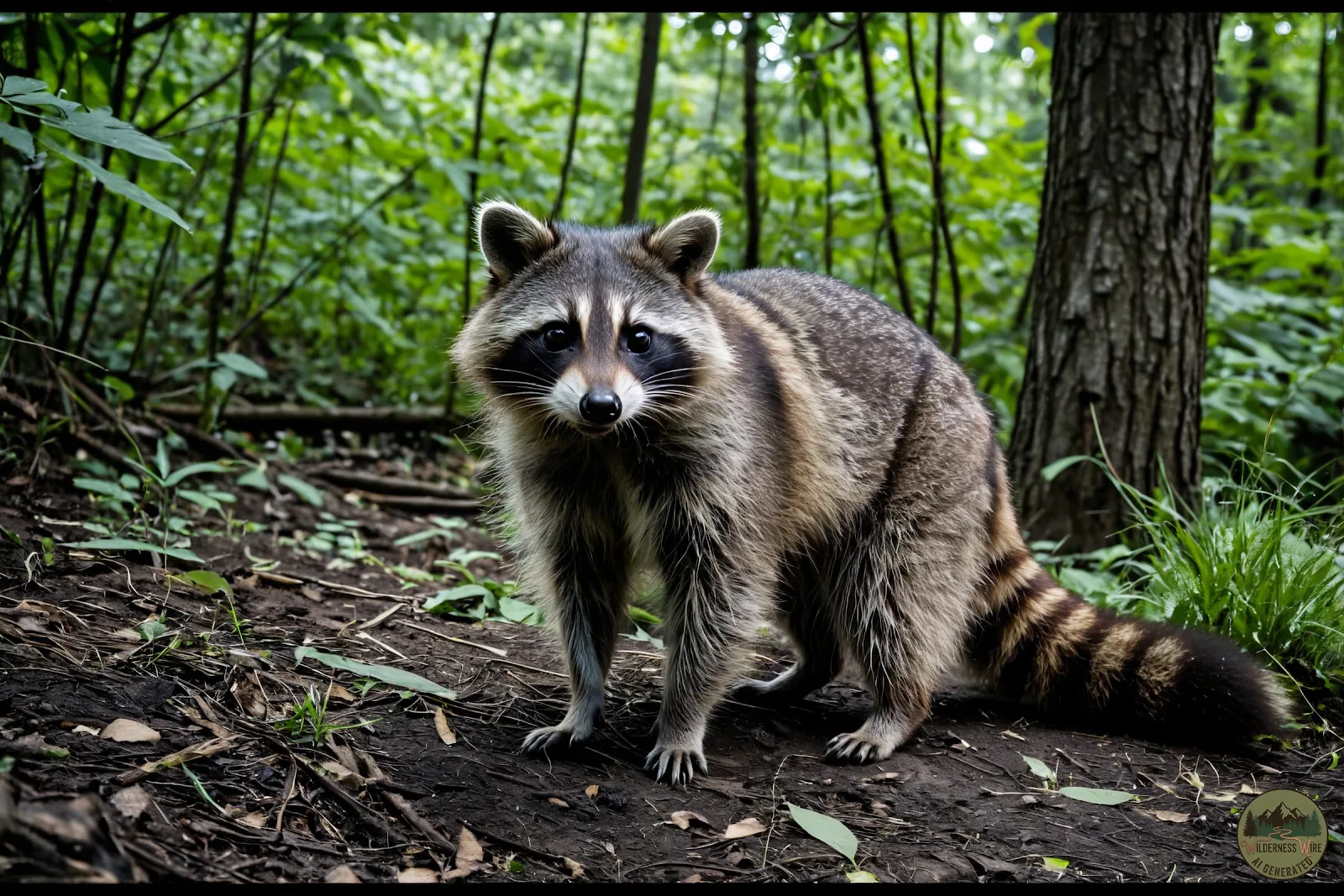
The raccoon's global success is fueled by a potent combination of problem-solving intelligence, incredible manual dexterity, and an opportunistic nature that allows it to turn human-dominated landscapes into its personal buffet.
+------------------+---------------------------------------------------------+

| Feature          | Raccoon Profile                                         |
+------------------+---------------------------------------------------------+

| Scientific Name  | Procyon lotor                                           |
| Range            | North America (native); heavily expanded into urban areas|
| Weight           | 4 to 9 kilograms (9 to 20 pounds)                       |
| Shoulder Height  | 23 to 30 centimeters (9 to 12 inches)                   |
| Diet             | Highly opportunistic omnivore (fruits, meat, trash)     |
| Main Attributes  | Hand-like front paws, high intelligence, ringed tail    |
+------------------+---------------------------------------------------------+
Physical Versatility: Built for the Shadows
Every part of the raccoon's anatomy is fine-tuned for survival. Its robust frame is blanketed by dense, grayish-brown fur that provides top-tier insulation against harsh winter weather.
However, its most distinct physical evolutionary traits include:
- The "Bandit Mask": The black patches around its eyes are far from just cosmetic. Similar to the black eye paint used by professional athletes, this dark fur reduces glare and significantly boosts its sharp night vision.
- Hyper-Sensitive Paws: Lacking opposable thumbs but possessing five hyper-dexterous digits, a raccoon's front paws function almost exactly like human hands. They can manipulate latches, untie knots, and identify objects by touch alone—even completely underwater.
- Secondary Sensory Whiskers: To aid navigation in pitch-black conditions, raccoons feature sensitive sensory whiskers (vibrissae) not just on their snouts, but also on their wrists and the backs of their hands.
The "Washing" Myth and Diet
Raccoons are legendary omnivores. They feast seasonally on fruits, berries, nuts, insects, frogs, and bird eggs. In cities, their diet shifts heavily toward pet food, garden crops, and unsecured human garbage.
A common behavior that fascinates onlookers is the raccoon's habit of "washing" its food in water. Science reveals this isn't actually driven by a desire for cleanliness. Instead, water softens the tough outer layers of their food and supercharges the nerve endings in their paws. Submerging their meals gives them a high-definition tactile profile of what they are about to eat.
Complex Society and Einstein-Level Intellect
Though long thought to be strictly solitary creatures, research shows raccoons live in flexible, complex social groups. Related females form cooperative networks that share denning sites and foraging grounds. Meanwhile, urban males often band together in small, loose coalitions to protect shared territories. Mating occurs in late winter, resulting in two to five vulnerable kits born in the spring.
Beyond their social structure, their intelligence is fierce. Raccoons are masterful trial-and-error problem solvers. Laboratory tests have proven they can remember solutions to complex mazes and mechanical locks for extended periods, making them one of the most cognitively flexible urban animals on Earth.
Coexistence and Conservation
As wild spaces shrink, human-raccoon interactions are at an all-time high. While they serve as vital natural scavengers, they can become high-profile pests by breaking into homes and raiding gardens.
More importantly, they pose notable public health risks as primary carriers of rabies and raccoon roundworm (Baylisascaris procyonis), which can be transmitted through their feces to pets and children. Managing these bold neighbors requires a mix of humane deterrents, secure engineering (like raccoon-proof bins), and public education. Ultimately, the raccoon's enduring presence is a spectacular testament to nature's resilience and a reminder that true adaptability is the ultimate superpower.