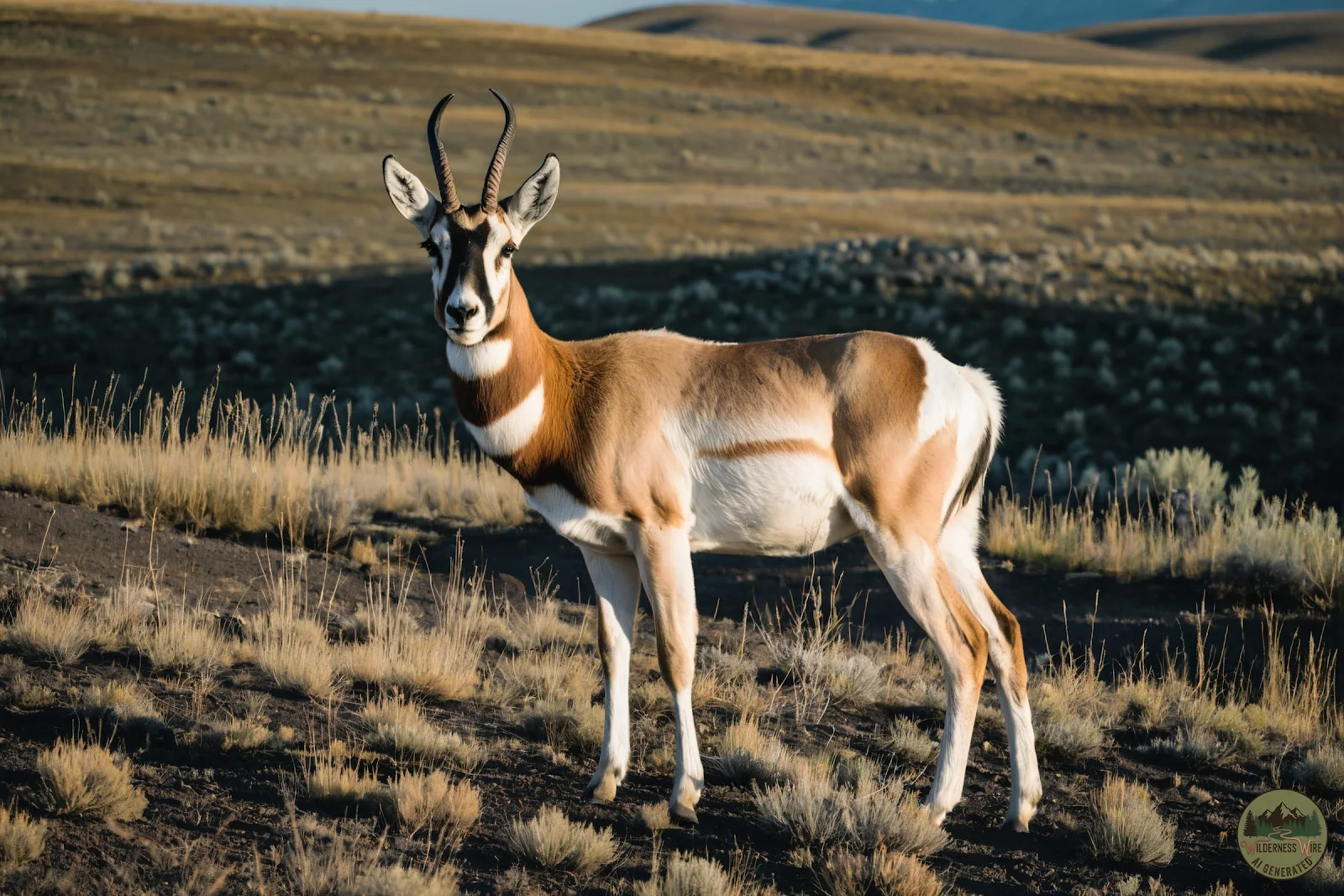
The majestic creature pictured above, often mistaken for an antelope, holds a unique and venerable place among North American fauna. It is, in fact, the sole surviving member of the Antilocapridae family, a lineage distinct from true antelopes found in Africa and Asia. Renowned as the fastest land animal in the Western Hemisphere, its very existence is a testament to millions of years of evolutionary refinement, perfectly adapted to the vast, open landscapes of the continent's interior. This remarkable mammal embodies the spirit of the American West, a survivor whose every feature is honed for life on the open range.
A Marvel of Speed and Endurance
The most striking attribute of this magnificent animal is its unparalleled speed. Capable of bursts up to 98 kilometers per hour (61 mph), it is second only to the cheetah globally, and it maintains high speeds over much longer distances than its African counterpart. This incredible athleticism is not just about raw power; it's a symphony of specialized adaptations. Its heart and lungs are disproportionately large, enabling exceptional oxygen uptake, allowing it to sustain intense exertion. Bones in its legs are lighter, while its hooves are cushioned for impact absorption, allowing it to traverse rough terrain with remarkable agility. A unique, spring-like arrangement in its legs provides extra propulsion, turning each stride into a finely tuned launch. This speed developed over millennia as a primary defense against now-extinct predators like the American cheetah, ensuring its survival in an unforgiving landscape where cover is scarce.
Distinctive Features and Sensory Prowess
Beyond its speed, this animal possesses several other remarkable features. Its "horns" are unlike those of any other mammal. While they resemble horns with a bony core, the outer sheath is shed annually, a characteristic more akin to antlers, yet they are true horns in their composition. Both males and females can possess these head adornments, though those of the males are typically larger, thicker, and more prominently branched. Their coat is a striking blend of tan, white, and dark brown, providing excellent camouflage against the prairie backdrop. The hollow hairs of its fur offer superior insulation, protecting it from both the scorching summer sun and the biting winter winds, making it resilient to extreme temperatures.
Perhaps equally impressive are its enormous eyes, positioned on the sides of its head, granting it an almost 360-degree field of vision without turning its head. This panoramic view, combined with vision comparable to an 8x binocular, allows it to detect predators or rivals from vast distances, a crucial advantage in the expansive, treeless plains it inhabits. A prominent white rump patch serves as an alarm signal; when danger is sensed, these hairs can be flared, creating a flash of white that alerts other members of the herd to flee, a swift and silent communication across miles of open terrain.
Life in the Open Plains
The natural range of this creature spans the plains, grasslands, brushlands, and deserts of western North America, from southern Canada down to northern Mexico. It thrives in open country where it can utilize its speed to evade threats, preferring environments with low, scattered vegetation. Its diet is remarkably varied and adaptable, consisting primarily of forbs, grasses, sagebrush, and even cacti, allowing it to subsist in environments where other grazers might struggle due to lack of diverse forage. This dietary flexibility is critical for surviving the seasonal changes and fluctuating resources of its semi-arid habitats, demonstrating its incredible resilience.
Socially, these animals are highly adaptable. During the breeding season in late summer and early autumn, males establish territories and fiercely defend harems of females, engaging in spectacular displays of dominance. Outside of this period, they often form larger, mixed-sex herds, sometimes numbering in the hundreds, which offer safety in numbers and facilitate foraging efficiency. Younger males often form bachelor groups, learning the intricacies of social structure before attempting to establish their own territories. Come spring, females give birth to one or two fawns, hidden amongst the vegetation, relying on their mottled coats for camouflage and their mother's vigilance for protection during their vulnerable early weeks. These fawns grow rapidly, quickly gaining the speed necessary for survival.
Challenges and Conservation
Despite their remarkable adaptations, these iconic animals have faced significant challenges. Historically, their populations dwindled dramatically in the late 19th and early 20th centuries due to unrestricted hunting and widespread habitat destruction, pushing them to the brink. However, robust conservation efforts, including strict hunting regulations, establishment of protected areas, and habitat preservation, have allowed their numbers to rebound significantly. Today, they represent a significant conservation success story, though new threats continue to emerge, demanding ongoing attention.
Habitat fragmentation, primarily from agricultural expansion, urban development, and energy infrastructure, restricts their movement and access to vital resources. The construction of fences, while necessary for ranching, often impedes their traditional migratory routes, sometimes leading to starvation or isolation of populations. Climate change poses another long-term threat, altering vegetation patterns, increasing frequency of droughts, and impacting water availability in their already arid environments. Conservationists are now focusing on creating wildlife corridors, implementing land use planning that considers wildlife needs, and modifying fences to allow safe passage, ensuring that these incredible sprinters can continue to roam the American West for generations to come.
The survival of this truly unique ungulate underscores the importance of protecting the vast, wild spaces of North America. It stands as a symbol of speed, resilience, and the enduring spirit of the continent's prairies and deserts, a living relic of an ancient ecosystem that continues to inspire awe and demonstrate the power of adaptation in the face of environmental pressures.